Which vacation destination fits you?

Questions about pace, money, weather, company, crowds and what you bring home, each with six answers, one for each of six trip types: Beach and islands, Big-city culture, National parks and mountains, Food and wine, History and old towns, and Adventure and outdoor sport. Choose the short version (8 questions) or the full one (12). The result names the trip type your answers point to most and shows how close the others came. Each result's page names two or three real destinations of that type, with facts and planning basics taken from official sources.
Notes under the questions explain what each one asks and how its answers are scored.
How this quiz works
What it matches
Your answers are matched to one of six trip types: Beach and islands, Big-city culture, National parks and mountains, Food and wine, History and old towns, and Adventure and outdoor sport. Each result's page names example destinations and takes every fact about them (park sizes, seasons, opening rules, entry requirements) from an official source such as the National Park Service, a tourism board or a government travel page, cited where it is used. Seasons matter for several of them: the Atlantic hurricane season, for example, runs from June 1 to November 30 (National Hurricane Center1).
How your answers are scored
Each answer stands for one trip type, and every question offers all six, one answer each. The full version asks 12 questions and the short version asks 8. Every answer is worth one point to its trip type: there are no weights, so a question about money counts the same as a question about weather. Your result is the trip type your answers pointed to most often, shown with the count for all six.
Ties are reported, not broken: if two or more trip types share the top count, the result names all of them. Answer options appear in a new random order each time the page loads, so no trip type sits in the same place on every question, and each answer is scored by what it says, not by where it sits.
What random answers would produce
These figures are worked out from this page's own questions and scoring rule, assuming every answer were picked at random. The full version would end in a tie at the top 33 percent of the time and the short version 37 percent. When the short version's questions get the same answers they got on the full version, the two name the same result 42 percent of the time. Real answers aren't random, so read these figures as a measure of how much room the scoring leaves for close calls, not as a prediction of anyone's result.
What it cannot tell you
This is a way to sort travel preferences, not a test, and the example destinations are examples, not a ranking. Which answer points to which trip type is a judgment made for this quiz, and the notes under the questions say why. A result says nothing about cost, availability or conditions on the dates you have in mind, so check the official pages each result cites before booking. The site earns nothing from any destination, hotel or booking site.
Which answers move the result
The figures in this part are worked out exactly, over every way the questions could be answered at random, and scored by the same rules as the quiz.
Every question offers each trip type once and every answer is worth one point, so no single question carries more weight than another. The exact figures bear that out. Changing one answer to another of its options changed the full version's result 50 percent of the time and the short version's result 59 percent of the time.
Counting the fewest answers that would have to change before the result changes, the full version needed 1.1 on average. One changed answer was enough for 90 percent of its results, and 1 percent needed three or more. On the short version the average is 1.1, and one changed answer was enough for 94 percent of its results. A result counts as changed when the set of trip types it names changes, so a single result turning into a tie counts.
Because every question offers each trip type once, every trip type has the same odds, so the figures for one trip type hold for all six, and they are given here once rather than on each result page. On the full version a trip type needs at least 3 of the 12 answers to be the only result, and 7 settle it whatever the other answers are; on the short version the figures are 3 and 5 of 8.
With random answers any one trip type is the only result 11 percent of the time on the full version and shares a tie 13 percent; on the short version the figures are 10 and 16 percent.
Among random answer sets that name a trip type, changing one answer, picked at random, to another of its options, also picked at random, took that trip type out of the result 25 percent of the time on the full version and 29 percent of the time on the short version.
Random answers are a stand-in. They show how the scoring behaves, not how real people answer.
Sources
- Tropical Cyclone Climatology, National Hurricane Center, NOAA. Accessed October 12, 2026.
- Virgin Islands National Park, National Park Service. Accessed October 12, 2026.
- Basic Information, Virgin Islands National Park, National Park Service. Accessed October 12, 2026.
- Directions, Virgin Islands National Park, National Park Service. Accessed October 12, 2026.
- No Passport Required for U.S. Visitors, U.S. Virgin Islands Department of Tourism (Visit USVI). Accessed October 12, 2026.
- Trusted Traveler, U.S. Virgin Islands Department of Tourism (Visit USVI). Accessed October 12, 2026.
- Dry Tortugas National Park, National Park Service. Accessed October 12, 2026.
- Basic Information, Dry Tortugas National Park, National Park Service. Accessed October 12, 2026.
- Directions, Dry Tortugas National Park, National Park Service. Accessed October 12, 2026.
- Plan Your Visit, Statue of Liberty National Monument, National Park Service. Accessed October 12, 2026.
- Plan Your Visit, National Mall and Memorial Parks, National Park Service. Accessed October 12, 2026.
- Visit, Smithsonian National Air and Space Museum. Accessed October 12, 2026.
- Visiting, The National Gallery, London. Accessed October 12, 2026.
- Visit, Natural History Museum, London. Accessed October 12, 2026.
- Apply for an electronic travel authorisation (ETA), GOV.UK. Accessed October 12, 2026.
- Yellowstone National Park, National Park Service. Accessed October 12, 2026.
- Plan Your Visit, Yellowstone National Park, National Park Service. Accessed October 12, 2026.
- Explore the Old Faithful Area, National Park Service. Accessed October 12, 2026.
- Grand Canyon National Park, National Park Service. Accessed October 12, 2026.
- Plan Your Visit, Grand Canyon National Park, National Park Service. Accessed October 12, 2026.
- North Rim Status, National Park Service. Accessed October 12, 2026.
- Going-to-the-Sun Road General Info, National Park Service. Accessed October 12, 2026.
- Visit Napa Valley: Official Travel Guide for Napa Valley, California, Visit Napa Valley. Accessed October 12, 2026.
- Fall in Napa Valley, Visit Napa Valley. Accessed October 12, 2026.
- Napa Valley Weather, Visit Napa Valley. Accessed October 12, 2026.
- New Orleans Restaurants, New Orleans & Company. Accessed October 12, 2026.
- Cajun and Creole Food in New Orleans, New Orleans & Company. Accessed October 12, 2026.
- Plan Your Visit, Boston National Historical Park, National Park Service. Accessed October 12, 2026.
- Walk the Freedom Trail, National Park Service. Accessed October 12, 2026.
- Castillo de San Marcos National Monument, National Park Service. Accessed October 12, 2026.
- Florida: Castillo de San Marcos National Monument, National Park Service. Accessed October 12, 2026.
- Fortifications of Québec National Historic Site of Canada, Parks Canada, Directory of Federal Heritage Designations. Accessed October 12, 2026.
- Entry requirements by country or territory, Government of Canada. Accessed October 12, 2026.
- Western Hemisphere Travel Initiative, U.S. Customs and Border Protection. Accessed October 12, 2026.
- Slickrock National Recreation Trail, Bureau of Land Management. Accessed October 12, 2026.
- Slickrock Bike Trail Trailhead, Bureau of Land Management. Accessed October 12, 2026.
- Directions, Arches National Park, National Park Service. Accessed October 12, 2026.
- Weather, Arches National Park, National Park Service. Accessed October 12, 2026.
- Whitewater at New River Gorge, National Park Service. Accessed October 12, 2026.
- Climbing, New River Gorge National Park and Preserve, National Park Service. Accessed October 12, 2026.
- Entering the UK: Before you leave for the UK, GOV.UK. Accessed October 12, 2026.
The possible results
Beach and islands
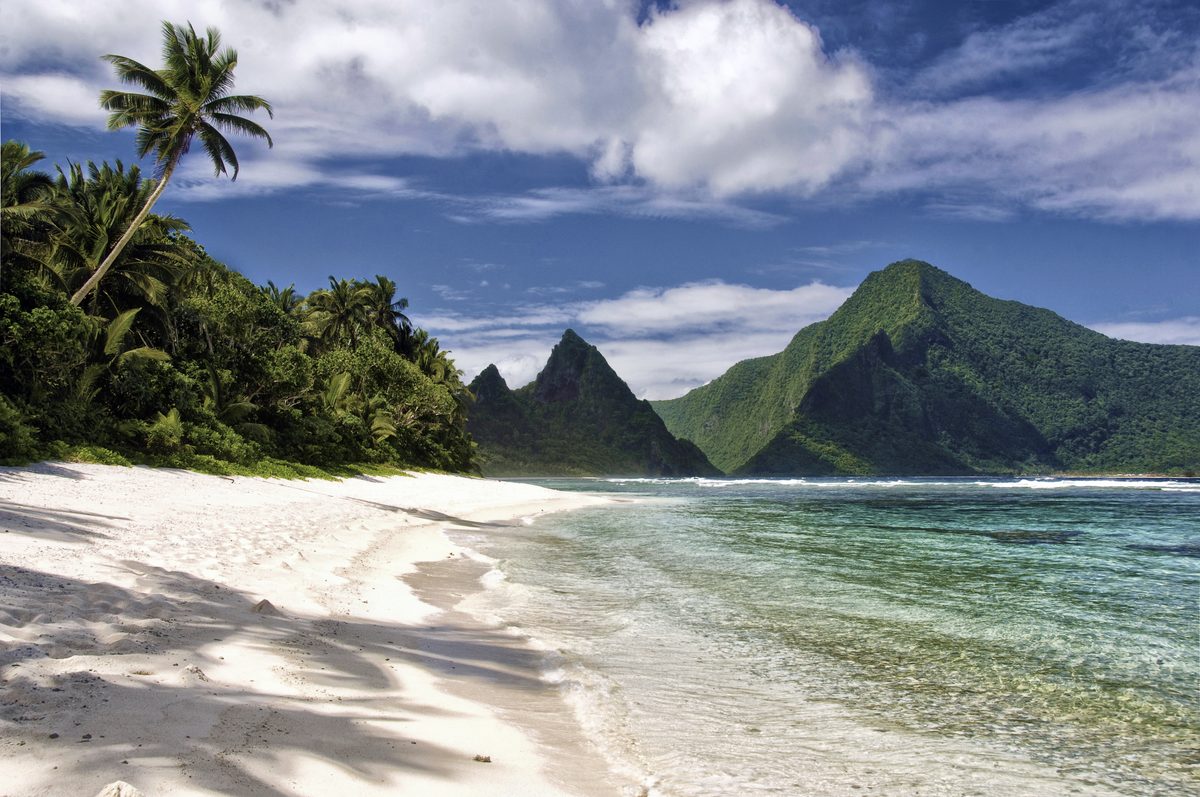
Warm water, a slow pace and days with little on the schedule. This result means your answers most often went to rest, sun, a room near the water and as little planning as possible. The example destinations on its page are Virgin Islands National Park on St. John and Dry Tortugas National Park off Key West.
Big-city culture
Museums, shows, skylines and a full calendar. This result means your answers most often went to a packed schedule, tickets and exhibitions, a downtown hotel and crowds as part of the energy. The example destinations on its page are New York, Washington, D.C. and London.
National parks and mountains
Scenic drives, day hikes, viewpoints and wildlife, with early starts. This result means your answers most often went to clear mountain air, a park lodge or campsite and a trail map read before the trip. The example destinations on its page are Yellowstone, Grand Canyon and Glacier national parks.
Food and wine
A trip planned around meals, markets and tastings. This result means your answers most often went to long lunches, booked tables, an inn among the vineyards and something to eat or drink brought home. The example destinations on its page are Napa Valley and New Orleans.
History and old towns
Old streets, forts, walls and guided tours at an unhurried pace. This result means your answers most often went to walking tours, historic sites, a historic inn and reading up before the trip. The example destinations on its page are Boston, St. Augustine and Quebec City.
Adventure and outdoor sport
Bikes, ropes, rafts and a hard day outside. This result means your answers most often went to as much activity as possible, guides and rentals, a bunk near the trailhead and a story to bring home. The example destinations on its page are Moab and New River Gorge.