BBC Television Began at Alexandra Palace in 1936
Key Points
- The BBC launched its television service from Alexandra Palace in north London on November 2, 1936, according to Alexandra Palace.
- The building held two rival systems, Marconi-EMI in Studio A and Baird in Studio B, and the Marconi-EMI 405-line system ultimately won.
- The opening ceremony was staged twice, once on each system, and a coin toss put the Baird Company first.
- Picture Page, a magazine programme, was first broadcast, as a test for the trade, on October 8, 1936, and ran 1,855 items before the Second World War.
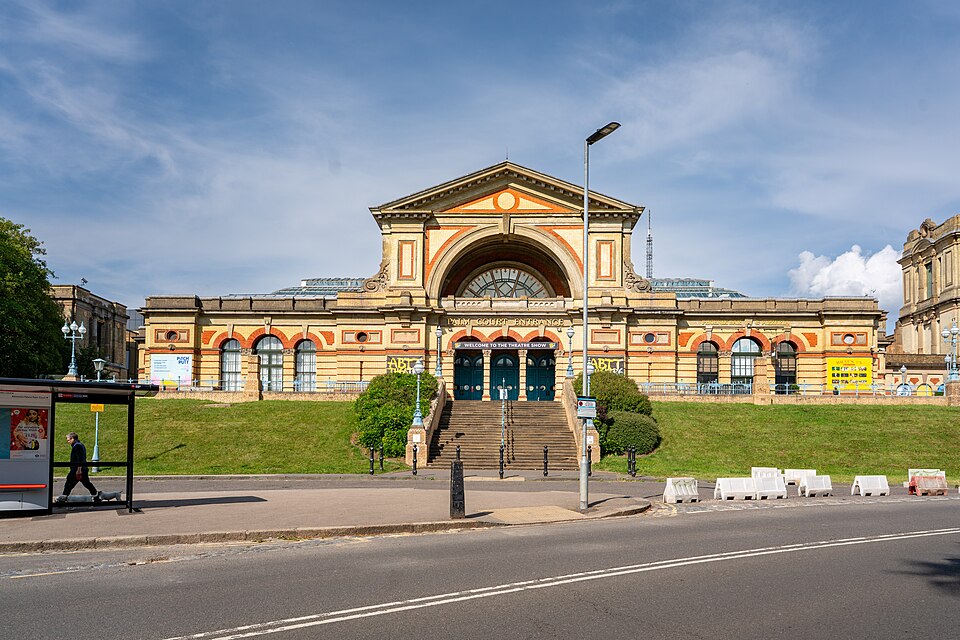

The BBC launched its television service from Alexandra Palace in north London on November 2, 19361, and Alexandra Palace describes it as the world's first regular public high-definition service. Monday, November 2, 2026, marks 90 years since that day. Here is how the launch worked and what was on the schedule.
Two systems and one building
The BBC first arrived at the Palace in 1935 and leased the entire East Wing, turning former dining rooms into two studios: Marconi-EMI in Studio A and the Baird Company in Studio B1. The contest was ultimately won by Marconi-EMI's 405-line system1.
John Logie Baird had demonstrated television to members of the Royal Institution on January 26, 1926, sending images of a ventriloquist's doll between rooms in his Soho laboratory2. His early service used 30 lines, which produced a low quality image on a small screen2. A television committee report dated January 1935 recommended replacing it with high definition, using a minimum of 240 lines, and suggested trialling both the electro-mechanical system descended from Baird's work and an all-electrical system from Marconi-EMI2. Isaac Shoenberg, who headed the EMI research laboratories, chose to pursue an even higher 405 lines2.
The site had a height advantage. Alexandra Palace sits on a hill, and with an 80-foot Victorian tower already in place, the BBC added a 220-foot mast to send the signal over London2. The two systems ran side by side, and Studio B, the Baird studio, used the Intermediate Film Technique, a film camera mounted above developing tanks that rapidly developed the footage so it could be scanned for transmission2. The Marconi-EMI Emitron cameras in Studio A were lightweight and could move around the studio, which allowed quicker cuts between cameras2.
Opening day, twice over
The opening ceremony had to be staged twice, first on the Baird 240-line system and then on the all-electronic 405-line Marconi-EMI system, with a short entertainment programme between4. A coin toss decided which went first, and the Baird Company won, with Marconi-EMI repeating the programme later that afternoon2.
The service was opened by the Postmaster-General, Major G. C. Tryon, who said it was the first time he had faced a television camera4. BBC chairman R. C. Norman told the guests that the proceedings would doubtless seem primitive in a few years but would be remembered as an historic occasion4. Tryon noted that there were nearly 8 million broadcast receiving licence holders in the British Isles at the time4. Lord Selsdon, chairman of the Television Advisory Committee, estimated that the London service area would cover Greater London, with a population of about 10 million, or roughly a radius of more than 20 miles4. He also promised that the technical standards would stay fixed for two years after the opening, so receivers would keep receiving the Alexandra Palace signal without any radical alteration4.
Leslie Mitchell presented from the Baird spotlight studio, a pitch dark room where a light was scanned across the presenter's face and picked up by two photocells2. The room was so dark that he had to memorise the opening announcement2.
Variety on the schedule
The BBC had already tested the idea on the public. During Radiolympia, the radio exhibition at Olympia in late August and early September 1936, programmes from Alexandra Palace were shown to give visitors a flavour of the new service5. Producer Cecil Madden made a 30-minute variety show with The Three Admirals singing Here's Looking at You, a song written for television, plus an orchestra, Helen McKay, a performing horse named Pogo and a dancing act5. The picture exposed one problem: Helen McKay's dress was hard to see on screen, so a large corsage was added2.
On October 8, 1936, about four weeks before the official launch, the first edition of the magazine programme Picture Page went out for test purposes and for the trade5. Joan Miller hosted from a switchboard, putting viewers through to performers who did a turn, and the first edition included the 16-year-old actress Dinah Sheridan, the suffragette Flora Drummond and a busker named John Snuggs5. Picture Page carried 1,855 items in its three-year run before the Second World War5. The schedule also had a 3pm programme on Christmas Day 1936, when B. J. Hulbert demonstrated how to carve the turkey5.
By 1938 about 30 percent of studio time at Alexandra Palace went to cabaret, variety and light entertainment, and a 1938 survey found a unanimous view among the small but growing audience that good variety and cabaret suited television5.
Leaving the studio
At first the BBC could televise only within about 500 feet of the studio control room, so cameras went into the grounds of Alexandra Palace for gardening, horse racing and a programme about farmers who brought their animals3. According to the RTS account of a talk by Norman Green, an audience survey of the 1930s found that outside broadcasts were the most popular programming3.
For the coronation of George VI in May 1937, the BBC and EMI built an outside broadcast unit of three vehicles, a mobile control room, a transmitter van and a generator vehicle, with the shots sent back to Alexandra Palace along eight miles of cable3. The more sensitive Super Emitron camera, ten times more sensitive than the original according to the RTS account, was first used in November 1937 for the Lord Mayor's Show, and Wimbledon, the Derby, boxing and motor racing followed3. The BBC also covered Neville Chamberlain's return to Heston Aerodrome from the Munich Conference in September 19383. Television stopped for the Second World War3.
What came next from the same studios
Following the launch, the Alexandra Palace studios created formats still around today, including the first television gardening programme, cookery shows and an election-night broadcast created by Grace Wyndham Goldie1. The first dedicated children's programme launched in 1946 with Muffin the Mule as its star1. The BBC news service left the Palace in 1969, and the corporation stayed on with the Open University until 19811.
Trivia
- From which London building did the BBC launch its television service on November 2, 1936? Alexandra Palace1.
- Which two companies' systems shared the building at launch? Marconi-EMI and the Baird Company1.
- Which system did the BBC ultimately adopt? Marconi-EMI's 405-line system1.
- What decided which system went first on opening day? A coin toss, which the Baird Company won2.
- What was the name of the magazine programme hosted by Joan Miller? Picture Page, first broadcast on October 8, 1936 as a test for the trade5.
Sources
- BBC at Alexandra Palace, Alexandra Palace (alexandrapalace.com). Accessed November 1, 2026.
- Opening Night of Television, Alexandra Palace online exhibit, Google Arts & Culture. Accessed November 1, 2026.
- Matthew Bell, The early days of BBC TV, Royal Television Society, November 11, 2016. Accessed November 1, 2026.
- Opening of the BBC Television Service, speeches and guest list, Terramedia. Accessed November 1, 2026.
- Jamie Medhurst, 'Here's Looking at You': Entertainment on the pre-war television service, Alexandra Palace blog. Accessed November 1, 2026.