Bob Beamon and the 1968 Long Jump That Outran the Measuring Device
Key Points
- On October 18, 1968, Bob Beamon jumped 8.90 metres, or 29 feet 2.5 inches, on his first attempt of the Olympic long jump final in Mexico City.
- The jump landed past the end of the optical measuring rail, and officials measured it with a steel tape after a long wait.
- The tailwind read 2.0 metres per second, the maximum allowable velocity for a record.
- The world record stood for almost 23 years, until Mike Powell jumped 8.95 m in Tokyo in 1991, and as of October 18, 2026, the jump remains the Olympic record.
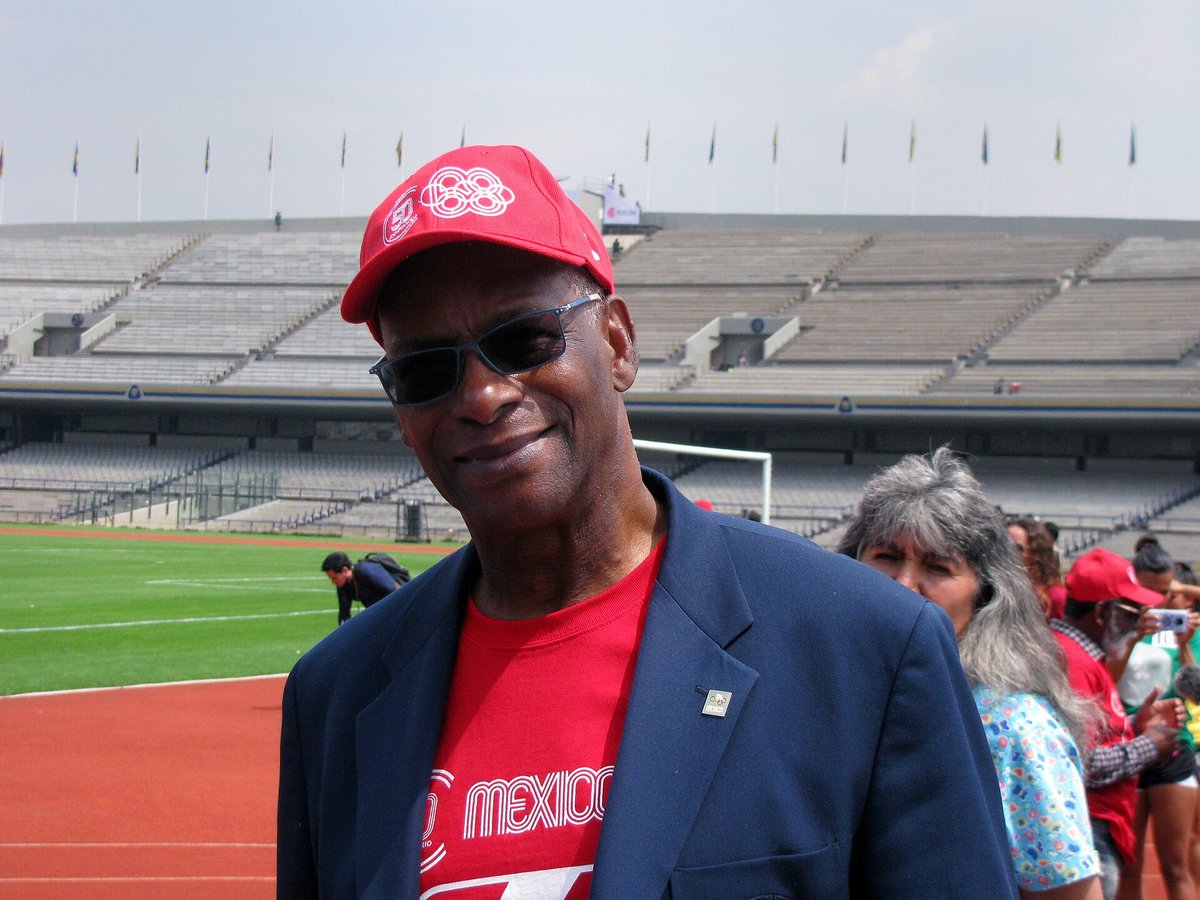

On October 18, 1968, in Mexico City, Bob Beamon ran down the long jump runway for his first attempt of the Olympic final and landed 8.90 metres, or 29 feet 2.5 inches6 away. Before that leap, the world record had been 27 feet, 4.75 inches1, shared by Igor Ter-Ovanesyan and Ralph Boston. Beamon beat it by one foot, 9.75 inches1, which works out to 55 centimetres3. Sunday, October 18, 2026, is the 58th anniversary.
Two fouls and a last chance
The jump almost never happened. Beamon fouled on his first two qualifying jumps1, and the Olympic Studies Centre notes that he almost didn't make the final2 because of those mistakes. With one chance left, he got through. Boston, his teammate and one of the two men who held the record, had been nervous about him for a while. "I'm always nervous when Beamon goes down the runway," Boston said, by Mike Fanelli's account, because "someday he might put all his great talent together in one big jump."7
Fanelli writes that the morning qualifying had been some fifteen degrees warmer7 than the later final, and that the cooler air of the later session had firmed up the tartan runway, which prompted the first three jumpers of round one to foul7. That put Beamon up fourth, still with nobody on the board.
Past the end of the rail
The optical measuring device slid off the end of the rail3 before it reached the spot where his feet had landed. In the words of the U.S. Olympic and Paralympic Museum, he had landed past the maximum distance that could be measured by the optical rail4 installed for the Games.
So the officials went low tech. The Olympic Studies Centre describes a 20-minute wait while Olympic officials found, and measured with, an old-fashioned steel tape2. Fanelli puts it longer, another 30 entire minutes7 before the judges were confident in the measurement. Fanelli reports that the Omega board first showed an unofficial 8.607, already an impossible number for the time, before the official mark went up as 8.90.
Altitude and a legal tailwind
Mexico City was a somewhat controversial selection3 as a host because of its altitude, which sits more than two kilometres above sea level3.
Then there was the wind. The gauge beside the runway read a following wind of 2.0 metres per second1, which ESPN notes was the maximum allowable velocity for a record1. Critics pointed to the wind, the runway and the thin air of Mexico City1, and Beamon's defenders answered that the other jumpers in the same final faced the same conditions.
Hands and knees
Beamon did not take it in right away. When the number came up, he fell to his hands and knees in amazement4. Fanelli quotes Boston, still working out the number aloud, "That's twenty-nine feet,"7 then "No, wait,"7 and finally "It's more than twenty-nine feet."7 Fanelli writes that doctors later called the collapse that followed a "cataplectic seizure7," a sudden loss of muscle tone brought on by strong emotion.
His rivals still had five rounds to jump. Ter-Ovanesyan said, "Compared to this jump, we are as children."1 Lynn Davies, the Welsh jumper8 who was the defending Olympic champion, put it more bluntly to Beamon, in words ESPN quotes1 as "You have destroyed this event." Beamon himself said, "I was as surprised as anybody at the distance."1
His second jump was 26 feet 4.5 inches7, and then he passed on his final four attempts7. Boston, the man who had worried about that one big jump, got up for third7.
How long it lasted
As a world record, the 8.90 stood for almost 23 years1. It fell on Aug. 30, 1991 at Tokyo1, when Mike Powell jumped 8.95 m at the Athletics World Championships5, five centimetres farther.
As an Olympic record it has never fallen. As of October 18, 2026, the U.S. Olympic and Paralympic Museum describes the leap as one that remains the Olympic record4. Guinness World Records, counting through the 2016 Rio Games, found it has never been bettered at an Olympic Games5 across a span of 12 Games, and noted that no other Olympic record set by a man or a woman has stood for so long5. At the Paris Games in August 2024, Miltiadis Tentoglou of Greece won the long jump with 8.489 metres, 42 centimetres short of the mark Beamon set at the Estadio Olímpico Universitario5 in 1968.
Trivia
Who took silver behind Beamon in the 1968 long jump?
Klaus Beer of East Germany, with 26 feet 10.5 inches7 on his second attempt.
Where did Igor Ter-Ovanesyan finish in that final?
Fourth, with 26 feet 7.75 inches7.
What was the longest Olympic long jump after 1968, as counted by Guinness through Rio 2016?
Carl Lewis's 8.72 m at the 1988 Seoul Olympics5.
By the Guinness count, how many of his 23 competitions in 1968 did Beamon win?
Twenty-two, according to Guinness World Records6.
Why did Beamon lose his scholarship at Texas-El Paso?
He took part in a boycott of a meet against Brigham Young1.
When and where was Bob Beamon born?
On August 29, 1946, in Jamaica, New York4.
What word for an outsized athletic feat did the jump add to the language?
Beamonesque4, by the U.S. Olympic and Paralympic Museum's account.
In what year did Beamon enter the U.S. Olympic and Paralympic Hall of Fame?
19834.
Sources
- Larry Schwartz, Beamon made sport's greatest leap, SportsCentury, ESPN.com. Accessed October 18, 2026.
- Olympic Studies Centre, Did you know?, OSC Newsletter No. 33, International Olympic Committee, June 2016. Accessed October 18, 2026.
- Canadian Olympic Committee, Mexico City 1968, Olympic.ca. Accessed October 18, 2026.
- U.S. Olympic and Paralympic Museum, Bob Beamon, Hall of Fame. Accessed October 18, 2026.
- Guinness World Records, Longest-standing Olympic record in athletics. Accessed October 18, 2026.
- Guinness World Records, Farthest long jump at the Olympic Games (male). Accessed October 18, 2026.
- Mike Fanelli, The 1968 Mexico Olympics Reconsidered, Day Six: Monumental Marks Manifested, RunBlogRun, January 20, 2024. Accessed October 18, 2026.
- Olympedia, Lynn Davies, athlete profile. Accessed October 18, 2026.
- World Athletics, Long Jump men, Final, Games of the XXXIII Olympiad, Paris 2024, Results. Accessed October 18, 2026.