CDC Order: DRC Attestation for US-Bound Flights, Nov. 3
Key Points
- A CDC order issued on October 22, 2026 prohibits boarding an aircraft bound for the United States, for passengers who are not otherwise exempt, unless they present a signed attestation that they have not been in the Democratic Republic of the Congo during the prior 21 days.
- The order takes effect at 11:59 p.m. Eastern Standard Time on November 3, 2026, and as of October 28, 2026, it is not yet in effect.
- The Federal Register notice gives two end dates, December 18, 2026 in its summary and December 17, 2026 in the order's Action section, and says the order may be amended or rescinded earlier.
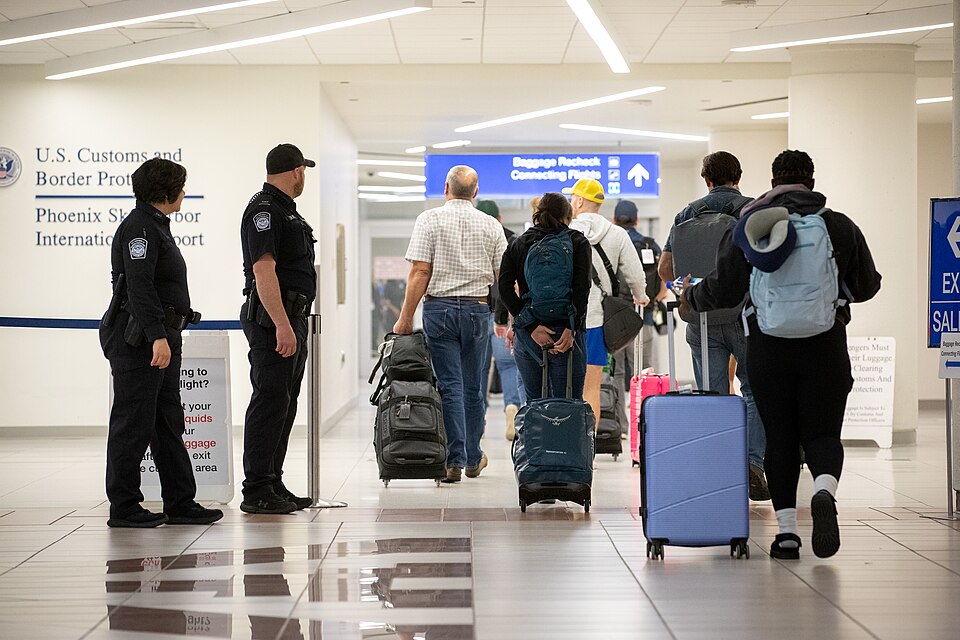

The Centers for Disease Control and Prevention has issued an order that sets a new condition for boarding a flight to the United States. The order was issued on October 22, 20261, and the Federal Register published the notice on October 27, 2026. It takes effect at 11:59 p.m. Eastern Standard Time on November 3, 20261. For air travel, the order applies to flights departing at or after that time1. As of October 28, 2026, it is not yet in effect.
What the order requires
The order prohibits the boarding of any passenger who is not otherwise exempt on any aircraft destined to the United States from a foreign country1 unless the passenger presents a signed attestation. The attestation confirms that the passenger has not been present in the Democratic Republic of the Congo (DRC) during the 21 days prior to boarding1. It can be in paper or digital format1. The order was signed by Admiral Brian Christine, MD, the Assistant Secretary for Health1 of the Department of Health and Human Services.
The requirement covers any flight arriving in the United States, regardless of whether the United States is its final destination or the flight is connecting through the United States en route to another country1. The order says it does not apply to overflights that do not land at any airport in the United States1. Under its definitions, “foreign country” means anywhere that is not a state, territory, or possession of the United States1.
A parent or other authorized individual may complete and sign the required attestation on behalf of a passenger under 181, and an authorized individual may also act for a passenger who is unable to act on their own behalf.
How the 21 days are counted
The order defines the period by calendar days. Day 0 is the day the individual departed the DRC, and Day 1 is the first full calendar day the individual is outside the DRC1. According to the order, an individual who was present in the DRC may board a flight to the United States on day 221.
The order's definition of presence is broad. It means any physical presence, including entering or traveling through the country by air (excluding overflights), land, or sea1, and it also includes connecting through an airport in the DRC, even if the passenger did not disembark the plane or leave the airport1.
What airlines must do
The order puts duties on the carrier as well as the passenger. An airline or other aircraft operator must confirm to the U.S. Government, at or before the time of boarding, that all passengers boarding or onboard the aircraft have completed and signed an attestation1, must not board a passenger who has not presented one, and must retain a copy of each passenger's completed and signed attestation for at least 42 days1 after the flight departs. The order adds that CDC encourages airlines and aircraft operators to incorporate the attestation into paperless check-in processes1.
For passengers, the order says that anyone who fails to provide the attestation or submits false or misleading information may face a delay of travel, denial of boarding, or denial of boarding on future travel1. It also says the U.S. Department of Justice may seek to prosecute individuals who knowingly and willfully submit false attestations1.
An airline that does not meet the order's requirements will not receive controlled free pratique, which is permission to enter a U.S. port of entry and disembark passengers1. The order also cites criminal penalties under 42 U.S.C. 270 and 271 and 42 CFR 71.2, with fines of up to $100,000 for individuals and $200,000 for organizations, and/or imprisonment of up to one year1. CDC cites 42 U.S.C. 264, 268, 270 and 271 and 42 CFR 71.20, 71.31(b) and 71.32(b) as its authority1.
Exemptions
The order lists two exemptions: aircraft operators transporting passengers with Ebola disease pursuant to U.S. Government authorization and in accordance with CDC guidance1, and individuals for whom the CDC has issued an exemption based on humanitarian or other important government considerations, e.g., emergency medical evacuations1. It adds that conditions may be placed on exempted individuals, such as observing precautions during travel or consenting to post-arrival monitoring.
Why CDC says it is acting
The order says the measure responds to an ongoing outbreak of Bundibugyo virus disease (BVD), a form of Ebola1, centered in eastern DRC's Ituri Province. It states that as of October 18, 2026, the DRC reports 9,455 confirmed cases and 4,561 deaths in 66 health zones across eight provinces1. On the length of the 21-day window, the order says the incubation period for BVD is typically between 2 and 21 days1.
The order says it operates in addition to, and does not supersede, modify, or replace, other CDC orders currently in effect concerning Ebola disease caused by the Bundibugyo virus1. Separately, CDC's Travel Health Notices page, as of October 28, 2026, lists a Level 4, Avoid All Travel, notice for Ituri and Nord-Kivu provinces2 in the DRC (unless traveling for humanitarian aid or emergency response) and a Level 3, Reconsider Nonessential Travel, notice for Haut-Uélé and Tshopo provinces2.
Two end dates in one notice
The Federal Register notice is not consistent about when the order ends. Its summary says the order shall remain in effect through 11:59 p.m. EST on December 18, 20261. The order's own Action section says it remains in effect until rescinded or modified based on specific public health or other considerations, or until December 17, 2026, whichever occurs first1. The notice also says the order is effective for a period of 45 days1 and may be amended or rescinded prior to that time1, and that any amendment or extension will be based on current outbreak metrics. As of October 28, 2026, the notice itself gives both dates.
Trivia
- How long must an airline keep each passenger's completed attestation? At least 42 days after the passenger's flight departs1 for the United States from a foreign country.
- On which day after leaving the DRC may a passenger board a US-bound flight, by the order's count? Day 221. Day 0 is the day of departure from the DRC.
- Does the order apply to a flight that crosses US airspace without landing? No. The order says it does not apply to overflights that do not land at any airport in the United States1.
- Which official signed the order, and on what date? Admiral Brian Christine, MD, the Assistant Secretary for Health1, on October 22, 2026.
- Who may complete the attestation for a passenger under 18? A parent or other authorized individual1.
Sources
- “Requirement for Attestation for All Airline or Other Aircraft Passengers Arriving in the United States From Any Foreign Country and Controlled Free Pratique for Airlines Confirming That Such Passengers Have Not Been in the Democratic Republic of the Congo in the Past 21 Days”, Notice of Agency Order, Centers for Disease Control and Prevention, Federal Register, October 27, 2026 (91 FR 67582). Accessed October 28, 2026.
- “Travel Health Notices”, Travelers’ Health, Centers for Disease Control and Prevention. Accessed October 28, 2026.