Lady Chatterley Trial Verdict at the Old Bailey, 66 Years On
Key Points
- A jury of nine men and three women at the Old Bailey found Penguin Books not guilty of publishing obscenity on November 2, 1960, over D. H. Lawrence's Lady Chatterley's Lover.
- It was the first prosecution of a work of literary merit under the Obscene Publications Act 1959, whose section 4 created a defence of public good and let experts give evidence on a work's merits.
- Prosecutor Mervyn Griffith-Jones asked the jury whether it was a book they would even wish their wife or their servants to read, and the defence called 35 witnesses.
- The jury took three hours to reach its unanimous verdict, and the Globe and Mail reported that all 200,000 copies of the 1960 edition sold out.
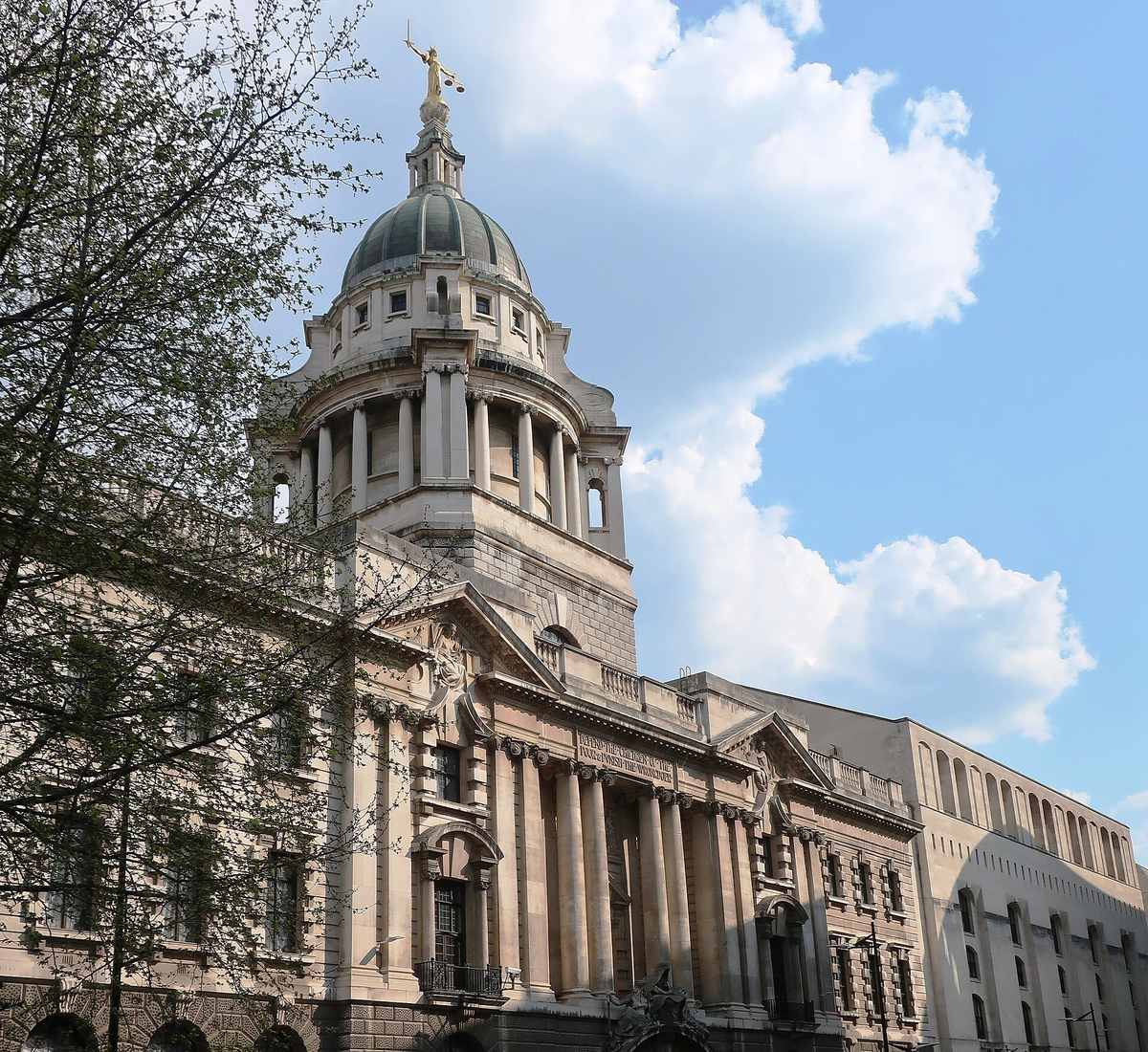

On November 2, 1960, a jury of nine men and three women in Court No. 1 of the Old Bailey in London found Penguin Books not guilty of publishing obscenity3. The book was D. H. Lawrence's Lady Chatterley's Lover, and the case, held at the Old Bailey (Central Criminal Court) from October 20 to November 2, 19605, was the first prosecution of a work of literary merit under the Obscene Publications Act 19591. Monday, November 2, 2026, is the 66th anniversary of the verdict.
A new law meets an old novel
Lawrence never saw his novel sold openly in Britain. Lady Chatterley's Lover was privately printed in Florence in 1928 and was not published in Britain until 19601, and Lawrence died in France on March 2, 19301. The authorities had pursued his work for decades, burning copies of The Rainbow, seizing his poems Pansies and raiding an exhibition of his paintings1.
The law changed in 1959. The Obscene Publications Act, dated July 29, 1959, describes itself as an Act9 to amend the law on obscene matter and, in its own words, "to provide for the protection of literature"9. It came into force on August 30, 19592. Its section 4 created a defence of public good: a person would not be convicted if publication was justified "on the ground that it is in the interests of science, literature, art or learning, or of other objects of general concern"8. The same section allowed the opinion of experts on the literary, artistic, scientific or other merits of a work to be admitted as evidence8. Under the Act, as Lois Bibbings, a professor of law at the University of Bristol, summarised it, material was obscene if its effect, taken as a whole, tended to deprave and corrupt the people likely to read it6.
Penguin published the book deliberately to test the new law1. Its decision to print 200,000 copies was made on the advice of its lawyers4, and the paperback was to sell at 3s 6d, the same price as ten cigarettes4. A summons was issued on August 25, 1960, at Bow Street Magistrates' Court2.
Six days in Court No. 1
The trial ran over six days, with Mervyn Griffith-Jones prosecuting, Gerald Gardiner defending and Mr Justice Byrne presiding2. On the first day, Griffith-Jones asked the jury: "Is it a book you would even wish your wife or your servants to read?"1 JSTOR Daily reports that members of the jury broke out in laughter, and that Gardiner used the gaffe to his advantage7.
The defence called 35 witnesses2, among them E. M. Forster, Helen Gardner, Richard Hoggart and Roy Jenkins2. John Robinson, the Bishop of Woolwich, told the court it was a book all Christians should read1, a remark that drew a rebuke from the Archbishop of Canterbury1. Gardiner told the jury that the attitude that it was all right to "publish a special edition at five or ten guineas so that people who are less well off cannot read what other people read"1 was "one which Penguin Books was formed to fight against"1.
In his summing-up, Byrne pointed out that at its low price the book would "be available for all and sundry to read"1.
The verdict
It took the jury three hours to find Penguin Books unanimously not guilty1. Contrary to tradition, the judge did not thank the jury afterwards1. The case established, in general, that a prosecution would not be brought against the written word in a work of literary merit2.
The Times and the Daily Telegraph were outraged, and some Conservative MPs called for The Guardian to be prosecuted1. Lawrence's stepdaughter, Barbara Barr, said: "I feel as if a window has been opened and a fresh air has blown right through England."1
Penguin calls the verdict almost certainly a factor in the end of the Lord Chamberlain's role as theatre censor in 19681.
Selling out after the verdict
The Globe and Mail, looking back in 2010, reported that all 200,000 copies of the 1960 edition sold out and that three million more were sold in the three months that followed3.
The judge's own copy
Mr Justice Byrne's marked copy of the Penguin edition reached the University of Bristol in October 2019, together with four handwritten pages of notes by Dorothy, Lady Byrne, and a hand sewn cloth bag5. The Byrne family auctioned it in 1993; it was sold to a private buyer in the United States in 2018 and then held under a temporary export deferral6, and Penguin reports that it sold for more than £50,000 to an overseas bidder1.
Trivia
- What number did Lady Chatterley's Lover carry in the Penguin series? Penguin Book no. 14841.
- In which Nottinghamshire town was D. H. Lawrence born? Eastwood, on September 11, 18851.
- At which war crimes trials had prosecutor Mervyn Griffith-Jones earlier represented the British? The Nuremberg trials7.
- Which peer moved in the House of Lords on December 14, 1960, to ban such publications? Lord Teviot, whose motion was voted down in a spoken vote2.
- According to JSTOR Daily, in what year was the novel declared legal in the United States after a 1929 ban? 19597.
- Where was Penguin founder Sir Allen Lane when an urgent telegram reached him in August 1960? Spain1.
- Which lawyer who defended Penguin at the trial has his papers held at the University of Bristol? Michael Rubinstein's5.
Sources
- John Self, The book that changed Britain: why the Lady Chatterley's Lover trial still matters 60 years later, Penguin, October 19, 2020. Accessed November 2, 2026.
- R v Penguin Books Ltd, Wikipedia. Accessed November 2, 2026.
- Ian Brown, The day the courts freed Lady Chatterley's Lover, The Globe and Mail, October 29, 2010. Accessed November 2, 2026.
- Sue Rabbitt Roff, How huge gamble by Lady Chatterley lawyers changed obscenity law forever, The Conversation, November 20, 2017. Accessed November 2, 2026.
- Hannah Lowery, Sixty years since Lady C: The Lady Chatterley's Lover Trial and the Penguin Book Archive, University of Bristol Special Collections blog, October 30, 2020. Accessed November 2, 2026.
- Lois Bibbings, The Chatterley Trial 60 years on: a court case that secured free expression in 1960s Britain, Inforrm's Blog, November 4, 2020 (republished from The Conversation). Accessed November 2, 2026.
- Matthew Wills, Would You Let Your Servant Read This Book?, JSTOR Daily, November 15, 2021 (updated December 3, 2025). Accessed November 2, 2026.
- Obscene Publications Act 1959, section 4, Defence of public good, as enacted, legislation.gov.uk. Accessed November 2, 2026.
- Obscene Publications Act 1959, introductory text, as enacted, legislation.gov.uk. Accessed November 2, 2026.