Chevrolet at 115: A Race Driver, an Ousted GM Founder and a Six
Key Points
- Chevrolet's own 1996 history, archived by GM's Heritage Center, says the Chevrolet Motor Car Company was incorporated on November 3, 1911, while Wikipedia's Chevrolet article gives November 8, 1911 for the incorporation.
- William C. Durant had lost control of General Motors in 1910 and started Chevrolet with the race driver Louis Chevrolet in 1911.
- The first car, the Classic Six, sold for $2,150 by GM's figure, and sources date Louis Chevrolet's resignation or sale of his stock anywhere from September 1913 to 1915.
- Durant used Chevrolet to win back control of General Motors, and HISTORY.com dates the conclusion of the deal to May 2, 1918.

Tuesday, November 3, 2026 is 115 years from the date most often given for the start of Chevrolet. Chevrolet gave that date itself. Its 1996 anniversary history, archived by GM’s Heritage Center, says the company became the “Chevrolet Motor Car Company,” incorporated on November 3, 1911 in New Jersey1, one of 270 car companies in America at the time. Not every account agrees on the day. Wikipedia’s Chevrolet article gives November 3 in its summary but, in its history section, says the Chevrolet Motor Car Company was incorporated on November 8, 19113, citing a 1986 history by Beverly Rae Kimes and Robert C. Ackerson. The Genesee County Historical Society in Flint names a Michigan company instead, the Chevrolet Motor Company of Michigan, incorporated on November 3, 1911 with headquarters in Detroit2. A timeline at chevroletbrothers.com lists the Articles of Association filed in Detroit on November 2, 191111, crediting the Archives of Michigan. The sources do agree on the month, and on Detroit as the starting point. GM’s history begins with a designer in a loft on a small street in Detroit1.
Two men who needed each other
William C. Durant was already a big name in Michigan business. The Detroit Historical Society traces him from a carriage partnership in Flint to Buick, which he took over in 1904 and turned into the nation’s leading car maker by 19085. That same year he launched General Motors as a New Jersey holding company and bought Olds, Oakland and Cadillac into it. In 1910, by the society’s account, Durant lost control of GM to the bank5. HISTORY.com says stockholders blamed Durant’s aggressive expansionism and forced him out7 of the company he had founded.
Louis Chevrolet came from the other end of the business. GM’s history calls him a Swiss race car driver and engineer1 who was racing Buicks for Durant at the time. Wikipedia’s biography says he had already started designing an engine in 1909 and built an overhead valve six-cylinder engine in his own machine shop on Grand River Boulevard in Detroit4. The Flint historical society says Durant had a famous racer to leverage from a celebrity and marketing standpoint2, and that Chevrolet came in as an early minority partner paid in stock.
In the Flint society’s account, Chevrolet brought in a fellow Frenchman, Etienne Planche, and the two spent the winter of 1910 to 19112 designing a prototype for Durant to approve. Durant set up sister companies beside it. GM’s history says the Little Motor Car Company and the Mason Motor Company were both incorporated in Flint, Michigan in 19111, Mason to make engines and Little to build bodies. The society dates the Little company’s incorporation to October 30, 1911, and Kettering University’s archive lists incorporation papers for the Little Motor Car Company (October 30, 1911)9 in its Chevrolet collection. By the society’s count, the Chevrolet incorporators were Louis Chevrolet, Bill Little and Dr. Edwin Campbell, Durant’s son-in-law. A summary on the This Day in Automotive History site says many historians believe Durant intended from the beginning6 to use the new automaker to retake General Motors.
The Classic Six
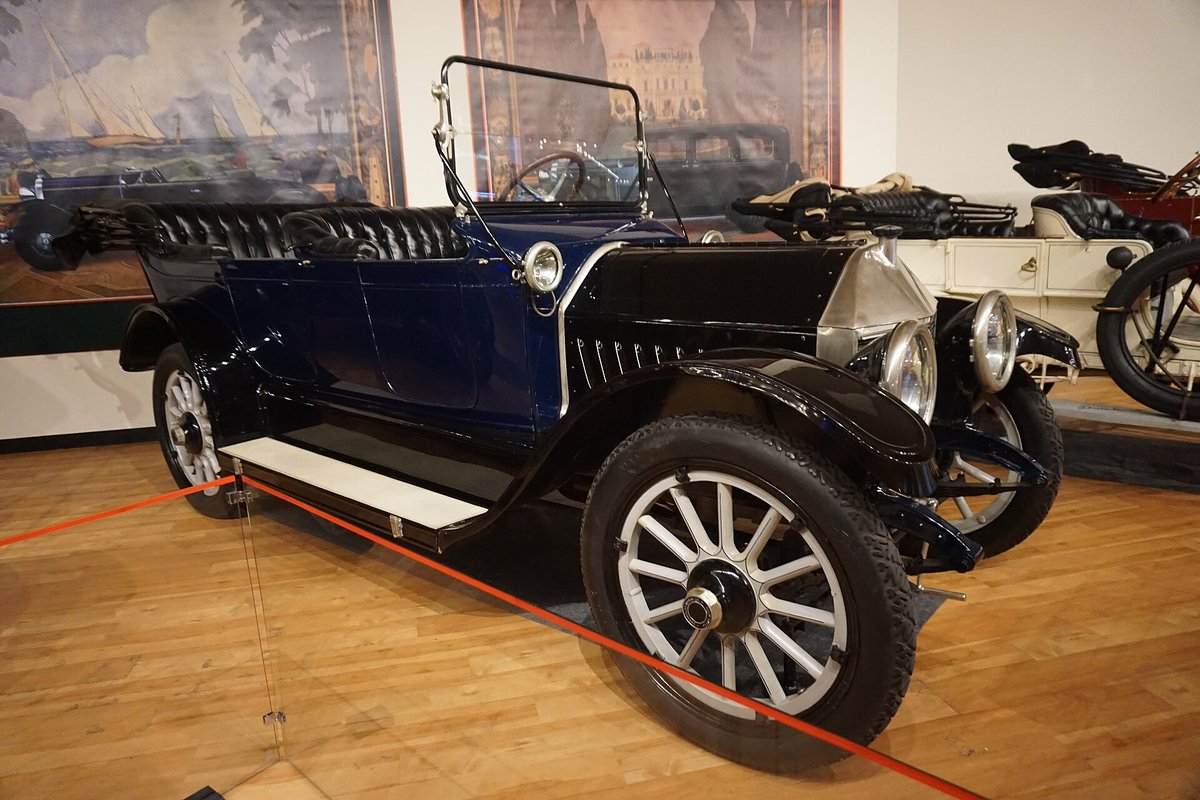
The first car was big and expensive. GM’s own history describes the Classic Six as a five-passenger touring sedan with four doors, electric lights, a folding top and a windshield, powered by a 299-cubic-inch, 6-cylinder engine1 good for 65 miles per hour. It sold for $2,150, which, GM’s book says, placed it in the rich man’s class1, and it recorded 2,999 sales in 1912. Other accounts differ on the sticker. This Day in Automotive History gives $2,500 each6 for cars rolling out of a Flint factory the year after the founding. GM says production moved from Detroit to Flint in 1913, when output more than doubled to 5,987 cars1.
One of those early cars appears in the photograph at the top of this article, a 1913 Chevrolet Classic 6 at the Sloan Museum at Courtland Center10 in Burton, Michigan, photographed in December 2018.
Why Louis Chevrolet walked away
The two founders wanted different cars. The Flint society says Durant wanted to compete with Ford in the mid price space, while Chevrolet favored a bigger, faster, more expensive car2. It adds a smaller grievance, that Durant disliked the cigarette that always hung from Chevrolet’s lip and thought he should smoke cigars. A biography on Encyclopedia.com says Chevrolet left when Durant added a cheaper car to the Chevrolet nameplate8, because he did not want to be associated with inexpensive cars and was anxious to return to racing.
The sources split on the year, too. The chevroletbrothers.com timeline, citing the Atlanta Constitution, records Louis Chevrolet’s resignation on September 16, 191311. GM’s history says only that the two parted ways early in the decade1. Wikipedia’s Chevrolet article and This Day in Automotive History put his sale of stock to Durant in 19143, the year Encyclopedia.com gives for his leaving, and Wikipedia’s own biography of him puts the sale in 19154. Whatever the year, the Encyclopedia.com biography says he sold his stock before it had appreciated in value8. The Flint society says walking away cost him many millions of dollars2.
The bowtie, and its competing origin stories
GM’s history says the bowtie appeared for the first time on Chevrolet vehicles1 in 1914. Where it came from is less settled, and GM’s own book tells two versions. In the first, which Durant himself confirmed, the shape came from wallpaper in a Paris hotel room in 1908, and he supposedly detached a small piece and folded it into his wallet1. In the second, from his wife, he spotted the design in a Sunday newspaper supplement while they were on vacation in Virginia1. Wikipedia adds two more. In one, the historian Ken Kaufmann found a slanted bowtie in an advertisement for “Coalettes”3, a coal product, in the Atlanta Constitution of November 12, 1911. The other reads it as a stylized Swiss cross, a nod to the founder’s homeland. Wikipedia also says the October 2, 1913 edition of the Washington Post seems, so far, to be the earliest known example of the symbol being used to advertise the brand3, a little ahead of GM’s 1914.
The small company that bought General Motors
GM’s history says the Royal Mail roadster at $750 and the Baby Grand touring car at $875 arrived in early 1914 and brought Chevrolet into the low-price motoring realm1. Wikipedia credits sales of the cheaper Series 490 with making Chevrolet profitable enough by 1916 for Durant to repurchase a controlling interest in General Motors3. The Detroit Historical Society likewise dates his return to 1916.
The method was a share swap. HISTORY.com says Durant offered GM stockholders five shares of Chevrolet stock for every one share of GM stock7, and dates the conclusion of the sale to May 2, 1918, after the 1916 return the Detroit Historical Society describes. Wikipedia calls the May 2, 1918 event a reverse merger3 and says Chevrolet was then merged into GM as a separate division. Durant’s second run did not last. The Detroit Historical Society says he agreed to resign in 1920 in exchange for GM president Pierre du Pont paying off his debts5.
Trivia
What was Louis Chevrolet’s hometown in Switzerland?
He was born on December 25, 1878 in La Chaux-de-Fonds4, a watchmaking center in French-speaking Switzerland.
Where did the 490 get its name?
GM’s history says it was a name taken directly from the price tag1.
Which of Louis Chevrolet’s brothers won the 1920 Indianapolis 500?
His younger brother Gaston, at the wheel of a straight eight-cylinder Frontenac8.
In what year did the first Chevrolet V8 appear?
GM’s history dates it to 1917, in the D-Series1, and says a V8 did not return to a Chevrolet until 1955.
Where did the first Chevrolet truck roll off an assembly line?
In St. Louis, in 19181, as a light delivery vehicle built on the 490 platform.
What job did Arthur Chevrolet hold for Durant?
He became Durant’s chauffeur2.
Sources
- Chevrolet 1911-1996, 85th anniversary history, General Motors Corp. (GM Heritage Center archive), December 1996, archived October 6, 2014. Accessed November 3, 2026.
- Louis Chevrolet, Genesee County Historical Society. Accessed November 3, 2026.
- Chevrolet, Wikipedia, the free encyclopedia. Accessed November 3, 2026.
- Louis Chevrolet, Wikipedia, the free encyclopedia. Accessed November 3, 2026.
- Durant, William C., Encyclopedia of Detroit, Detroit Historical Society. Accessed November 3, 2026.
- Brian Corey, November 3, 1911: Chevrolet is founded, This Day in Automotive History, November 3, 2022. Accessed November 3, 2026.
- GM buys Chevrolet, May 2, 1918, HISTORY.com Editors, A&E Television Networks, published November 13, 2009, updated May 27, 2025. Accessed November 3, 2026.
- Louis Chevrolet, Encyclopedia of World Biography, via Encyclopedia.com. Accessed November 3, 2026.
- Chevrolet, Documents, catalog number 2011.001.026, Kettering University Archives. Accessed November 3, 2026.
- File:Sloan Museum at Courtland Center December 2018 14 (1913 Chevrolet Classic 6).jpg, Wikimedia Commons, Michael Barera, December 28, 2018. Accessed November 3, 2026.
- Chevrolet Motor Company, timeline, chevroletbrothers.com. Accessed November 3, 2026.