Fantasia’s 86th Anniversary: Disney’s Stereo Gamble in 1940
Key Points
- Fantasia premiered as a roadshow at the Broadway Theatre in New York City on November 13, 1940, and its anniversary falls on Friday, November 13, 2026.
- Disney and RCA developed Fantasound for the film, which Wikipedia says made Fantasia the first commercial film released in stereo.
- The film ran at the Broadway for 49 consecutive weeks, the longest run achieved by a film at the time, but was an initial box office failure.
- In 1990 it was selected for preservation in the U.S. National Film Registry.

Fantasia premiered as a roadshow at the Broadway Theatre in New York City on November 13, 19401, so its anniversary falls on Friday, November 13, 2026. It is the third Disney animated feature film, built from eight animated segments set to classical music conducted by Leopold Stokowski1. Here is how it came together, why it sounded unlike anything in theaters, and why a film now remembered as a classic first lost money.
A Mickey Mouse short that outgrew itself
Walt Disney conceived the project in 1938, while finishing The Sorcerer’s Apprentice, which was originally planned as an elaborate Silly Symphony cartoon to revive the declining popularity of Mickey Mouse1. When rising production costs threatened to outpace what the short could earn, Disney expanded the idea into a feature-length musical compilation, with Stokowski and the music critic and composer Deems Taylor as collaborators1.
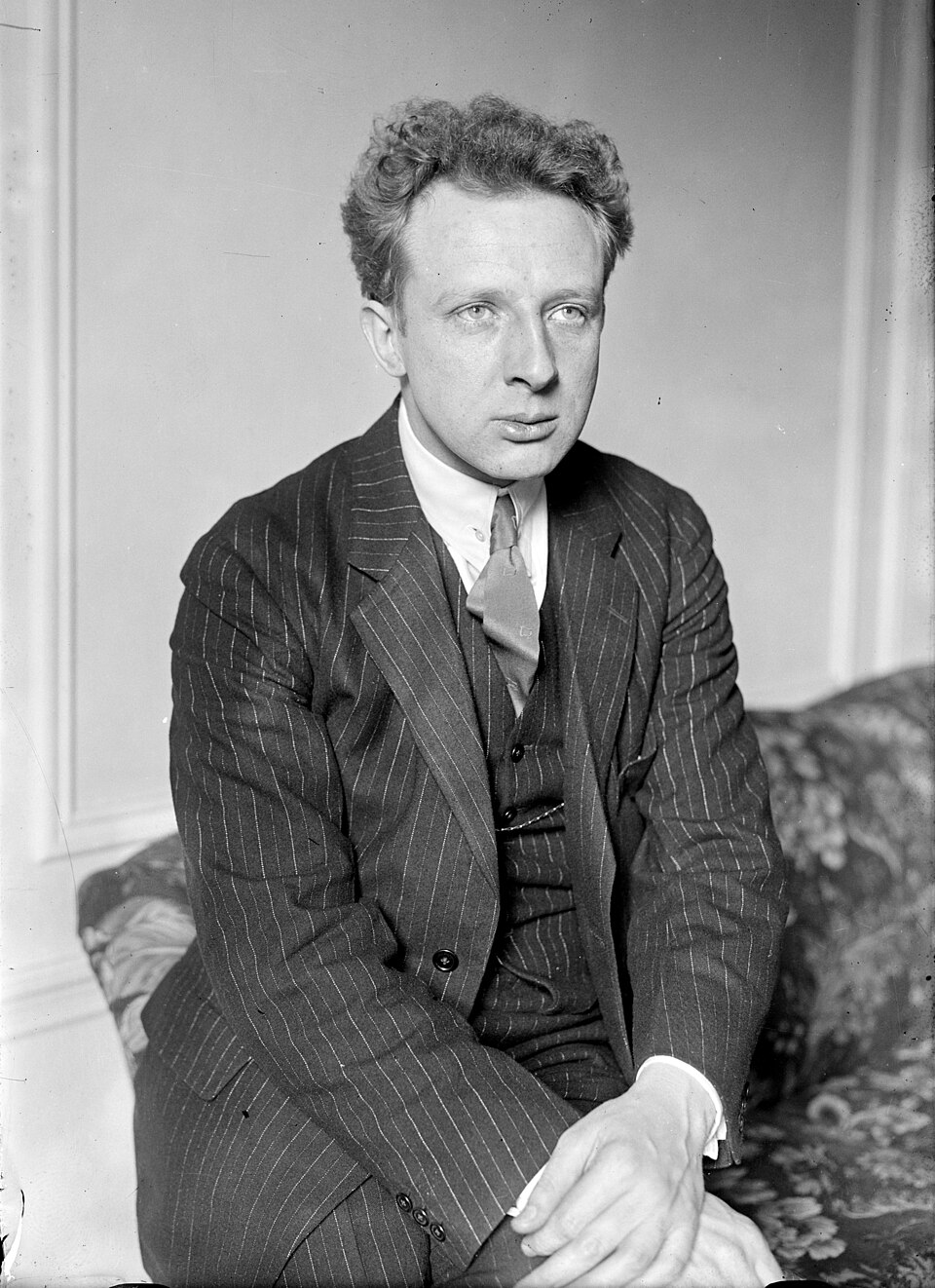
Disney happened to meet Stokowski, then the conductor of the Philadelphia Orchestra, at Chasen’s restaurant in Hollywood and talked about his plans for the short. Stokowski said he liked the piece and offered to conduct it for free1. Seven of the finished film’s eight segments are performed by the Philadelphia Orchestra, and Taylor appears in live-action scenes as the master of ceremonies who introduces each one1. The photograph above shows Stokowski in a Library of Congress image whose date is not recorded.
What was on the program
The film opens with live-action shots of an orchestra tuning up, then Taylor takes the stage. The first piece is Bach’s Toccata and Fugue in D Minor, where animated lines, shapes and clouds follow the rhythms of the music1. Tchaikovsky’s Nutcracker Suite follows, with fairies, fish, flowers, mushrooms and leaves dancing through summer, autumn and winter1. In Paul Dukas’s The Sorcerer’s Apprentice, based on Goethe’s 1797 poem, Mickey Mouse plays the young apprentice of the sorcerer Yen Sid and cannot control the magic he tries1.
Stravinsky’s The Rite of Spring depicts the planet’s formation, the first living creatures and the reign and extinction of the dinosaurs1. After an intermission, Beethoven’s Pastoral Symphony brings a mythical Greco-Roman world of centaurs, cupids and fauns1. Ponchielli’s Dance of the Hours follows, with hippos, ostriches and alligators1. The finale pairs Mussorgsky’s Night on Bald Mountain with Schubert’s Ave Maria: on Walpurgis Night the giant devil Chernabog summons spirits from their graves until the sound of an Angelus bell drives them back1.
Fantasound: stereo before stereo was common
To make the soundtrack work, Disney and RCA developed Fantasound, which Wikipedia says made Fantasia the first commercial film released in stereo and a precursor to surround sound1. The Disney brothers wanted a system that would “create the illusion that the actual symphony orchestra is playing in the theater”1. Fantasound ran two projectors at once. One held the picture film with a mono soundtrack as a backup, and the other ran a sound film mixed down from nine recorded tracks to four: three for the left, center and right stage speakers, and a control track that drove variable-gain amplifiers1. Three more speakers in the auditorium acted as surround channels1.
Almost a fifth of the film’s budget was spent on its recording techniques1, and the budget is given as $2.28 million1. That sound did not travel easily, as the next sections show.
Opening night at the Broadway Theatre
The Disneys secured a year’s lease on the Broadway Theatre, which was fully equipped with Fantasound, and installing the equipment took personnel a week working around the clock1. Proceeds from the opening night went to the British War Relief Society following the Battle of Britain1. Disney funded and managed the roadshow himself until RKO Radio Pictures took over its distribution from April 19411.
The Broadway Theatre is at 1681 Broadway, near 53rd Street, and opened in 19242. It was the same theater where Steamboat Willie had appeared 12 years earlier1, and Steamboat Willie was screened there in November 1928, when the house was called the Colony, as the first Mickey Mouse cartoon released to the public2. A Mickey Mouse short and a Mickey Mouse feature segment, a dozen years apart, in the same building.
Fantasia ran at the Broadway for 49 consecutive weeks, the longest run achieved by a film at the time, and for a total of 57 weeks until February 28, 19421. The roadshow reached a total of 13 U.S. cities1.
A critical success that lost money
Despite widespread critical acclaim, the film was an initial box office failure. Its high production costs, the steep expense of leasing theaters and installing Fantasound equipment, and the loss of the European market due to World War II left the studio unable to turn a profit1. A single Fantasound setup cost $85,000 in production and installation, and wartime demands for material limited the number of Fantasound prints to sixteen1. All but one of the Fantasound setups were dismantled and given to the war effort1.
RKO reissued the film in January 1942 at more popular prices with a mono soundtrack. Disney gave in to cuts because the studio needed income, but refused to make them himself1. Later reissues deleted, modified or restored footage1.
How its reputation changed
In 1990, Fantasia was selected for preservation in the U.S. National Film Registry by the Library of Congress as “culturally, historically, or aesthetically significant”1. The American Film Institute ranked it 58th in its 100 Years...100 Movies list and fifth on its animated film list1. On the review aggregator Rotten Tomatoes, 95 percent of 61 critics’ reviews are positive, as the Wikipedia article reported, citing Rotten Tomatoes on January 9, 20261. On February 26, 1942, the Academy gave two Honorary Awards for the film, one to Disney, William Garity, John N. Hawkins and RCA for advancing the use of sound in motion pictures, and one to Stokowski and his associates1.
Trivia
- Where did Fantasia premiere as a roadshow on November 13, 1940? The Broadway Theatre in New York City1.
- Which conductor led the music, and offered to conduct the original short for free? Leopold Stokowski1.
- What was the name of the stereo sound system Disney and RCA developed for the film? Fantasound1.
- Which Mickey Mouse cartoon appeared at the same theater 12 years earlier? Steamboat Willie1.
- In what year was Fantasia selected for the National Film Registry? 19901.
Sources
- Fantasia (1940 film), Wikipedia. Accessed November 6, 2026.
- Broadway Theatre (53rd Street), Wikipedia. Accessed November 6, 2026.