Gojira Opened in Japan in 1954 and Godzilla Never Left
Key Points
- Toho’s Godzilla opened nationwide in Japan on November 3, 1954, directed by Ishiro Honda with special effects by Eiji Tsuburaya.
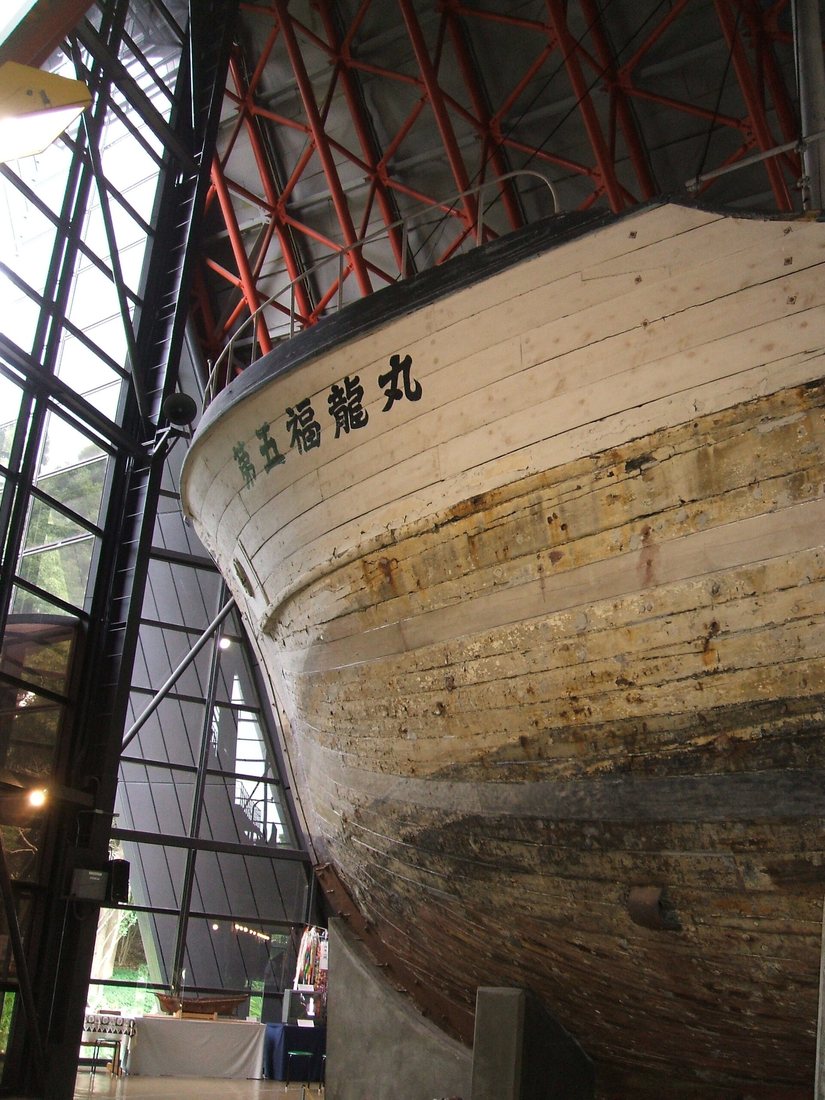
- The film followed the March 1, 1954 Castle Bravo hydrogen bomb test, whose fallout caught the tuna boat Daigo Fukuryu Maru, the Lucky Dragon No. 5.
- Akira Ifukube wrote the score and made the original roar by dragging a resin coated leather glove along the loosened strings of a double bass.
- The American version, Godzilla, King of the Monsters!, with added scenes of Raymond Burr as the reporter Steve Martin, opened in New York on April 27, 1956.

Gojira opened across Japan on November 3, 195411, and Toho International marks that date as the first time Godzilla appeared on the silver screen2. A Toho press release credits the film to the vision of director Ishiro Honda and special effects director Eiji Tsuburaya1. Audiences in Nagoya saw it first, on October 27, 1954, a week before the nationwide release11. Tuesday, November 3, 2026, is the 72nd anniversary.
A fishing boat in the fallout
On March 1, 1954, the United States tested its first deliverable hydrogen bomb, Castle Bravo, at Bikini Atoll in the Marshall Islands3. Scientists expected the device to yield about 6 megatons, and it produced 15, two and a half times the estimate3. The military had drawn a Danger Area of 57,000 square miles, and the fallout spread beyond it3.
The Daigo Fukuryu Maru, known in English as the Lucky Dragon No. 5, was a wooden tuna fishing boat10. Contemporary reports placed it about 80 miles east of Bikini, outside the Danger Area, though its exact position that morning is uncertain12. Seven minutes after the blast the crew heard what they described as a double clap of thunder, and about two hours later a rain of white dust began to fall3. The ash burned them, and back in Japan the men were diagnosed with radiation sickness3. The government buried the boat’s tuna, but contaminated fish from other boats had already been sold in markets, and once people learned the fish was radioactive, fishing in Japan nearly stopped3.
Aikichi Kuboyama, the boat’s chief radioman, died on September 23, 195412. The Japanese government said the hydrogen bomb test killed him, while the American government said a botched blood transfusion was the cause3. The United States later paid his widow and children the equivalent in yen of about $2,80012. According to the National Museum of Nuclear Science and History, producer Tomoyuki Tanaka had first wanted a monster movie in the mold of The Beast from 20,000 Fathoms, and flying over Bikini Atoll on a trip from Indonesia to Japan in 1954 inspired a monster born from nuclear testing3. The National WWII Museum notes that Honda and Tsuburaya recreated the Castle Bravo test at the start of the film4.
A director and an effects chief
Honda had been drafted and served in the Imperial Army in China4. Several directors had passed on the project, but Honda took it seriously because of Toho’s record budget4.
When Toho was formed in 1937, Tsuburaya headed its special effects department4. His work on a wartime propaganda film got him blacklisted during the American occupation, and he was not back on Toho’s staff until the occupation ended in 19524. He had planned to animate Godzilla with stop motion, but time and budget ruled it out4. Stop motion would have taken at least six months, so he built a miniature Tokyo and put an actor in a rubber suit3. Tsuburaya came to be called the “god of tokusatsu”5, a word that literally means “special filming,” the special effects genre the film started5.
The man inside the suit
Haruo Nakajima was a stunt actor in samurai films when he was approached to play Godzilla6. Born in 1929, he had made his screen debut as a fighter pilot in the 1953 film Taiheiyo no washi (Eagles of the Pacific), which Honda directed5. Tsuburaya warned him early on that the costume weighed a ton and asked whether he would be OK5. Nakajima later recalled that the rubber suit was extremely hot, especially under the glaring lights of the set6.
Nakajima died of pneumonia in August 2017 at 88, and he had been scheduled to appear at the Tokyo International Film Festival that October6.
A roar from a double bass
The original film carried a score by Akira Ifukube6, and the composer also made the sound that became the monster’s signature. Ifukube created the 1954 roar by dragging a resin coated leather glove along the loosened strings of a double bass7, as NPR described it in 2014.
The Oxygen Destroyer
In the film, Dr. Serizawa has secretly built the Oxygen Destroyer, a device that disintegrates oxygen atoms in water and suffocates and dissolves every living thing in the water4. Afraid it would start a new arms race, he destroys his notes so it can never be used again and takes his own life4. Godzilla’s fiery rampage through Tokyo also evokes the firebombing that leveled Japanese cities during the war4.
Raymond Burr and the American cut
Godzilla, King of the Monsters! opened in New York on April 27, 1956, distributed by Embassy Pictures8. Terry Morse directed new American footage, and every scene with Raymond Burr as the reporter Steve Martin was added to the Japanese material8. The American release ran 80 to 81 minutes, against roughly 96 minutes for the Japanese original8, and very little of the dialogue was dubbed into English8.
Rialto released the uncut Japanese version in American theaters in 2004, about half a century after its Japanese run9. Reviewing it, the Austin Chronicle critic Marc Savlov wrote that the 1956 version had inserted Burr at the expense of 40 minutes of the original production9.
The boat and the long tail
After its exposure, the Daigo Fukuryu Maru was rebuilt as a training vessel for the Tokyo University of Fisheries and retired from service in 196710. The boat itself is now on display in the Tokyo Metropolitan Daigo Fukuryu Maru Exhibition Hall, with a memorial to Aikichi Kuboyama, the ship’s engine and a Tuna Memorial outside10.
Tanaka produced most of the Godzilla series, from the 1954 film through Godzilla vs. Destoroyah in 199513, and by August 2024 Godzilla had starred in 38 films made in the United States and Japan4, according to the National WWII Museum.
Trivia
- According to the AFI Catalog, which two Japanese words does the name Gojira combine? Gorilla and whale8.
- Which animals did Haruo Nakajima say he watched to work out how a monster would move? An elephant and a bear; he recalled watching their feet14.
- Which earlier monster film did Tsuburaya show Nakajima to explain the new creature? King Kong5.
- Where and when was the Daigo Fukuryu Maru built, and for what kind of fishing? In Wakayama Prefecture in 1947, as a bonito fishing boat, later remodeled for deep sea tuna10.
- On what date did the Daigo Fukuryu Maru Exhibition Hall open? June 10, 197610.
- Roughly how much did the American scenes with Raymond Burr cost to shoot, and where? About $100,000, on a small rented sound stage on La Brea Avenue in Los Angeles8.
- How did the Castle Bravo yield compare with the Little Boy bomb? It was about 1,000 times larger3.
- Which New York Times critic called the 1956 version “incredibly awful”? Bosley Crowther8.
Sources
- Godzilla Day 2023 News From Toho International (Toho press release), SciFi Japan. Accessed November 2, 2026.
- The King of Monsters Rules All When Godzilla Day Returns on November 3, Licensing International, October 27, 2022. Accessed November 2, 2026.
- Gojira (1954), National Museum of Nuclear Science and History (Atomic Heritage Foundation), November 14, 2018. Accessed November 2, 2026.
- Brandon Daake, Godzilla and World War II: Long Live the King of Monsters, The National WWII Museum, August 15, 2024. Accessed November 2, 2026.
- Being Godzilla: An Interview with Nakajima Haruo, the Man Inside the Suit, Nippon.com, July 30, 2014. Accessed November 2, 2026.
- Yuri Kageyama, Haruo Nakajima, who played the original 1954 Godzilla, dies, Associated Press via KSL.com, August 8, 2017. Accessed November 2, 2026.
- NPR Staff, What’s In A Roar? Crafting Godzilla’s Iconic Sound, NPR via WBUR, May 18, 2014. Accessed November 2, 2026.
- Godzilla, King of the Monsters! (1956), AFI Catalog of Feature Films. Accessed November 2, 2026.
- Marc Savlov, Godzilla, Austin Chronicle, July 23, 2004. Accessed November 2, 2026.
- Daigo Fukuryu Maru Exhibition Hall, Tokyo Metropolitan Government, official English site. Accessed November 2, 2026.
- Wikipedia, Godzilla (1954 film). Accessed November 2, 2026.
- Wikipedia, Daigo Fukuryū Maru. Accessed November 2, 2026.
- Wikipedia, Tomoyuki Tanaka. Accessed November 2, 2026.
- Merrit Kennedy, Haruo Nakajima, The Original Godzilla Actor, Dies, NPR via KPBS, August 8, 2017. Accessed November 2, 2026.