Holland Tunnel Opened November 13, 1927: Ferries to 84 Fans
Key Points
- The Port Authority dates the Holland Tunnel's opening to November 13, 1927, which makes November 13, 2026 the 99th anniversary.
- Before the tunnel, the National Park Service says all vehicles crossed the Hudson River between New York City and New Jersey by ferry, with waits of hours at the worst times.
- The tunnel's ventilation system, with 84 fans in four buildings, was the first of its kind for a vehicular tunnel, according to the Port Authority.
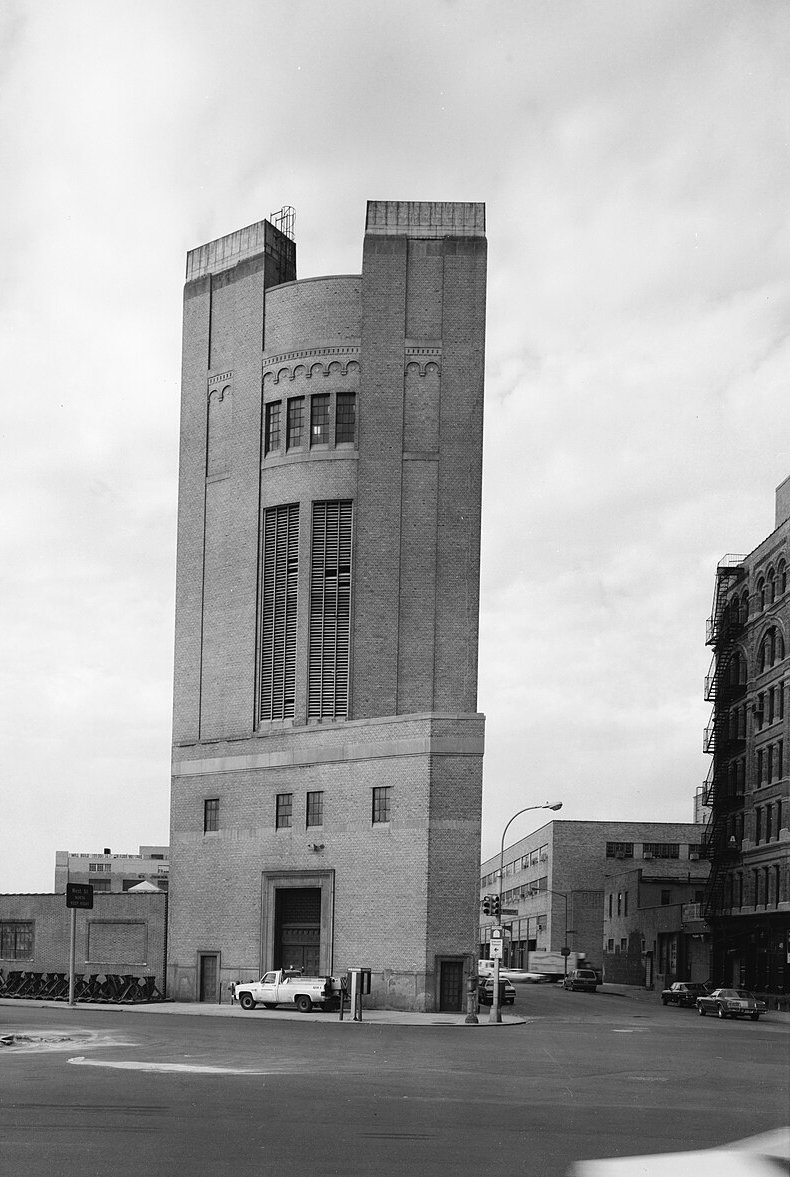

The Port Authority of New York and New Jersey dates the opening of the Holland Tunnel to November 13, 19273, which makes Friday, November 13, 2026 the 99th anniversary. Before it opened, every car, truck and horse-drawn wagon that crossed the Hudson River between New York City and New Jersey went by ferry2. The tunnel replaced that wait with a drive under the river, and it is still a working route.
The ferry problem
The National Park Service landmark nomination for the tunnel says a survey run between 1913 and 1919 found that at least three out of four vehicles ferried between New York City and New Jersey crossed near the proposed tunnel site. In 1913, 90 percent of those vehicles were horse-drawn, but by 1919 the rise in automobiles had cut horse-drawn traffic on those ferries by half2. The greatest single complaint was delay: on weekends and holidays, vehicles often waited hours for a place on a boat, and tides, ice and fog added danger. In 1919, strikes by boatmen threatened to cut Manhattan off from the west2.
Charters for bridges to New Jersey had been granted as early as 1868, but no workable design appeared. On July 11, 1919, President Woodrow Wilson signed a Congressional resolution calling for a tunnel2. Construction began on October 12, 1920, on what was first called the Hudson River Vehicular Tunnel3.
The engineers and the name
Clifford M. Holland, the chief engineer, was born on March 13, 1883, and died of angina pectoris in 1924 at age 41, only days before the north tube was holed through. His assistant, Milton H. Freeman, died of pneumonia five months later, and Ole Singstad, Holland's engineer of design, completed the project2. The sources differ on the exact gap: the Port Authority blog says Holland died the day before the two halves were scheduled to connect in October 19243, while the nomination says two days. Before the opening, the tunnel was named for Holland, and the New York toll plaza for Freeman2.
The air was the hard part
The nomination calls ventilation the most challenging element. Little was known about what a tunnel full of gasoline engines needed, so the two state tunnel commissions studied it in three parts: how much exhaust vehicles produce, how much dilution makes it harmless, and what equipment could do that at a reasonable cost. The U.S. Bureau of Mines tested 101 randomly selected cars and trucks and concluded that carbon monoxide was the only asphyxial gas among the many in automobile exhaust, and tests under Dr. Yendel Henderson of Yale studied how fast the body absorbs it2.
The result was a transverse-flow system: four ventilation buildings, two on land and two in the river, with 84 fans in all. Each fresh air duct and each exhaust duct has three adjustable-speed fans, and only two are needed for maximum air movement. At full speed they can replace all the air in the tunnel every 1.5 minutes2. The American Society of Mechanical Engineers lists the fans as 42 blowing and 42 exhaust fans of 6,000 total horsepower5. The Port Authority calls the Holland the first mechanically ventilated underwater vehicular tunnel3, and the nomination says the research behind it influenced the design of every later underwater vehicular tunnel2.
Opening day
President Calvin Coolidge, on a yacht in the Potomac River, turned a gold telegraph key at 4:55 p.m. to signal the parting of two flags at the tunnel entrance3. The tunnel opened to foot traffic before cars, and more than 20,000 people walked through in the first two hours3. The original car toll was 50 cents in both directions4.
The nomination records 52,285 vehicles passing through on opening day, against an expected capacity of 46,000 a day per tube, and says the carbon monoxide level stayed below 1.6 parts per 10,000, well under the permitted 4 parts per 10,0002. The nomination dates that count to November 12, 1927, a day earlier than the Port Authority's November 13 opening date. Wikipedia, citing New York Times reports of November 13 and 14, 1927, says the ceremony and a walk through the tunnel by about 20,000 people were on Saturday, November 12, that vehicles were admitted from 12:01 a.m. on Sunday, November 13, and that the 52,285 vehicles were counted on November 131, which would explain why the sources differ. Costs differ slightly too: the Port Authority says $48.5 million3 and the nomination says $48,000,0002.
Traffic and recognition since
In 1919, Holland and his team estimated the tunnel would carry about 15 million vehicles a year, but by its 13th year it was handling more than 20 million4. The tunnel handled more than 8.74 million vehicles in 1928, its first full year, and the Port Authority blog of November 13, 2017 put the current figure at more than 34 million a year3. That is a 2017 figure, so check the Port Authority for newer counts. The Port Authority took over operation in April 19303.
The nomination says the American Society of Civil Engineers and the American Society of Mechanical Engineers named it a National Engineering Landmark in 19842, and the Interior Department designated it a National Historic Landmark in 19933. Each tube is 29.5 feet in diameter, the two run about 15 feet apart, and portal to portal the north tube is 8,558 feet long and the south tube 8,371 feet2. The north tube carries two lanes from New York to New Jersey and the south tube two lanes the other way2.
This page links no store and earns nothing from any link. For current tolls and conditions, check the Port Authority of New York and New Jersey before a trip.
Trivia
- What was the tunnel first called? The Hudson River Vehicular Tunnel3, before it was named for chief engineer Clifford M. Holland.
- How did vehicles cross the Hudson before the tunnel opened? By ferry2; the nomination says all cars, trucks and horse-drawn vehicles went that way until the late 1920s.
- How many fans does the ventilation system have? 842: 42 blowing and 42 exhaust fans in four ventilation buildings.
- Which president signaled the opening with a gold telegraph key? Calvin Coolidge3, from a yacht in the Potomac River.
- What was the original car toll? 50 cents4, charged in both directions.
Sources
- Holland Tunnel, Wikipedia, Opening section (cites The New York Times, November 13 and 14, 1927). Accessed November 6, 2026.
- Holland Tunnel, National Historic Landmark Nomination (NRHP 93001619), National Park Service, 1993. Accessed November 6, 2026.
- The Holland at 90: A Drive Down Memory Lane, Port Authority of NY & NJ PORTfolio blog, November 13, 2017. Accessed November 6, 2026.
- Throwback Thursday: 8 Things You (Probably) Didn't Know About the Holland Tunnel, Port Authority of NY & NJ PORTfolio blog, July 27, 2017. Accessed November 6, 2026.
- Holland Tunnel Ventilation System, Landmark 93, American Society of Mechanical Engineers. Accessed November 6, 2026.