Hyundai Q3: Profit Up 5.5 Percent, Volume Down 11.3 Percent
Key Points
- Hyundai Motor reported on October 29, 2026 that its third-quarter operating profit rose 5.5 percent from a year earlier to KRW 2.68 trillion, a margin of 5.9 percent.
- Revenue fell 3.4 percent from a year earlier to KRW 45.11 trillion, and global wholesale volume fell 11.3 percent from a year earlier to 920,710 units, which Hyundai attributed to fewer working days and strike-related production constraints.
- Hybrids made up 18.2 percent of sales while electric vehicle (EV) sales fell 9.2 percent from a year earlier to 69,117 units.
- Hyundai lowered its 2026 targets to 4 million wholesale units and a 5.5 to 6.5 percent operating profit margin.
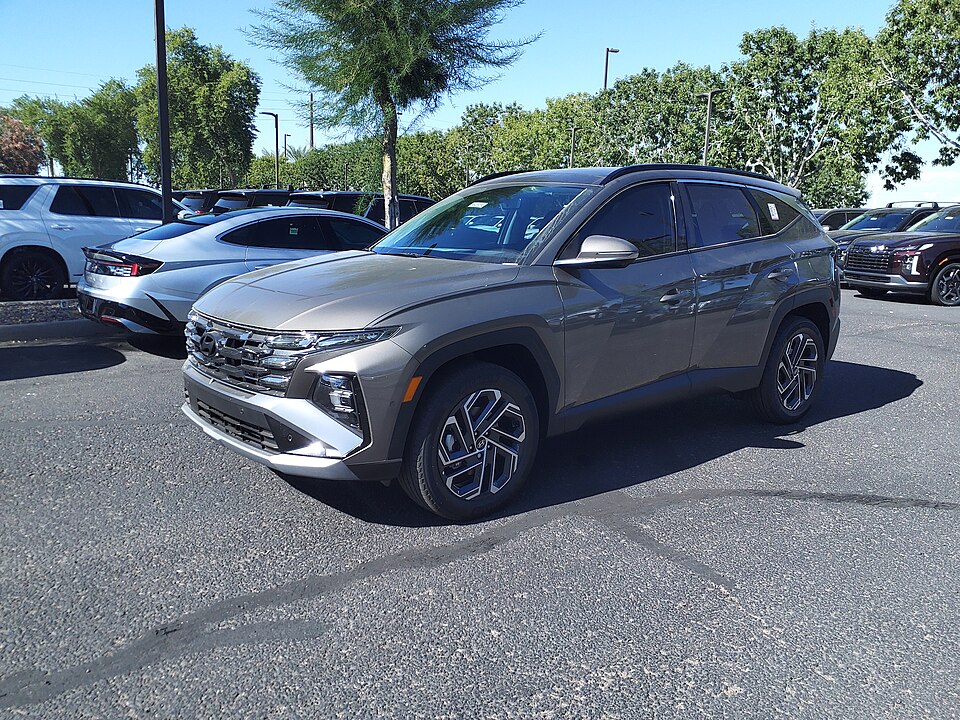

Hyundai Motor Company reported third-quarter 2026 results on Thursday, October 29, 2026. Its operating profit rose even as the number of vehicles it sold fell by more than a tenth, and the company cut its full-year targets for volume and margin. This piece goes through what Hyundai said in its own release and, separately, what The Korea Times reported the same day.
The headline figures, as Hyundai published them
Hyundai said its operating profit was KRW 2.68 trillion for the third quarter, up 5.5 percent year on year1, with an operating profit margin of 5.9 percent, up 0.5 percentage points1. The results table in the release gives the exact numbers in billions of won: operating profit of 2,677 against 2,537 a year earlier1. Revenue for the July to September period was KRW 45.11 trillion, down 3.4 percent1 (45,110 billion won against 46,721 billion). Net profit, which Hyundai notes includes non-controlling interests, was KRW 1.93 trillion, down 24.2 percent1 (1,932 billion won against 2,548 billion). The release states the figures are under K-IFRS1.
Hyundai credited the profit increase to favorable exchange rates, cost optimization efforts and improved product mix driven by hybrid electric vehicle (HEV) sales1. It said the revenue decline came as production constraints weighed on sales volume1, partly cushioned by sales of higher-value models led by hybrids.
Volume: what wholesale means and where it fell
Hyundai's vehicle sales figures are on a wholesale basis1, as a footnote in its table says. The release does not define the term further. Global wholesale volume was 920,710 units, an 11.3 percent decrease1 from 1,038,353 units1 a year earlier. Hyundai gave two reasons: fewer working days due to holidays, combined with strike-related production constraints1.
The release splits the total by market. In Korea, sales declined 27.2 percent to 131,468 units as strikes impacted domestic production1. Outside Korea, sales were 789,242 units, down 8 percent1. The two add up to the global total. Hyundai also said it maintained a market share in the 6 percent range for the sixth consecutive quarter in the U.S.1, helped by hybrid sales.
Hybrids up, electric vehicles down
The powertrain mix moved in two directions. Hybrids (HEV, which Hyundai counts separately from plug-in hybrids) reached 167,414 units, up 3.8 percent1 from a year earlier and made up 18.2 percent of total sales, up 2.7 percentage points1 from a year earlier. Electric vehicles (EV) were 69,117 units, down 9.2 percent1 from a year earlier. Counting hybrids, electric vehicles, plug-in hybrids and fuel cell vehicles together, electrified sales were 245,540 units, down 2.7 percent1 from a year earlier, or 26.7 percent of global sales, up 2.4 percentage points1 from a year earlier. Subtracting the hybrid and electric figures from that total leaves 9,009 units for plug-in hybrids and fuel cell vehicles combined, a number the release does not print and that comes from this arithmetic alone.
A share can rise while a count falls, and both happened here. Total volume dropped more than electrified volume did, so electrified vehicles took a larger slice of a smaller total. The Korea Times described the hybrid increase as about 6,000 vehicles2 from the same quarter a year earlier.
The revised 2026 guidance
Hyundai said it revised its annual guidance to reflect weaker global industry demand, production disruptions and rising raw material prices1. The wholesale target fell to 4 million units, from the previous target of 4.16 million1. The consolidated operating profit margin target moved to 5.5 to 6.5 percent from 6.3 to 7.3 percent1, which the company tied to higher fixed costs from lower production volume and higher raw material prices. The revenue growth target of 1.0 to 2.0 percent remains unchanged1. Its automotive investment plan was adjusted to KRW 16 trillion from KRW 17.8 trillion1 after the company re-examined priorities and timing.
The company described the change as a realistic update1 for disruptions beyond its control and said it does not signal a deterioration in its underlying competitiveness or earnings capability. That is Hyundai's own characterization. It also kept its quarterly dividend at KRW 2,500 per common share1.
What The Korea Times added
The Korea Times, in a report by Lee Min-hyung published October 29, 2026, said the results were reported in a regulatory filing2 and converted the operating profit to $2.05 billion2. That dollar figure is the outlet's conversion, not Hyundai's. The paper also reported that the average won-dollar exchange rate rose 2.8 percent from a year earlier to 1,423 won2 during the quarter, and that the company anticipates continued pressure from U.S. tariffs2 alongside rising raw material costs.
On the outlook, the paper reported that Hyundai said domestic production began returning to normal in September2, and quoted Lee Seung-jo, an executive vice president at Hyundai Motor, from the conference call: "Hyundai expects increased sales of the new Avante and Tucson models, as well as the Genesis GV902," he said, alongside a more favorable mix after the GV80 Hybrid launch. The paper also reported the dividend is scheduled to be paid on Dec. 302.
How to read a quarter like this
Three things separate in this release. Profit measures how much was left after costs, volume counts vehicles on Hyundai's wholesale basis (the release does not define the term), and guidance is the company's own forecast for the year, which it can and did change. Here profit rose while volume fell, because Hyundai says exchange rates, cost measures and mix helped while strikes and fewer working days held back output. The release says nothing about next quarter's results beyond the plans it names, and this article does not predict them.
Trivia
- By what percent did Hyundai say its third-quarter 2026 operating profit rose year on year? 5.5 percent1.
- How many units was Hyundai's global wholesale volume in the quarter? 920,7101.
- What was Hyundai's new full-year wholesale target, in units? 4 million1, down from 4.16 million.
- What share of Hyundai's total sales did hybrids make up in the quarter? 18.2 percent1.
- What did the Korea Times report the average won-dollar exchange rate was in the quarter? 1,423 won2.