Hyundai Recalls 37,901 Veloster N and Kona Electric Vehicles
Key Points
- Hyundai Motor America is recalling 37,901 vehicles, certain 2019 to 2022 Veloster N and 2019 to 2023 Kona Electric, over an air bag control unit software error.
- NHTSA's record says the error may improperly deactivate the air bag system and seat belt pretensioners, and the fix is a free dealer software update.
- Owner letters are expected January 1, 2027, and the affected VINs are due to become searchable on NHTSA.gov on November 6, 2026.
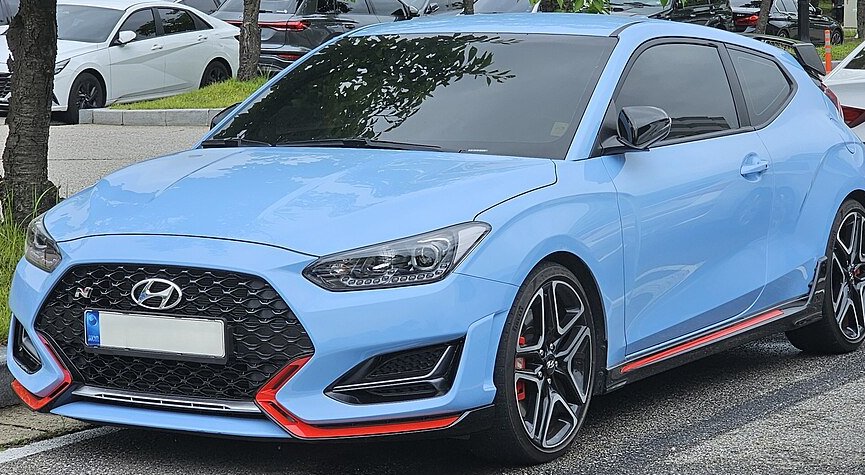

Hyundai Motor America is recalling 37,901 vehicles because a software error in the air bag control unit may improperly deactivate the air bag system and the seat belt pretensioners1. The affected vehicles are certain 2019 to 2022 Veloster N cars and 2019 to 2023 Kona Electric SUVs. NHTSA lists the campaign as 26V728 and the report received date as November 3, 20261, and the fix is a free software update at dealers.
What the record says
The facts below come from the NHTSA recall record for campaign 26V728, which the agency publishes through its recall database. The record describes the defect as a software error in the air bag control unit (ACU) that may improperly deactivate the air bag system and seat belt pretensioners1. The stated consequence is that air bags and seat belt pretensioners that do not activate in a crash increase the risk of injury1.
The record names two models. It covers the Veloster N in model years 2019 to 2022 and the Kona Electric in model years 2019 to 20231, and the potential number of units affected is 37,901 across the campaign1. The record gives one total for the campaign and does not split it by model, so this page does not either. It also does not say how many of the vehicles actually have the error, and it does not mention any crash or injury linked to it.
The remedy and the dates
Dealers will update the ACU software free of charge1. Owner notification letters are expected to be mailed January 1, 20271, so the mailing is about two months after the November 3 report date. Hyundai’s number for the recall is 3111. The vehicle identification numbers involved are due to become searchable on NHTSA.gov on November 6, 20261, the date of this article, which is the step that lets an owner look up a specific car.
The same record carries two flags worth reading. It marks the campaign as not an over-the-air update1, so the update is a dealer visit rather than a download to the car. It also has its park-it and park-outside fields set to false1. Those are statements about the record, not about the risk to any one car.
What an air bag control unit does
An air bag is not triggered by the bag itself. During a crash, the vehicle’s crash sensors give the electronic controller unit information including collision type, angle and severity, and its algorithm decides whether the crash meets the criteria for deployment and fires one or more air bag modules2. The control unit monitors several sensors, among them accelerometers, impact sensors, side pressure sensors, wheel speed sensors and seat occupancy sensors2. Depending on the result of its calculations, it may also deploy seat belt pre-tensioners, which use hot gas to drive a piston that pulls the slack out of the belt2.
That is why a software fault in the unit matters more than its size suggests. The decision to deploy an air bag in a frontal crash is typically made within 15 to 30 milliseconds after the crash begins, and the bags are fully inflated within about 60 to 80 milliseconds of first contact2. The record’s description is that the software may deactivate both the bags and the pretensioners, which are the two things the unit exists to trigger.
The two models
The Veloster is a compact hatchback known for an asymmetrical door layout, one large door on the driver side and two smaller doors on the passenger side3. Hyundai produced it from 2011 until 20223. The Veloster N, released in 2019, was the first N model sold in North America, with a turbocharged four-cylinder engine initially rated at 250 PS, or 275 PS with the optional Performance Package3. In July 2021, citing slow sales, Hyundai announced it would discontinue all Veloster models in the United States for 2022 except the N3.
The Kona Electric is the battery version of a subcompact crossover. It was first launched in South Korea in the first half of 2018, with a United States debut in 20194. It was offered with two battery sizes, 39.2 kilowatt-hours and 64 kilowatt-hours4. The recall range reaches from the first U.S. model year to 2023.
The model details above are background from a general reference and are not part of the recall. Only the NHTSA record decides which vehicles are included, which is why NHTSA’s VIN lookup is the place to check a specific car once the numbers go live.
A short history of the air bag
In 1967, Allen K. Breed invented a ball-in-tube crash sensor, an electromechanical device in which a steel ball held by a magnet would trigger an air bag in under 30 milliseconds2. In 1981, Mercedes-Benz introduced the air bag in West Germany as an option on its flagship S-Class (W126), with sensors that tensioned the seat belts and then deployed the bag2. The result was a system in which the belt and the bag work together, which is the arrangement this recall concerns.
Trivia
- How many vehicles does NHTSA campaign 26V728 potentially affect? 37,9011, across the Veloster N and the Kona Electric.
- What can the software error in the air bag control unit do? It may improperly deactivate the air bag system and the seat belt pretensioners1.
- On what date are the affected VINs due to become searchable on NHTSA.gov? November 6, 20261, with owner letters expected on January 1, 20271.
- Which N model was the first one Hyundai sold in North America? The Veloster N, released in 20193.
- Which carmaker introduced the air bag in West Germany in 1981, on which model? Mercedes-Benz, as an option on the S-Class (W126)2.
Sources
- Recall campaign 26V728000, Hyundai Motor America, air bag control unit software (Veloster N, Kona Electric), NHTSA recalls API, report received November 3, 2026. Accessed November 6, 2026.
- Airbag, Wikipedia. Accessed November 6, 2026.
- Hyundai Veloster, Wikipedia. Accessed November 6, 2026.
- Hyundai Kona, Wikipedia. Accessed November 6, 2026.