I Love Lucy at 75: How One Sitcom Wrote the Rules of Television
Key Points
- The sitcom starring Lucille Ball, Desi Arnaz, Vivian Vance and William Frawley premiered on the CBS television network on October 15, 1951.
- The show was made with three cameras running simultaneously in front of a studio audience, and the Television Academy credits Arnaz and the production team with pioneering that format.
- "Lucy Goes to the Hospital," the January 1953 episode in which Lucy gives birth, drew 44 million viewers, more than the television audience for Eisenhower's inauguration the following day.
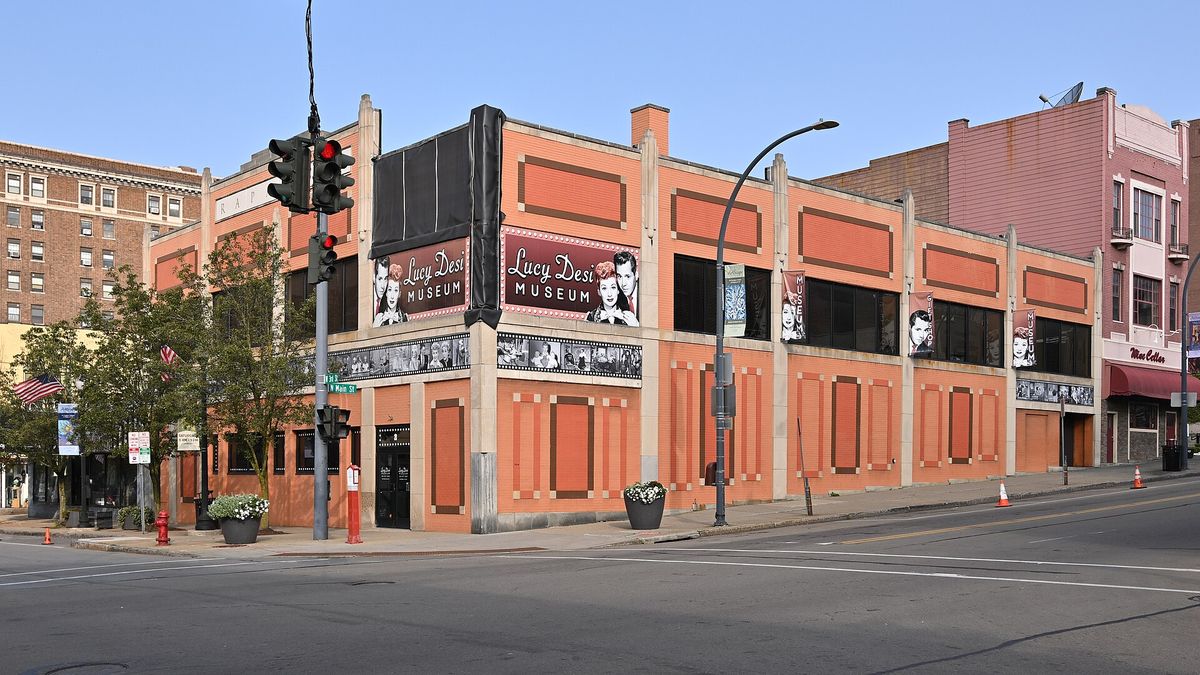

I Love Lucy premiered on the CBS television network on October 15, 19516, which makes October 15, 2026 its 75th anniversary. Its four leads were Lucille Ball, Desi Arnaz, Vivian Vance and William Frawley3, with Vance and Frawley playing the Ricardos' landlords and best friends, Ethel and Fred Mertz14. The show was, in one television historian's words, "an immediate sensation"4.
A radio star and a condition
Before television, Ball spent three years on a CBS radio comedy, "My Favorite Husband," opposite Richard Denning4. When CBS asked her to move to TV, she agreed on one condition: her real husband, Desi Arnaz, would play her TV husband4. The network and prospective sponsors "balked at the casting of Arnaz"4, so to prove the pairing worked, "Ball and Arnaz created a nightclub act and toured during the summer of 1950"4. CBS then agreed to pay for a pilot.
The next fight was over where and how to make the show. CBS and the sponsor "insisted that the program be broadcast live from New York"4. Ball and Arnaz wanted to stay in Hollywood and to "ensure the long-term value of their series by capturing it on film"4. The network gave in, but asked the couple to pay the additional cost of production4 and to accept a reduced fee for themselves. In exchange, "Desilu was given one-hundred percent ownership of the series"4, "a provision that quickly turned Ball and Arnaz into the first millionaire television stars"4.
Three cameras and a live audience
Arnaz "recruited famed cinematographer Karl Freund"4. The show was made with "three cameras running simultaneously in front of a studio audience"4, and Freund came up with "a system for lighting the set from above"4, since the lights could not be changed in the middle of a performance. American Cinematographer's report on the show describes the rig: "The show is photographed on 35mm film with three Mitchell BNC cameras mounted on dollies"5, and "All three cameras shoot the action simultaneously."5 Desilu was "turning out 22 minutes of TV program film in 60 minutes of actual shooting time."5
The magazine called the studio audience "an important adjunct to the show"5, and Freund put the case for film plainly: "Putting a show on film, you can plan and cut, which you can't do with a live show."5 The Television Academy now credits Arnaz and the production team with having "pioneered the use of the three-camera filming format before a live studio audience"1, a production standard that still influences television comedies1.
Owning the film, inventing the rerun
The Television Academy says the couple took a substantial pay cut in exchange for full ownership of the show's negatives1, a choice that let them replay episodes and amounted to "singlehandedly inventing television syndication and the blueprint for residuals"1. The series "earned over $1 million a year in reruns by the mid-1950s"4. Desilu's expansion began with "an investment of $5,000 in 1951"4, and the show's success made the company "one of the most prolific and influential television production companies of the 1950s"4.
The pregnancy nobody could name
When Ball became pregnant, the pregnancy went into the story. CBS and its sponsor, Philip Morris, "were hesitant to portray pregnancy on television"12, and the word itself was off limits; the writers used euphemisms like "expecting" and "with child"12. One episode title borrowed the French word instead: "Lucy is Enceinte"12.
The payoff came in January 1953. "Lucy Goes to the Hospital"1, the episode in which Lucy gives birth, drew 44 million viewers, more than the television audience for President Dwight D. Eisenhower's inauguration the following day1. On the same day, Ball gave birth in real life to her son, Desi Arnaz Jr.11.
The scenes everyone remembers
The National Comedy Center and the Lucy Desi Museum counted "Lucy Does a TV Commercial" (the Vitameatavegamin episode)6, "Job Switching" (the chocolate factory episode)6 and "Lucy's Italian Movie" (the grape stomping episode)6 among the fan favorites in 2021, and noted that the chocolate factory scene "was named the funniest scene in TV history in 2013"6.
A ratings run that held to the end
I Love Lucy was "the first sitcom to top the Nielsen charts"1, the Television Academy says. It "spent four of its six prime-time seasons as the highest-rated series on television"4 "and never finished lower than third place"4. "When it ceased production as a weekly series in 1957, I Love Lucy was still the number one series in the country"4.
During its original run the series was nominated for 20 Emmy Awards1, by the Television Academy's count, winning two as best situation comedy, with Arnaz accepting as executive producer1. Ball won two Emmys of her own1 for the show.
How the 75th is being marked
On August 25, 2026, the Television Academy named I Love Lucy the first series honored with its newly created Legacy Award1, given to a program that has "made a profound and generational impact on audiences"1. Cris Abrego, chair of the Academy, said the show's "creative ambition, technical innovation and groundbreaking approach to the business of television established a blueprint that continues to influence our industry 75 years later."1 The award was presented2 on night two of the 78th Emmy Awards, September 6, 2026, at the Peacock Theater at L.A. LIVE in Los Angeles. Earlier, on August 14, 202615, the Academy's Televerse event held an "I Love Lucy 75th Anniversary Script Reading & Conversation"13, starring Constance Zimmer as Lucy Ricardo, Wilson Cruz as Ricky Ricardo and Justina Machado as Ethel Mertz13.
In Jamestown, New York, Lucille Ball's hometown6, the National Comedy Center set aside "We Love Lucy" celebration weeks starting October 5 and October 12, 20267 for group tours, with a new 75th Anniversary I Love Lucy exhibit7. The Lucy Desi Museum, which shows "exact re-creations of the I Love Lucy sets"8, is billing the year as "Celebrating Lucy, Desi, and 75 Years of I Love Lucy"8. On television, MeTV ran a marathon on Sunday, October 4, 202610, from 11 a.m. to 4 p.m. ET/PT9, with a lineup that included "Lucy Is Enceinte," "Job Switching" and "Lucy Does a TV Commercial"9.
For anyone catching up, the series is available on Paramount+ and Pluto1, as the Television Academy noted in August 2026.
Trivia
Which episode was the first one CBS broadcast?
"The Girls Want to Go to a Nightclub"6, according to the National Comedy Center.
Where was the show being filmed at the start of its run?
On Stage 2 of General Service Studios5, according to American Cinematographer.
For which film had Karl Freund already won an Academy Award?
The Good Earth4 (1937).
How much did Desilu get when it sold the rights to I Love Lucy to CBS, and when?
$4.3 million, in October 19564.
After weekly production ended, where did the Ricardos and the Mertzes turn up next?
In thirteen one-hour episodes, many of which appeared as installments of the Westinghouse Desilu Playhouse4.
Which two later TV franchises does the National Comedy Center name as Desilu productions?
Star Trek and Mission: Impossible7.
In what years did the Television Academy induct Ball into its Hall of Fame and give her its Governors Award?
1984 and 19891. Arnaz followed her into the Hall of Fame in 1991.
Which Hollywood studio did Desilu buy in January 1958, and for how much?
RKO, for $6.15 million4.
Sources
- I Love Lucy, Trailblazing 1950s Show That Set the Standard for TV Comedies, to Receive Television Academy's Inaugural Legacy Award, Television Academy, August 25, 2026. Accessed October 15, 2026.
- 78th Emmy Awards Night Two Winners Announced, Television Academy, September 6, 2026. Accessed October 15, 2026.
- I Love Lucy, Television Academy. Accessed October 15, 2026.
- Christopher Anderson, I Love Lucy, The Museum of Broadcast Communications Encyclopedia of Television, 1997, at The Interviews, Television Academy Foundation. Accessed October 15, 2026.
- Leigh Allen, Filming the I Love Lucy Show, American Cinematographer, January 1952, American Society of Cinematographers. Accessed October 15, 2026.
- National Comedy Center and Lucy Desi Museum to Mark the 70th Anniversary of I Love Lucy, National Comedy Center, October 14, 2021. Accessed October 15, 2026.
- We Love Lucy Celebration Weeks in Jamestown, NY, National Comedy Center, 2026. Accessed October 15, 2026.
- Lucille Ball Desi Arnaz Museum, Lucy Desi Museum. Accessed October 15, 2026.
- Luke Bouma, MeTV Marks 75 Years of I Love Lucy With a Special 10-Episode Block, Cord Cutters News, September 25, 2026. Accessed October 15, 2026.
- Matthew Keys, Weigel's MeTV to mark I Love Lucy anniversary with marathon, The Desk, September 25, 2026. Accessed October 15, 2026.
- Today in History: January 19, The Boston Globe, January 19, 2024. Accessed October 15, 2026.
- Luke Bouma, Today in TV History: I Love Lucy Breaks Barriers, Acknowledges Pregnancy on Television, Cord Cutters News, December 8, 2024. Accessed October 15, 2026.
- Rachel Stone, I Love Lucy Script Reading and The Shards Screening Set for Televerse 26, BroadwayWorld, August 5, 2026. Accessed October 15, 2026.
- Ray White, I Love Lucy: An American Legend, In the Muse, Library of Congress, August 5, 2011. Accessed October 15, 2026.
- Televerse 26, Day 1 Recap: Summer House, The Traitors and More, Television Academy, August 14, 2026. Accessed October 15, 2026.