Kate Smith First Sang God Bless America on the Radio in Nov. 1938
Key Points
- Irving Berlin's website says Kate Smith introduced God Bless America on her CBS radio show, The Kate Smith Hour, on November 10, 1938, which NPR calls the eve of the holiday then known as Armistice Day.
- The North Carolina Music Hall of Fame gives November 11, 1938, instead, so the debut date differs between sources.
- Berlin wrote that he composed the song at Camp Upton in 1918 for Yip, Yip, Yaphank, did not use it, and rewrote it in 1938 as a song of peace.
- Berlin took no royalties from the song, and his site says the trust has turned all income from it over to the Girl Scouts and Boy Scouts of America.
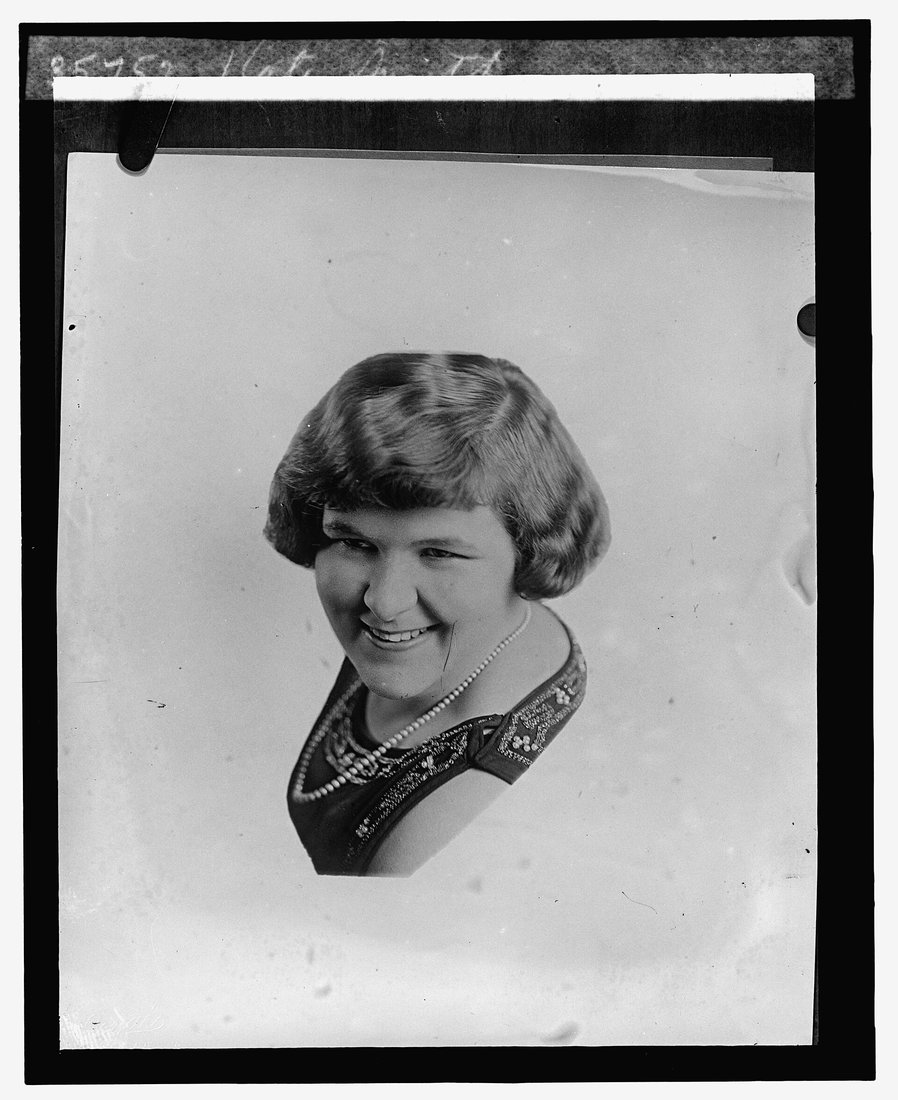

Irving Berlin's own website says Kate Smith introduced “God Bless America” on her CBS radio show, The Kate Smith Hour, on November 10, 19381. An NPR story calls that date the eve of the holiday then known as Armistice Day3. Counting from Berlin's date, Tuesday, November 10, 2026, is the song's 88th birthday on the air. The North Carolina Music Hall of Fame gives a different date, saying Smith first sang it on her radio show on November 11, 1938, to commemorate the twentieth anniversary of the end of the war7, while a Forward timeline4 and a 2014 article from the U.S. Copyright Office5 both give November 10. Radio historian Jim Ramsburg writes that Smith's CBS variety hour had been in Thursday's Top Ten for two years6, and November 10, 1938, was a Thursday.
A song from 1918
In a July 19, 1954, letter to Abel Green, the editor of Variety, Berlin wrote that he composed the song at Camp Upton in 1918 to be the finale of Yip, Yip, Yaphank1. The Copyright Office places Camp Upton in Yaphank, New York, where Berlin was serving in the U.S. Army5. Berlin remembered that the show opened on August 19 at the Century Theatre, and that its finale had the soldiers, in overseas outfits and helmets, marching through the theater to board a transport that rolled off stage1. Having soldiers sing “God Bless America” there struck him as “painting the lily,” so he did not use it1.
His memory of what replaced it shifted. The 1954 letter recalls “In the Y.M.C.A.” as the song the soldiers sang as the curtain came down, while an October 26, 1971, letter to his friend and onetime musical secretary Harry Ruby says he replaced it with “We’re On Our Way To France”1. In the same 1971 letter, Berlin wrote that the one and only time he played and sang it was at a rehearsal, and that the reaction from the soldiers was a “thunderous silence”1.
Rewritten for 1938
Berlin's site says he wrote the 1938 version on his way home from the London premiere of his film Alexander's Ragtime Band, held September 30, 19381. In the 1954 letter he said he was in London during Chamberlain's visit to Hitler and the beginning of the Munich pact, and that on the way back he recalled the old song and rewrote it, underlining the word rewrote1.
The 1918 chorus asked to guide the country “to the right with a light from above,” which Berlin said had taken on a political meaning by 1938, so it became “thru the night with a light from above”1. The old line “Make her victorious on land and foam” marked it as a war song, and Berlin wrote that in 1938 he wanted a song of peace instead1. He recalled that Ted Collins, Smith's manager, wanted a song for her to sing on her Armistice Day program1.
The broadcast
Smith sang it late in the show, and introduced it as a song “that’s never been sung before by anybody,” written especially for her, with the author named as Mr. Irving Berlin1. NPR notes that the song opened with a verse about storm clouds gathering overseas, with World War II a year away3. Ramsburg writes that the first broadcast used slightly different lyrics in both the verse and the chorus from the version that became familiar from 19406. The Library of Congress holds the first edition printers' proofs of the sheet music in its Irving Berlin Collection2.
Ramsburg also describes Smith as already the undisputed Queen of Network Radio, and credits her manager Collins with steering her career from the Broadway stage to network radio6. The North Carolina Music Hall of Fame gives her birth date as May 1, 1907, and her death as June 17, 1986, in Raleigh, and says she recorded over 2,000 sides for Decca, Victor and Columbia7.
Where the money went
Berlin took no royalties from the song3. The Forward dates the God Bless America Fund to 19404, and Berlin's site says the trust has turned all income from the song over to the Girl Scouts and Boy Scouts of America1. The Copyright Office's account says that when his publisher disagreed, Berlin set up his own music company, and that he established the fund with three trustees to receive the royalties5.
He also resisted the idea that it should become the national anthem. Berlin said of the song, “It is not a hymn or an anthem. It is just a song,” and in an August 16, 1943, letter to Dale Carnegie he wrote that the Star Spangled Banner cannot be replaced1.
A long life after the radio
Smith sang it in the 1943 film version of This Is the Army1, in a scene that, according to the Forward, also featured Ronald Reagan as Johnny Jones4. The same timeline notes the song was off the radio from January to October 1941, along with every song licensed by ASCAP, during a fight over royalty rates4.
Smithsonian magazine reports that the Philadelphia Flyers played Smith's recording from the late 1960s, that she sang it live during game six of the 1974 Stanley Cup finals, which the Flyers won against the Boston Bruins, and that a statue of her went up outside the Spectrum in 19878. In 1982, President Ronald Reagan awarded Smith the Presidential Medal of Freedom8. In April 2019 the Flyers removed the statue and dropped the recording, and the New York Yankees stopped playing her version during the seventh inning stretch, after songs she recorded in the 1930s with racist lyrics came to light8.
On September 11, 2001, a bipartisan group of members of Congress broke into an impromptu chorus of the song on the Capitol steps, according to the House Office of the Historian9.
Trivia
- What song did Berlin write and tear up on his way home from London in 1938? A chorus called “Thanks America,” which he said was very bad1.
- When was the sheet music first published? February 1939, amid a fight between Berlin and Smith over performance rights4.
- Which 1940 presidential campaign got a grant to use the song, without exclusive rights? The Republican campaign for Wendell Willkie1.
- What did the Yankees switch to in 2019 after dropping Smith's recording? A keyboard version of the song8.
- On which TV show did Berlin sing it for his 80th birthday tribute in 1968? The Ed Sullivan Show1.
- Who sang it with striking Leviton workers at a union rally in February 1941? Eleanor Roosevelt4.
- By 2014, how much had the song given to scouting, according to the Copyright Office? $10 million5.
- What was Kate Smith's radio theme song? “When the Moon Comes Over the Mountain,” which she co-wrote with Harry Woods and Howard Johnson7.
Sources
- God Bless America, Behind the Songs, Irving Berlin, official website of The Irving Berlin Music Company, with excerpts from The Complete Lyrics of Irving Berlin, edited by Robert Kimball and Linda Emmet, 2001. Accessed November 10, 2026.
- Cait Miller, Sheet Music of the Week: God Bless America on Veterans Day, In The Muse, Library of Congress, November 10, 2011. Accessed November 10, 2026.
- NPR Staff, From Peace To Patriotism: The Shifting Identity Of God Bless America, NPR, September 3, 2013, republished by KCUR. Accessed November 10, 2026.
- Eileen Reynolds, A God Bless America Timeline, The Forward, June 27, 2013. Accessed November 10, 2026.
- Judith Nierman, Irving Berlin Gives God Bless America Royalties to Scouting, Copyright Notices, U.S. Copyright Office, August 2014. Accessed November 10, 2026.
- Jim Ramsburg, Kate's Great Song, Gold Time Radio, 2016, hosted by World Radio History. Accessed November 10, 2026.
- Kate Smith, 2016 Inductees, North Carolina Music Hall of Fame. Accessed November 10, 2026.
- Brigit Katz, Philadelphia Flyers Remove Statue of Singer Kate Smith Amid Allegations of Racism, Smithsonian magazine, April 24, 2019. Accessed November 10, 2026.
- Whereas: Stories from the People's House, September 11 educator edition, Office of the Historian, U.S. House of Representatives, September 2021. Accessed November 10, 2026.