Monopoly Turns 91, From Lizzie Magie to Parker Brothers
Key Points
- Parker Brothers began marketing Monopoly on November 5, 1935, after rejecting Charles Darrow in a letter dated October 19, 1934.
- The game grew out of Lizzie Magie’s Landlord’s Game, patented on January 5, 1904, to illustrate the teachings of Henry George.
- Charles Todd taught the Atlantic City version to Esther Darrow, the wife of Charles Darrow, and Todd’s misspelled Marvin Gardens stayed in the Darrow sets.
- Magie sold her later patent to Parker Brothers in 1935 for $500.
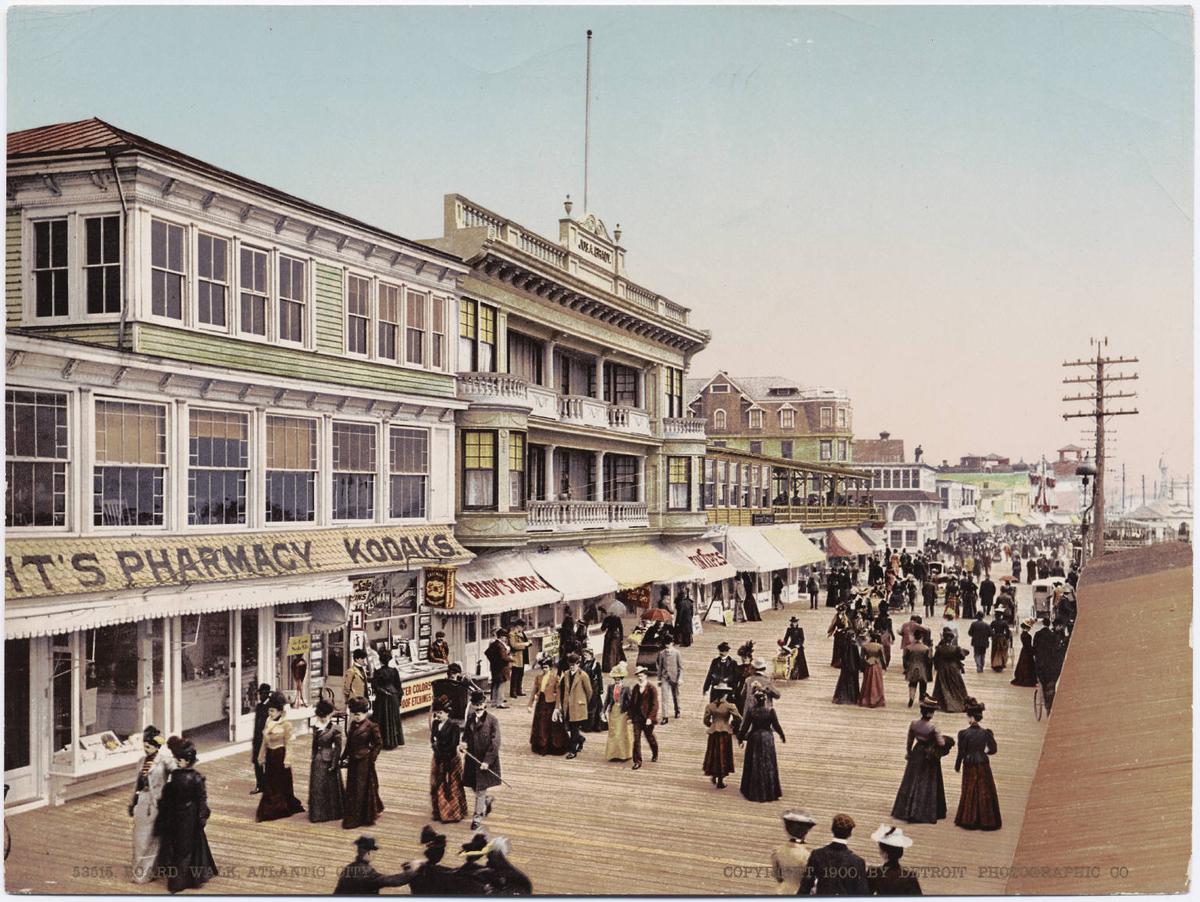

Parker Brothers began marketing Monopoly on November 5, 19351, so Thursday, November 5, 2026, is the game’s 91st anniversary. TIME, marking the date in 2014, wrote that the company took the game on reluctantly and still believed it was a fad that would soon fade8. The Strong National Museum of Play says Monopoly began life as The Landlord’s Game in 19045.
A game with a lesson
Lizzie Magie, born in Macomb, Illinois, in 1866, designed her game to illustrate the teachings of the progressive era economist Henry George4. She was granted U.S. Patent 748,626 on January 5, 190410, and the museum says she devised it to point out the social pitfalls of unequal wealth5.
Her set included rules for two different games, one against monopolies and one for them, and the first was later called Prosperity3. In 1906 Magie and fellow Georgists formed the Economic Game Company in New York to publish it3. The Strong notes that they greedily collected huge piles of money and property and delighted in opponents’ financial troubles5.
Passed from hand to hand
A shortened version that dropped the second round of play, the round built on a single land value tax, became common in the 1910s and was called Auction Monopoly2. The game circulated informally at first, and along the way players picked up the habit of building houses and hotels to raise rents, with a monopoly of properties allowing very steep ones5.
Ruth Hoskins, a Quaker teacher, learned the game in Indianapolis and later made a board with Atlantic City street names and railroads2. The Atlantic City players brought back Magie’s original rule of buying properties at their listed price instead of auctioning them, because Quakers did not believe in auctions2. Those property names were familiar to anyone who lived in Atlantic City, New Jersey5.
That Atlantic City version was taught to Charles Todd, who taught it to Esther Darrow, the wife of Charles Darrow2. Todd misspelled one property as Marvin Gardens, and the mistake stayed in the Darrow sets2. The real Marven Gardens is a neighborhood in Margate City, about two miles south of Atlantic City, and its name blends Margate City and Ventnor City7.
Darrow’s oilcloth boards
Darrow, born in Philadelphia in 1889, was a heating sales engineer who lost his job after the stock market crash of 19296. He drew his first boards with a drafting pen on round pieces of oilcloth, and his wife and son colored the spaces and made the title deeds and cards2. He later hired a printing company, Patterson and White, to print the property spaces, and he received a copyright on the game in 19332.
One of those handmade sets still exists. In December 2010 the Rochester Business Journal reported that The Strong had bought a circular oilcloth set Darrow made around 1933, called the oldest known version of Monopoly, at a Sotheby’s auction of the Forbes toy collection9.
A rejection, then a deal
Parker Brothers sent Darrow a rejection letter dated October 19, 19342. In TIME’s telling, the game seemed too long, too complicated and too niche8. Darrow went ahead anyway, producing 5,000 copies at his own expense and selling them through a Philadelphia department store, according to The Strong5. The Lemelson-MIT Program says Parker Brothers rejected Darrow's approach in 1934, then changed its mind after hearing about the massive Monopoly orders of the 1934 Christmas season, and bought the rights to the game in return for royalties11.
Parker Brothers heard about those strong sales in Philadelphia during the 1934 Christmas season, and its president, Robert Barton, set up a new meeting with Darrow in New York City2. In March 1935 the company bought Darrow’s game, helped him take out a patent on it and bought his remaining inventory2.
Buying the rest of the family tree
Parker Brothers went on to buy Magie’s 1924 patent and the copyrights of other commercial variants2. Barton also bought the rights to Finance, a game Daniel Layman had sold since 1932, from Knapp Electric later in 19352.
Magie sold her later patent to Parker Brothers in 1935 for $5003. In January 1936 a Washington newspaper ran an interview in which she criticized Parker Brothers. The company agreed to publish two more of her games but kept crediting Darrow as the inventor of Monopoly4.
A Depression best seller
At the height of the Great Depression, Monopoly was the best selling game in the country5. Parker Brothers started licensing it for sale outside the United States in 19361, and a 1937 Time report estimated the game was in its sixth million and selling faster than ever2.
TIME wrote in 2014 that sales made Darrow rich enough to quit the heating trade and take up growing orchids8. The same article put sales at more than 275 million games since 19358.
The credit question
Darrow was known as the inventor of Monopoly until Ralph Anspach, creator of the Anti-Monopoly game, discovered Magie’s patents4. Anspach was an economics professor, and starting in 1974 Parker Brothers and its then parent, General Mills, tried to suppress his game; the case was finally settled in 19852.
Trivia
- Which character first appeared on the Chance and Community Chest cards in 1936? Rich Uncle Pennybags, the Monopoly mascot5.
- In what year was Monopoly inducted into the National Toy Hall of Fame? 19985.
- Under what title was The Landlord’s Game first published in the United Kingdom in 1913? Brer Fox an’ Brer Rabbit, from the Newbie Game Company3.
- What number did the U.S. Patent Office give Magie’s second patent, issued September 23, 1924? 1,509,3123.
- In what year did Parker Brothers formally apologize for the Marvin Gardens misspelling? 19957.
- Where did Atlantic City place a plaque honoring Darrow in 1970? On the Boardwalk, near Park Place6.
- Whom did Lizzie Magie marry in 1910, at age 44? Albert Wallace Phillips4.
- Which classic token did a 2022 Hasbro fan vote bring back, replacing the T. rex? The thimble1.
Sources
- Monopoly (game), Wikipedia. Accessed November 4, 2026.
- History of the board game Monopoly, Wikipedia. Accessed November 4, 2026.
- The Landlord’s Game, Wikipedia. Accessed November 4, 2026.
- Lizzie Magie, Wikipedia. Accessed November 4, 2026.
- Monopoly, National Toy Hall of Fame, The Strong National Museum of Play. Accessed November 4, 2026.
- Charles Darrow, Wikipedia. Accessed November 4, 2026.
- Marven Gardens, Wikipedia. Accessed November 4, 2026.
- Jennifer Latson, The Most Popular Game in History Almost Didn’t Pass Go, TIME, November 5, 2014. Accessed November 4, 2026.
- Nate Dougherty, The Strong acquires oldest known Monopoly, Rochester Business Journal, December 21, 2010. Accessed November 4, 2026.
- Game-board, U.S. Patent 748,626, Lizzie J. Magie, January 5, 1904, Google Patents. Accessed November 6, 2026.
- Charles Darrow, Lemelson-MIT Program, Massachusetts Institute of Technology. Accessed November 6, 2026.