Monster Mash: the Halloween No. 1 of 1962
Key Points
- "Monster Mash" by Bobby "Boris" Pickett and the Crypt-Kickers was No. 1 on the Hot 100 for the charts dated October 20 and October 27, 1962.
- Pickett imitated Boris Karloff, and producer Gary Paxton made the cauldron, coffin and chain sounds with a straw, a rusty nail and chains on a floor.
- The song re-entered the Hot 100 in 1970, 1973 and 2021, and Billboard estimated in 2023 that it could earn about $1 million a year.
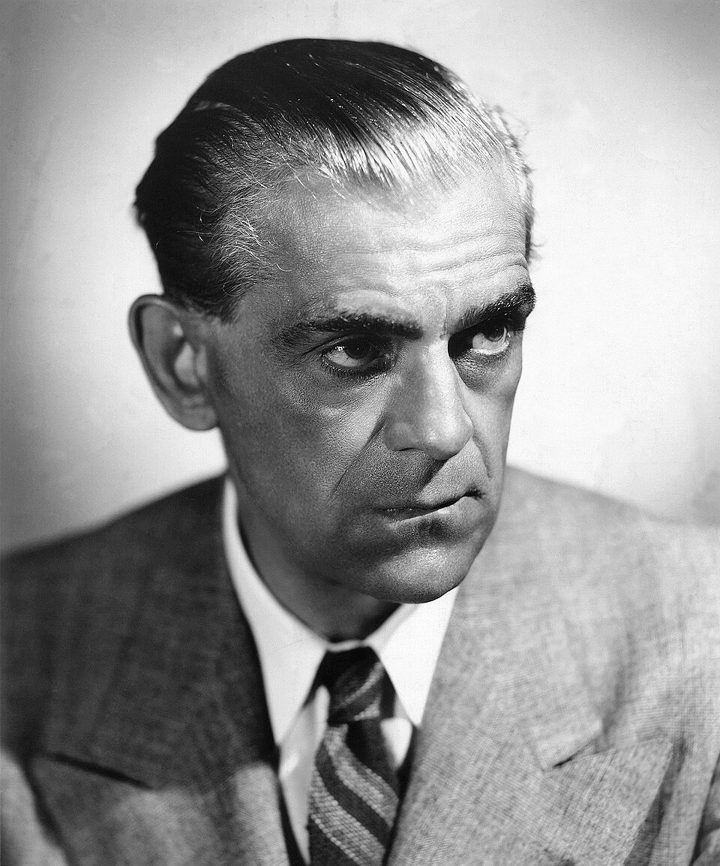

On Halloween 2026, a novelty record released in August 1962 is still played every October. "Monster Mash," credited to Bobby "Boris" Pickett and the Crypt-Kickers, was No. 1 on Billboard's Hot 100 for the chart dated October 27, 19625, four days before Halloween that year. It came back on the charts in 1970, 1973 and 2021, and it keeps earning money more than six decades later.
A Karloff impression and a dance craze
Pickett was a Korean War veteran trying to find work as an actor in Los Angeles2, and he took a singing job in Lenny Capizzi's band, the Cordials, mainly to have a paycheck. During the band's version of the Diamonds' "Little Darlin'," he did the spoken middle section as Boris Karloff1, and audiences loved it. Karloff was best known for playing the monster in the 1931 film Frankenstein2. Capizzi suggested writing something original around the voice.
The idea came together at Capizzi's piano. In his 2005 autobiography, as quoted by The Christian Science Monitor3, Pickett said Capizzi worked out four-chord progressions while Pickett stood beside him, and that Capizzi suggested the Frankenstein monster could start a dance craze. In a 1995 interview with American Songwriter, he described the dance idea as his own. The dance was the Mashed Potato, which Capizzi named as the latest dance when Pickett guessed the Twist2, and the pair shortened "Monster Mashed Potato" to "Monster Mash." Wikipedia says the record was partly inspired by Paxton's earlier novelty hit "Alley Oop"1 as well as by the Mashed Potato craze itself.
Recording the sound effects
Paxton, who produced the session, had already scored with the Hollywood Argyles' 1960 hit "Alley Oop"2. Pickett said the two met after Paxton's daughter went to a Cordials show and handed the band her father's card. Pickett later recalled that his vocal took about half an hour, and that Herb Alpert was cutting "Brave Bull" and Jimmie Rodgers was recording "Honeycomb" in the same studio that day.
The sound effects are the part listeners remember. According to Pickett, Paxton bubbled a straw in a glass of water for the cauldron, pulled a rusty nail out of a board for the coffin lid and dragged chains across a linoleum floor2. Wikipedia's account of the song adds that the Beatles would later use the same bubbling-water trick on "Yellow Submarine"1. On who played what, Pickett said the band was Chuck Hamilton on bass, Jesse Sailes on drums, Billy Lee Riley on guitar and Paxton on piano and Hammond organ1. A long-running story puts Leon Russell at the piano, but Pickett said Russell played on the B-side, "Monster Mash Party," and arrived after the A-side was finished2.
From 500 records to No. 1
The record did not take off at once. Many labels turned it down2, so Paxton pressed 500 copies on his own Garpax label and drove north from Los Angeles handing them to disc jockeys2. London Records, one of the labels that had passed, called back, and orders came in at a massive level, Pickett said. Billboard's chart page for the week shows how quickly it climbed: the song debuted at No. 72 on the chart dated September 8, 1962, and reached No. 1 on the chart dated October 20, its seventh week on the chart5.
On the chart dated October 27, Billboard lists "Monster Mash" at No. 1 for a second week, ahead of "He's a Rebel" by the Crystals at No. 2 and "Do You Love Me" by the Contours at No. 35. The Four Seasons' "Sherry" had spent five weeks at No. 1 and sat at No. 5 on that chart5.
Not every broadcaster welcomed it. Some radio stations hesitated because the song was considered morbid2, and Wikipedia says the BBC banned it from airplay in 1962 as "too morbid"1. American Songwriter says the BBC held out until sales from the 1973 re-release forced its hand, so the two accounts differ on how long the ban lasted. The real Karloff, meanwhile, was a fan: Pickett said a London Records promotion man ran into Karloff at Wallach's Music City, buying a copy of the Monster Mash album, and that Karloff said he loved the record2. Pickett added that Karloff performed his own version on the TV show Shindig for its Halloween episode in 19652.
Comebacks and the long tail
The song returned several times. Wikipedia records that it returned to the Hot 100 in August 1970 and again on May 5, 1973, peaking at No. 10 on August 111. Wikipedia lists the Parrot single as certified Gold on August 28, 19731. Pickett, who died in 2007 at age 692, also kept returning to the idea. In the mid-1980s he released "Monster Rap," in which he plays Boris again and teaches Frankenstein's monster to talk by rapping2, and the song has been covered by Vincent Price and by the Misfits, among many others3.
In 2021, nearly 60 years after its release, the song re-entered the Hot 100 at No. 371. By Wikipedia's count, the chart dated November 13, 2021 was its 38th week on the Hot 100. Wikipedia also records a mix-up over its chart life: on the September 15, 1973, American Top 40, Casey Kasem said the record had 40 weeks on the Hot 100, but a listener told him the 1970 weeks were already included in the 1973 run, which made the total 371.
What the song earned, as of 2023
In a 2023 analysis, Billboard compared Halloween-season streaming in its October 31, 2023 report. Across the previous four Halloweens combined, "Monster Mash" drew more than 15.4 million on-demand streams, against 16.7 million for Michael Jackson's "Thriller," 12.8 million for Ray Parker Jr.'s "Ghostbusters" and 8.85 million for Andrew Gold's "Spooky, Scary Skeletons," according to Luminate4. The magazine estimated nearly $350,000 a year on average over three years from the master recording (not counting synch or compilation licensing) and about $500,000 a year in publishing revenue (including covers and synch), with combined revenue that could easily hit $1 million a year4.
The ownership is split in an unusual way. according to Hersh in Billboard's 2023 report, London Records kept the 1962 master, which is controlled through Universal Music Group's Decca U.K. subsidiary4, while Capizzi, who died in 1988, kept his share of the publishing. In the 1990s Pickett's manager, Stuart Hersh, produced a new version designed to sound as close to the original as possible, with an actual creaky door in place of the nail effect4, so that the master would be Pickett's own and could be licensed to independent films. That version was placed in the 2005 film Must Love Dogs and in Halloween greeting cards4. Billboard also reported that the U.S. Patent and Trademark Office listed 60 active and abandoned applications using the name "Monster Mash," including a General Mills cereal4.
Trivia
- Which actor's voice does Bobby Pickett imitate on the record? Boris Karloff2.
- What were the Hot 100 chart dates of its first run at No. 1? October 20 and October 27, 19625.
- What did Gary Paxton do to make the bubbling cauldron sound? Bubbled a straw in a glass of water2.
- Which label did Paxton start, and which label later distributed the record? Garpax pressed the first 500 copies, and London Records took it on later2.
- What did Billboard estimate in 2023 that the song earns in a year, combining all sources? About $1 million4.
Sources
- Monster Mash, Wikipedia. Accessed October 31, 2026.
- Joe Vitagliano, Behind The Song: Monster Mash, Bobby Boris Pickett and the Crypt-Kickers, American Songwriter, Oct. 29, 2021. Accessed October 31, 2026.
- Tracey Samuelson, The origin of that terrible Monster Mash song, The Christian Science Monitor, Oct. 30, 2009. Accessed October 31, 2026.
- Steve Knopper, How Much Is 'Monster Mash' Worth?, Billboard, Oct. 31, 2023. Accessed October 31, 2026.
- The Hot 100, week of October 27, 1962, Billboard. Accessed October 31, 2026.