Mount Rushmore Carving Ends: The Last Drilling, October 31, 1941
Key Points
- Mount Rushmore National Memorial was declared a completed project on October 31, 1941, almost eight months after Gutzon Borglum died, with final drilling under the direction of his son Lincoln.
- The Park Service says 90% of the mountain was carved using dynamite, and nearly 400 men and women worked on it over 14 years with no fatalities.
- The figures were originally intended to be carved to the waist and are busts instead.
- As of October 28, 2026, the memorial charges no entrance fee, though a parking fee is charged by the park’s concessioner.
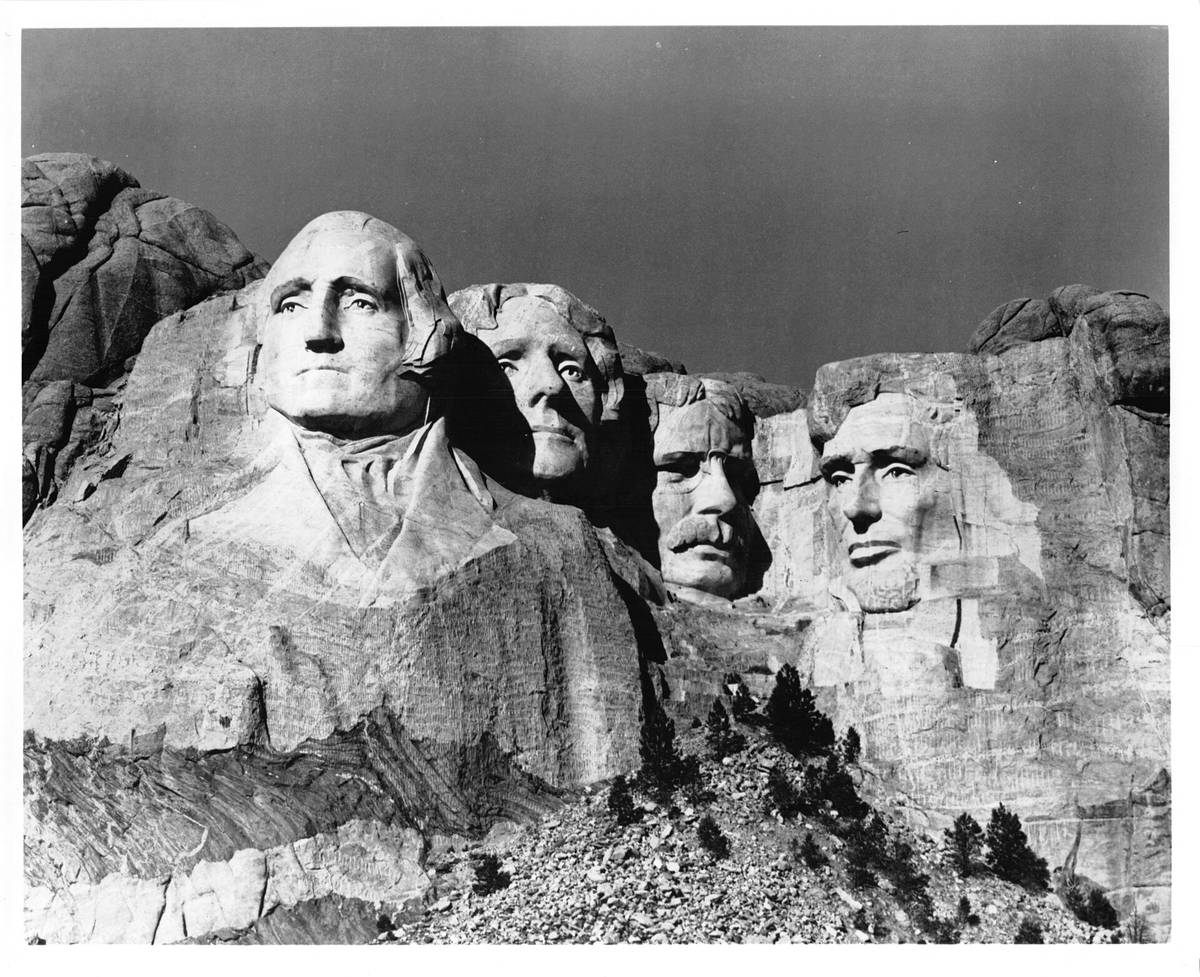

On October 31, 1941, the National Park Service says, Mount Rushmore National Memorial was declared a completed project1. The park’s timeline records that day as the one when final drilling takes place under the direction of Lincoln Borglum2, the son of the sculptor who had started the work. Saturday, October 31, 2026, is the 85th anniversary.
From an idea to the first drill
The idea came from South Dakota’s state historian, Doane Robinson, who on December 28, 1923, suggested a sculpture in the Black Hills2. Gutzon Borglum, a sculptor born in Idaho in 1867, came to South Dakota in 1924 at the age of 577. On August 10, 1927, the first ceremonial drilling2 took place after President Calvin Coolidge handed Borglum a set of drill bits, and the first actual carving began on October 4, 19272. Federal money followed. In February 1929, according to a Park Service chronology, Congress took over financial responsibility for the monument8 at Coolidge's urging, and Coolidge signed the bill authorizing government matching funds up to $250,0001.
Carving a mountain with dynamite
The tools were closer to a mine than a studio. The Park Service says 90% of the mountain was carved using dynamite3, with powdermen who would cut and set charges of dynamite of specific sizes to remove precise amounts of rock3. History.com puts the total at around 450,000 tons of rock12 removed.
Closer to the finished surface, the crews switched methods. Drillers bored rows of holes close together in the last few inches of granite, a technique the park calls honeycombing3, which weakened the stone enough that it could often be broken away by hand. A bumper tool then would even up the granite, creating a surface as smooth as a sidewalk3. A 1992 Park Service planning document sums up the usual order as measuring, drilling, blasting, drilling, wedging and bumping8.
The 1992 document says the job used a unique pointing system, a scale model, and materials not normally associated with art8. The model that survives in the Sculptor’s Studio is a 1/12th scale model of Mount Rushmore10.
The workers hung over the face of the mountain in a bosun chair3 on steel cables, raised and lowered by men hand cranking winches in a winch house on top, with call boys relaying messages to keep the drillers safe. Later stages moved from the chairs to scaffolding, and the last stage took place with workers in a wooden cage8.
Who did the work
The project involved the efforts of nearly 400 men and women3 over its 14 years. Most of the crew were unemployed hardrock miners8, and the park notes that during the Depression any job was a good job3. Asked what they did there, one worker answered, “I earn $8.00 a day.”3 Conditions were harsh, yet the park reports that there were no fatalities during the carving work4.
Four faces, one at a time
Washington came first, with his figure dedicated on July 4, 19302. His head is 60 feet tall8. Jefferson was harder. The first attempt was made on the viewer's left of Washington, but inherent flaws in the stone there scuttled 18 months of work8, and the crew blasted it off and restarted Jefferson on Washington's other side, between Washington and Theodore Roosevelt, where he stands today. The finished Jefferson was dedicated on August 30, 19362, with President Franklin D. Roosevelt in attendance. Lincoln followed on September 17, 19372 and Theodore Roosevelt on July 2, 19392.
The son who finished it
Lincoln Borglum had been on the mountain for years before he ran it. The park says he worked for several years on the mountain without pay6, including the crucial position of “pointer.” He was hired at an hourly wage in 19346, became chief pointer in 1935 and superintendent of all work in 19386.
In the project’s last two years his father spent much of his time traveling and working to secure additional funding1, and Lincoln supervised the work while he was away. Gutzon Borglum died in Chicago following surgery on March 6, 19417, as a final dedication was being planned1. Lincoln took on the responsibility of sculptor6, but his father’s death, along with the impending American involvement in World War II1, ended the work. On October 31, almost eight months after Gutzon’s death, the crews led by Lincoln set down their jackhammers and walked away8. He stayed on as the memorial’s first National Park superintendent6.
Why the presidents stop at the shoulders
The 1992 prospectus says the figures, originally intended to be carved to the waist, are busts instead8. Borglum’s later designs, South Dakota Public Broadcasting notes, included clothing detail, limbs and hands11, but cracks and other “flaws” in the rock forced certain decisions11 about what could be cut.
Funding cut the plan back as well. Borglum had begun a large repository in a valley behind the sculpture, the Hall of Records, and stopped it in 1939 after Congress threatened to cut off all funding1 unless the money went to finishing the sculpture itself. The prospectus lists the grand stairway, entablature, and removal of stone debris8 as not completed, and only the entry hall of the Hall of Records was roughed in.
What it cost
A Park Service chronology puts the total cost of the project at $989,992.328, after a final appropriation of $86,000 from Congress in August 1940. The Smithsonian American Art Museum says $836,000 came from Federal appropriations9.
Visiting in the off season
As of October 28, 2026, Mount Rushmore National Memorial does not charge an entrance fee17, but a parking fee is charged by the park’s concessioner, and the annual, senior and access passes cannot be used for parking fees17. On the anniversary itself the grounds are open 6:00 am to 9:00 pm18 and the Lincoln Borglum Visitor Center 8:00 am to 6:00 pm18, the October hours.
From November 1 the visitor center keeps 8:00 am to 5:00 pm daily18 hours, closed on Christmas Day, and through March 9 the grounds stay open from 6:00 am to 9:00 pm. There is no evening program in the off season; instead the sculpture is lit at sunset until 9:00 pm through March 918. The Sculptor’s Studio is closed for the season18 until May 23. The Park Service counts just over two million visitors a year19.
Trivia
- How long is Washington’s nose? 21 feet5, according to the National Park Service.
- How old was Lincoln Borglum on his first trip to the Black Hills with his father? 126; the trip was on September 24, 1924.
- What did a visitor pay a hoist operator for a piece of honeycombed granite? $6.003, after a $2.00 offer was turned down; once the visitor left, the operator called to the top of the mountain for another piece.
- In what shape did Borglum plan to carve the Entablature, a brief history of the United States beside the four faces? The shape of the territory of the Louisiana Purchase14, in letters three feet tall.
- Who won the college-age category of the 1934 essay contest for the Entablature text? William Andrew Burkett14, then a law student in Nebraska15.
- How long is the tunnel blasted for the Hall of Records? 70 feet13.
- What was placed in the floor of the Hall of Records entry on August 9, 1998? A repository of sixteen porcelain enamel panels13 in a teakwood box, inside a titanium vault, under a granite capstone.
- Which part of the nation’s story did Borglum choose Lincoln to represent? Its preservation16.
Sources
- “Memorial History”, Mount Rushmore National Memorial, National Park Service. Accessed October 28, 2026.
- “Timeline”, Mount Rushmore National Memorial, National Park Service. Accessed October 28, 2026.
- “Carving History”, Mount Rushmore National Memorial, National Park Service. Accessed October 28, 2026.
- “The Workers”, Mount Rushmore National Memorial, National Park Service. Accessed October 28, 2026.
- “How Big Are the Heads?”, Mount Rushmore National Memorial, National Park Service. Accessed October 28, 2026.
- “Lincoln Borglum”, Mount Rushmore National Memorial, National Park Service. Accessed October 28, 2026.
- “Gutzon Borglum”, Mount Rushmore National Memorial, National Park Service. Accessed October 28, 2026.
- Division of Interpretive Planning, Harpers Ferry Center, “Interpretive Prospectus: Mount Rushmore National Memorial”, National Park Service, April 1992, reproduced by npshistory.com. Accessed October 28, 2026.
- “Mt. Rushmore: Seventy Years Old and We’ve Got Some Early Photos”, Smithsonian American Art Museum. Accessed October 28, 2026.
- “Sculptor’s Studio”, National Park Service. Accessed October 28, 2026.
- Brian Gevik, “Borglum’s Vision For Mount Rushmore”, South Dakota Public Broadcasting, April 27, 2015. Accessed October 28, 2026.
- HISTORY.com Editors, “Mount Rushmore”, History.com. Accessed October 28, 2026.
- “Hall of Records”, Mount Rushmore National Memorial, National Park Service. Accessed October 28, 2026.
- “The Entablature Idea”, Mount Rushmore National Memorial, National Park Service. Accessed October 28, 2026.
- John Andrews, “The Rushmore Essayist”, South Dakota Magazine, March 25, 2014. Accessed October 28, 2026.
- “Why These Four Presidents?”, Mount Rushmore National Memorial, National Park Service. Accessed October 28, 2026.
- “Fees & Passes”, Mount Rushmore National Memorial, National Park Service. Accessed October 28, 2026.
- “Operating Hours & Seasons”, Mount Rushmore National Memorial, National Park Service. Accessed October 28, 2026.
- “History & Culture”, Mount Rushmore National Memorial, National Park Service. Accessed October 28, 2026.