National Park Fee-Free Days 2026: Dates, Rules and Pass Prices
Key Points
- The last two national park entrance fee-free days of 2026 were set for Tuesday, October 27, and Wednesday, November 11.
- Beginning in 2026, free entrance on those days is for U.S. citizens and residents only.
- Only the entrance fee is waived, and camping, reservation and special use permit fees still apply.
- As listed on October 31, 2026, the America the Beautiful pass costs $80 for U.S. citizens and residents and $250 for nonresidents.

The National Park Service set eight entrance fee-free days for 2026. The last two were Tuesday, October 27, Theodore Roosevelt's birthday, and Wednesday, November 11, Veterans Day1, which is still ahead as of October 31, 2026. On those days, park sites that normally charge an entrance fee let U.S. citizens and residents in free1. Here is what is covered, what is not, and what nonresidents pay, as listed by the park service on October 31, 2026.
Who gets in free
The park service says that beginning in 2026, free entrance on these days will be for US citizens and residents only1, and that nonresidents pay the regular entrance fee and any applicable nonresident fees unless they hold the Non-Resident Annual Pass. Its February 13, 2026 news release on the Presidents Day free day called them U.S. resident fee-free days2.
All eight fee-free dates in 2026
The October and November dates close out a year of fee-free days that began on Presidents Day, February 162. The park service lists the full 2026 set as February 16 (Presidents Day), May 25 (Memorial Day), June 14 (Flag Day), July 3 to 5 (Independence Day weekend), August 25 (the 110th birthday of the National Park Service), September 17 (Constitution Day), October 27 and November 11. Its release framed them as a way for U.S. residents to visit as the country approaches the 250th anniversary of independence.
What the free day covers
Only the entrance fee is waived. The park service notes that other fees such as camping, reservations, and special use permits still apply2, and its passes page adds that timed entry or reservation fees may apply1. Most park service sites are free to visit1.
The park service also says that some parks use timed entry to manage vehicle traffic, and others use tour reservations to manage access to a building or natural feature1. Reservations are typically offered through recreation.gov on a rolling basis, and the park service recommends making one well in advance. A fee-free day does not remove that step where a park requires it.
Passes and the nonresident fee
As listed on October 31, 2026, the America the Beautiful pass, which covers entrance at national parks and other federal recreation lands for a year, costs $80 for U.S. citizens and residents and $250 for nonresidents1. On the same October 31, 2026 listing, citizens and residents 62 and over pay $20 for an annual pass or $80 for a lifetime pass1, and current military, veterans, Gold Star families, U.S. fourth graders and U.S. citizens and residents with permanent disabilities can get passes free.
As listed on October 31, 2026, nonresidents age 16 and older pay a $100 nonresident fee on top of the regular entrance fee at 12 parks1 (the page lists Sequoia and Kings Canyon together), unless they hold an annual or America the Beautiful pass. The parks are Acadia, Bryce Canyon, Everglades, Glacier, Grand Canyon, Grand Teton, Rocky Mountain, Sequoia and Kings Canyon, Yellowstone, Yosemite and Zion.
The America the Beautiful pass is not limited to the park service. The park service says it covers entrance fees and standard amenity (day-use) fees at lands managed by the National Park Service, the Fish and Wildlife Service, the Forest Service, the Bureau of Land Management, the Bureau of Reclamation and the Army Corps of Engineers1. Depending on the type of fee a site charges, it covers one private vehicle or four people where fees are charged per person. Passes are non-refundable and non-transferable, and holders must show photo identification with each one.
The page describes three ways to get one. Physical passes can be bought or picked up at over 1,000 federal recreation sites1. Online orders through the USGS store are for physical passes and may take up to three weeks to arrive, so the park service recommends ordering at least three weeks ahead or picking one up in person. A digital pass from recreation.gov can be saved to a phone and used right away.
Two details are easy to miss. The Senior Pass may give a 50 percent discount on some amenity fees such as camping, but generally does not cover or reduce special recreation permit fees or concessioner fees1. And the Non-Resident Annual Pass, according to the same page, covers the entrance fee and any nonresident fees for the holder and passengers in a private vehicle (up to 15 passengers). The $100 nonresident fee also applies to nonresidents in commercial tour groups unless they use that pass.
Why October 27
October 27 is Theodore Roosevelt's birthday. As president, he established 150 national forests, 51 federal bird reserves, 4 national game preserves, 5 national parks and 18 national monuments3, and the park service credits him with protecting about 230 million acres of public land. He signed the Antiquities Act on June 8, 19063, the law that lets a president declare national monuments.
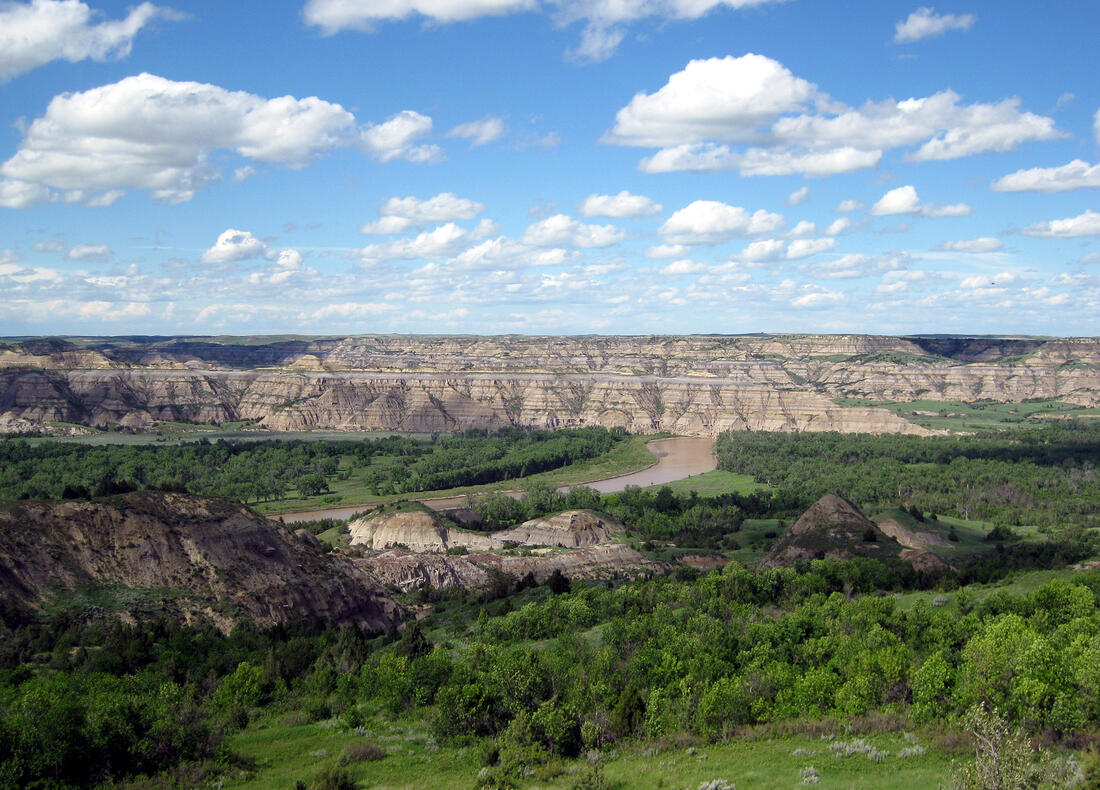
Roosevelt first came to the North Dakota Badlands in September 1883 to hunt big game, and the park service says his writings are laced with lament for the loss of species and habitat3. He also watched overgrazing in the region and lost his ranches to it. Theodore Roosevelt National Park, in that same region, is the park pictured above.
The park service says that when it was created in 1916, seven years after Roosevelt left office, there were 35 sites to manage, and Roosevelt helped create 23 of them3. The national parks he worked with Congress to establish were Crater Lake (1902), Wind Cave (1903), Sullys Hill (1904, now managed by the Fish and Wildlife Service), Platt (1906, now part of Chickasaw National Recreation Area) and Mesa Verde (1906). Because the Antiquities Act did not need congressional approval, he could create monuments faster, among them Devils Tower, El Morro, Montezuma Castle and Petrified Forest in 1906 and Grand Canyon in 1908. Several became national parks later. The 51 federal bird reserves later became today's national wildlife refuges, and he created the Forest Service in 1905 inside the Department of Agriculture.
What to know before going
- Check the park's own page for reservations or timed entry, which can still be required on a fee-free day.
- The passes page and the news release are both park service pages, and prices were read on October 31, 2026, so confirm them before buying.
Trivia
- What are the last two national park fee-free days of 2026? October 27 and November 111.
- As listed on October 31, 2026, how much is the America the Beautiful pass for nonresidents? $2501.
- As listed on October 31, 2026, how many parks charge the $100 nonresident fee? 121, with Sequoia and Kings Canyon listed together on the page.
- How many national parks did Theodore Roosevelt establish? 53, along with 18 national monuments.
- When did Roosevelt sign the Antiquities Act? June 8, 19063.
- About how many acres of public land does the park service credit Roosevelt with protecting? About 230 million3.
Sources
- Entrance Passes, Plan Your Visit, National Park Service. Accessed October 31, 2026.
- Presidents Day Fee-Free Kickoff: Celebrate America in America's National Parks, National Park Service news release (February 13, 2026). Accessed October 31, 2026.
- Theodore Roosevelt and Conservation, Theodore Roosevelt National Park, National Park Service. Accessed October 31, 2026.