New York Subway Opens: City Hall to 145th Street, October 27, 1904
Key Points
- New York’s first subway ride left City Hall at 2:35 p.m. on October 27, 1904, with Mayor George McClellan at the controls.
- The first line ran 9.1 miles through 28 stations, from City Hall to 145th Street and Broadway, and opened to the public at 7 p.m. for a nickel a ride.
- As of October 25, 2026, the MTA fare is $3, and its 2024 report counts 472 subway stations and 1,195 million rides that year.
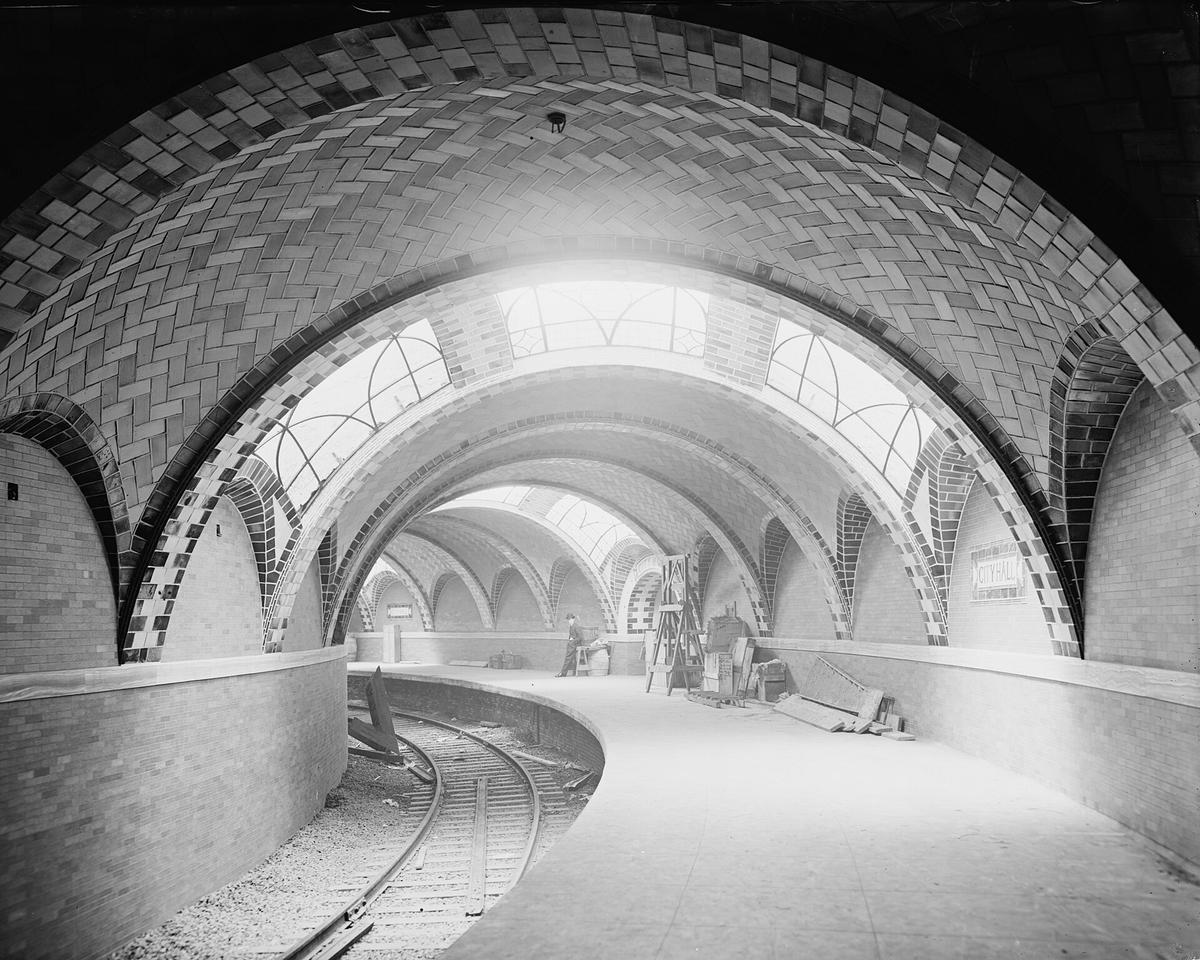

New York’s first subway ride left City Hall on the afternoon of Thursday, October 27, 1904, with the mayor at the controls. Oxford University Press’s blog records that the day was marked by ceremonies in City Hall2, led by Mayor George McClellan and the company that would run the trains, and that by midnight 127,381 riders had made use of the subway2. Tuesday, October 27, 2026, is the 122nd anniversary.
A mayor who would not let go
The official train pulled out of the City Hall station at 2:35 p.m.2, and History.com says McClellan stayed at the controls all the way from City Hall to 103rd Street1. The train reached the northern terminal at 145th Street and Broadway at 3:01 p.m.2, 26 minutes after it left.
The public got its turn that evening. The line opened to everyone at 7 p.m.3, and Civil Engineering magazine, the American Society of Civil Engineers’ publication, says the city made it a party3. History.com puts the opening crowd at more than 100,000 people1, each paying a nickel1 for a first ride. Both counts put the first day’s riders well over 100,000.
The route
The first line ran 9.1 miles through 28 stations1, starting at City Hall in lower Manhattan, running up to Grand Central1, turning west along 42nd Street to Times Square1 and then heading north to 145th Street and Broadway in Harlem1. Riders on opening weekend waited in lines two blocks long3 for the chance to travel underground at up to 40 mph3.
Who built it and who ran it
A New York Times fact list from October 28, 1904, reproduced by nycsubway.org, says contractor John B. McDonald won with a proposition to do the building for $35,000,0004. He could not put up the required security on his own, so he enlisted the aid of August Belmont, who formed the Rapid Transit Subway Construction Company4. In 1902, the same list says, the Interborough Rapid Transit Company was organized by Mr. Belmont and his associates4, and McDonald assigned the lease part of his contract to the new corporation4. That company, the IRT, is the one History.com names as the line’s operator1.
The engineering fell to William Barclay Parsons, who served as chief engineer for the IRT3. Because the depth of the bedrock kept changing, Parsons argued for a shallow cut-and-cover approach3, digging under the street, building the tunnel and roofing it over. The work was split among 15 firms assigned individual stretches of construction3. He also proposed an express track that would allow some trains to skip stations3.
The station that started it
The first ride left from the most elaborate stop on the line. The New York Transit Museum credits the City Hall station to architects George Heins & Christopher LaFarge5, with tiled ceilings by master artisan Rafael Guastavino5, and lists its chandeliers, leaded skylights, vaulted tile ceiling, and sweeping structural curves5.
Those curves turned out to be its problem. The station was decommissioned in 19455; a 2023 report by 6sqft dates the closing to December 31, 19456 and says the curved tracks could no longer accommodate the longer train cars6 as trains grew from five cars to ten. It never fully went dark. The museum says the station is still active as a turnaround for the 6 line5, and 6sqft notes that riders can glimpse it by staying on the downtown 6 train after it leaves the Brooklyn Bridge station6. The museum also runs member tours inside, at $50 per person5 (October 2026).
Then and now
The nickel is long gone. As of October 25, 2026, the MTA says the fare is $3 for most riders8 on subways and local buses. The system has been under the Metropolitan Transportation Authority1 since 19681, according to History.com.
The city’s contract with the IRT guaranteed a fixed five-cent fare9, Wikipedia’s history of the system notes, and the nickel held until July 1, 1948, when the subway fare was raised to 10¢10, according to an Oxford University Press blog post by transit historian Andrew J. Sparberg.
The MTA’s ridership report for 2024 counts 472 subway stations7, against 28 in 1904. It says 2024 subway annual ridership rose to 1,195 million7, reaching 70% of pre-pandemic levels7.
Trivia
- When was ground broken for the first subway, and where? On March 24, 19004, when Mayor Van Wyck formally broke ground in front of City Hall.
- Which explosion does the 1904 Times list name among the construction’s most serious accidents? A dynamite explosion on Jan. 27, 19024 in a storage shed opposite the Murray Hill Hotel, which the list says killed 6 people and injured 125.
- How quickly did the new subway fill up? It reached its capacity of 600,000 passengers per day by October 19053, even with only partial service.
- When did IRT service first reach the Bronx, Brooklyn and Queens? The Bronx in 1905, Brooklyn in 1908 and Queens in 19151.
- Was New York’s subway the first in the United States? No. Boston built the first U.S. subway in 18971, and London’s underground network opened in 1863.
- Which station was the busiest in 2024? Times Sq-42 St/Port Authority Bus Terminal7, with 57,743,486 riders.
- What is the most a rider pays in a week, as of October 25, 2026? $358 on subway and local bus fares, under the MTA’s weekly cap.
- How long does a museum tour spend inside the old City Hall station? About 20 minutes5 of a roughly 90 minute tour, which begins above ground.
Sources
- HISTORY.com Editors, “New York City subway opens”, This Day in History, History.com. Accessed October 25, 2026.
- Joseph B. Raskin, “New York City goes underground”, OUPblog, Oxford University Press, 27 October 2013. Accessed October 25, 2026.
- Leslie Nemo, “The first New York City subway delivers speed”, Civil Engineering, American Society of Civil Engineers, 14 May 2024. Accessed October 25, 2026.
- “Interesting Facts About Our Subway”, The New York Times, 28 October 1904, reproduced by nycsubway.org. Accessed October 25, 2026.
- “Old City Hall Tours”, New York Transit Museum. Accessed October 25, 2026.
- Aaron Ginsburg, “Tours of NYC’s old City Hall subway station return this spring”, 6sqft, 14 February 2023. Accessed October 25, 2026.
- “Subway and bus ridership for 2024”, MTA. Accessed October 25, 2026.
- “Subway and bus fares”, MTA. Accessed October 25, 2026.
- “History of the New York City Subway”, Wikipedia. Accessed October 25, 2026.
- Andrew J. Sparberg, A vision of New York City’s transit system, from 1940-1968 [slideshow], OUPblog, February 3, 2015. Accessed October 25, 2026.