Porsche Profit Rebounds to 1.74 Billion Euros as Deliveries Fall 16%
Key Points
- Porsche AG reported operating profit of 1.74 billion euros for the first nine months of 2026, against 40 million euros a year earlier, with an operating return on sales of 6.9 per cent.
- Deliveries fell 16.0 per cent to 178,532, while group sales revenue fell 5.9 per cent to 25.28 billion euros.
- China deliveries fell 33 per cent to 21,493, while 911 deliveries rose 12 per cent to 42,217.
- Porsche confirmed its 2026 forecast of 35 to 36 billion euros in group sales revenue and a group operating return on sales of 5.5 to 7.5 per cent.
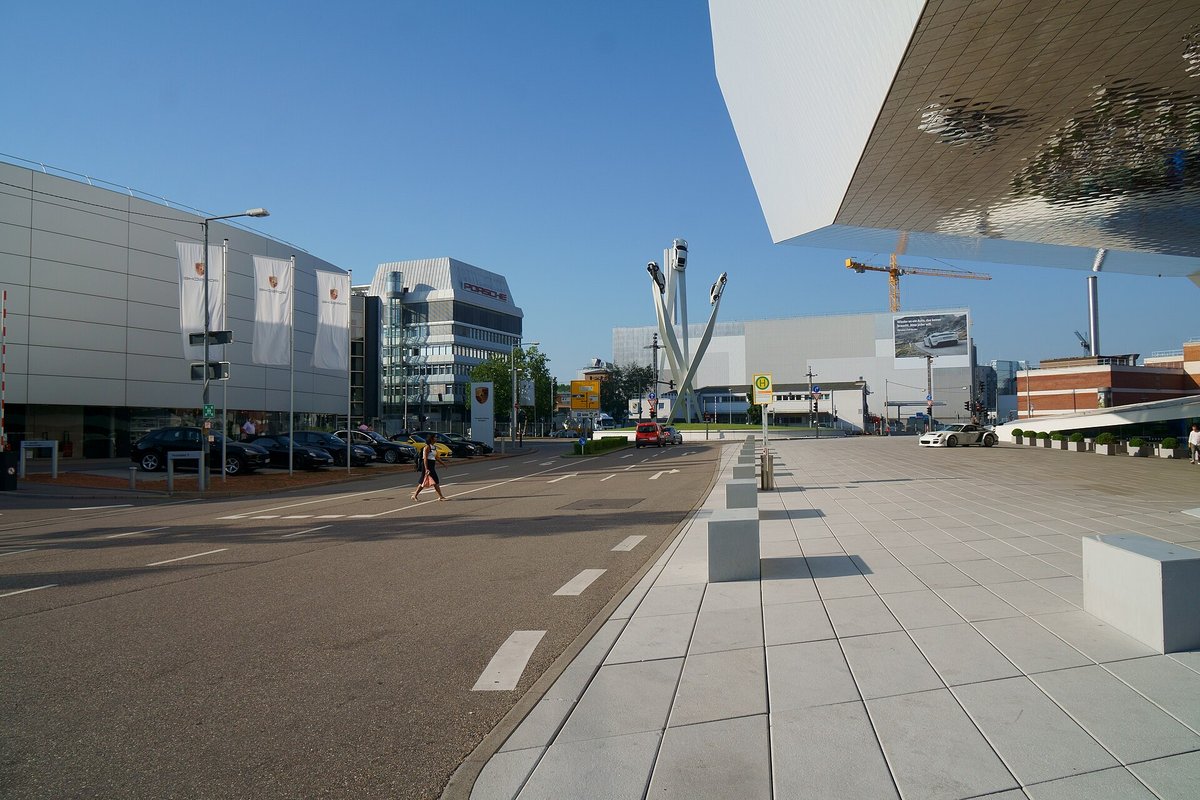

Porsche AG published its figures for the first nine months of 2026 on 27 October1. Sales revenue came to 25.28 billion euros and operating profit to 1.74 billion euros, with an operating return on sales of 6.9 per cent1. A year earlier, nine month operating profit had been 40 million euros, according to Reuters3, and the operating return on sales was 0.2 per cent1. Volume went the other way. Deliveries to customers fell by 16.0 per cent to 178,532, from 212,5091. Reuters reported that shares in the company were 2.3 per cent higher3.
How profit rose while sales fell
Much of the swing comes from last year's bill. Porsche says the sharp increase in its return on sales is also attributable to the costs of its strategic realignment in the same period of 2025, which amounted to 2.7 billion euros1. In the first nine months of 2026, those costs came to approximately 500 million euros1.
Group sales revenue fell 5.9 per cent from 26.86 billion euros, a decline the company describes as less pronounced than the 16.0 per cent drop in deliveries1. Porsche points to the kind of cars it sold rather than the count, saying that “despite lower volumes, a higher proportion of high-margin models and positive pricing and product-mix effects are supporting business performance.”1 The Automotive EBITDA margin was 17.3 per cent, against 11.9 per cent a year earlier1.
Below operating profit, in the financial result, the sale of Porsche's shares in Bugatti Rimac and the Rimac Group was completed in September and resulted in a gain of 593 million euros1, which the company says had a major impact on that result for the Porsche AG Group1.
Cash and one-off charges
Automotive net cashflow grew to 2.50 billion euros from 1.34 billion euros, and the Automotive net cashflow margin stood at 11.3 per cent, up from 5.6 per cent1. Porsche attributes the increase mainly to the cash inflow from the Bugatti Rimac and Rimac Group sale, which totalled 984 million euros for the group, most of it included in Automotive net cashflow1.
Three charges pulled the other way in the third quarter. The company lists 200 million euros in charges arising from US tariffs, between 100 and 200 million euros in connection with the strategic realignment, and 250 million euros for the further financing of pension obligations1, all of which reduced Automotive net cashflow. Reuters noted that Porsche, which has no production outside Europe, has suffered from US import tariffs3. As at 30 September 2026, net liquidity in the Automotive segment had increased by 884 million euros to 8.23 billion euros compared with the end of 20251.
Deliveries by region
Porsche's delivery release of 9 October2 broke the 178,532 cars down by market. North America remained the largest region with 56,088 deliveries, down 13 per cent from 64,4462, and the company says that decline is mainly due to the end of production of the 718 model line and the strong prior year performance of the Macan Electric2. Europe excluding Germany took 44,949 cars, down 11 per cent, and Germany took 20,954, down 7 per cent2.
Overseas and Emerging Markets fell 19 per cent to 35,0482, a decline driven in part by product availability gaps related to the 718 model line and the combustion engined Macan2. China fell furthest. Porsche delivered 21,493 cars there in the first nine months, down 33 per cent from 32,1952. The results release says the market environment in China remains challenging, which is why Porsche continues to pursue its “Value over Volume” strategy there, prioritising the brand's long-term development over short-term volume targets1. Reuters described the turnaround plan as one to downsize and retreat from China3, and noted that declining sales in China have also depressed results at Volkswagen and at fellow subsidiary Audi3.
Deliveries by model
The Cayenne was the largest model line with 59,586 deliveries, down 2 per cent2. That total includes 7,002 all-electric Cayenne models delivered to customers since the car's market launch in the summer2. The Macan followed with 51,025, down 21 per cent, split between 23,029 fully electric cars and 27,996 with combustion engines2. Production of the combustion engined Macan ended in summer 20262.
The 911 was the exception. Its deliveries rose 12 per cent to 42,2172, and Reuters called it the only model in Porsche's portfolio whose sales rose over the nine months3. Porsche says GTS, Turbo and GT models once again accounted for a significant proportion of total sales2. “Our customers are deliberately choosing the exclusive and most emotionally engaging versions of our sports cars,” said Matthias Becker, the board member for sales and marketing2.
Everything else shrank. Panamera deliveries fell 35 per cent to 13,714, the Taycan fell 31 per cent to 8,699, and the 718 Boxster and Cayman fell 79 per cent to 3,2912, the last because production of the 718 model line ended in October of last year2. Battery electric cars made up 21.7 per cent of deliveries, down from 23.1 per cent1, and Porsche says the higher share in 2025 was due in particular to the strong ramp-up of sales of the all-electric Macan that year1.
The new chief executive and the forecast
Michael Leiters took office as chief executive at the start of the year, appointed by the supervisory board to change course after the company's electrification strategy failed to take off3. Reuters reported that he plans more customisation and exclusive higher-margin models, which will shrink the group but should increase profits3. In the results release he said, “We are implementing our strategic realignment consistently and at a rapid pace.”1 That includes selling a business outside car making. In August Porsche agreed to sell its MHP subsidiary to Tata Consultancy Services, a deal subject to closing conditions that is expected to complete within the next 12 months1.
Jochen Breckner, the board member for finance and IT, said, “We achieved a solid operating result in the first nine months while simultaneously generating strong net cashflow.”1 On 27 October, Porsche confirmed its forecast for the full year 20261. It calls for group sales revenue of 35 to 36 billion euros, a group operating return on sales of 5.5 to 7.5 per cent, an Automotive net cashflow margin of 5.5 to 7.5 per cent, an Automotive EBITDA margin of 15 to 17 per cent and a battery electric share between 24 and 26 per cent1.
Trivia
- In what year, and in which city, was the Porsche company founded? 1931, in Stuttgart4.
- Where were the first models of what became the Porsche 356 built? In a small sawmill in Gmünd, Austria4.
- In what year was the 356 road certified? 19484.
- What was the 911 originally designated, and why was the name changed? 901, a name that contravened Peugeot's trademarks4.
- Which car did Ferdinand Porsche design for Volkswagen? The first Volkswagen Beetle4.
- In which Stuttgart district are Porsche's headquarters and main factory? Zuffenhausen4.
- Where is the subsidiary Porsche Engineering headquartered? Weissach, Germany4.
Sources
- Porsche AG, “Porsche AG systematically implements its strategic realignment: robust results and cashflow, outlook remains stable”, press release, Porsche Newsroom, 27 October 2026. Accessed November 9, 2026.
- Porsche AG, “Porsche delivers 178,532 cars worldwide in the first nine months of 2026”, press release, Porsche Newsroom, 9 October 2026. Accessed November 9, 2026.
- Reuters, “Porsche profit rebounds as turnaround plan takes hold”, Business Day, 27 October 2026. Accessed November 9, 2026.
- “Porsche”, Wikipedia. Accessed November 9, 2026.