Pudge Heffelfinger and the First Paid Football Game, November 12, 1892
Key Points
- On November 12, 1892, the Allegheny Athletic Association beat the Pittsburgh Athletic Club 4 to 0, and William "Pudge" Heffelfinger scored the only touchdown.
- An Allegheny expense sheet records a $500 cash "game performance bonus" to Heffelfinger, which the Pro Football Hall of Fame calls pro football's birth certificate.
- The proof came out decades later, after the Hall opened in 1963, and John Brallier of Latrobe, paid $10 and expenses in 1895, now ranks no higher than seventh in line.
- The Hall says others may have been paid before 1892, but the Allegheny sheet is the first irrefutable evidence of an out and out cash payment.
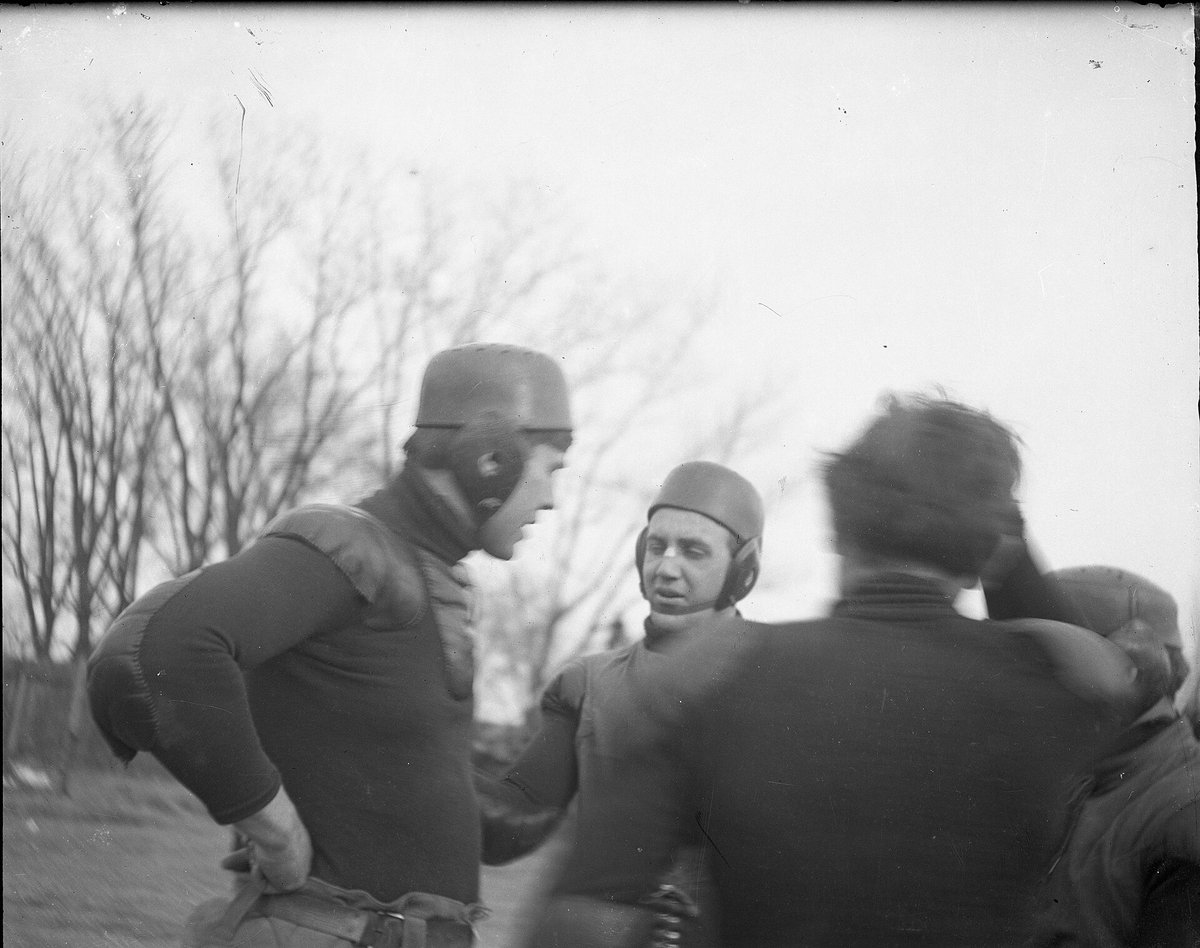

Thursday, November 12, 2026, is 134 years since the Allegheny Athletic Association beat the Pittsburgh Athletic Club on November 12, 1892, with William "Pudge" Heffelfinger openly paid $500 to play2. The Pro Football Hall of Fame counts him as pro football's first paid player1, and a Pennsylvania historical marker traces the origin of pro football to this game4. Written proof of the payment sat unseen in a club ledger for decades.
A grudge match in Allegheny City
The two clubs did not like each other. They had played to a 6 to 6 tie on Columbus Day 1892 in East Liberty, a game followed by accusations of dirty play and unprofessionalism5, with Allegheny arguing that a Pittsburgh player was a professional5. A rematch was set for November at Recreation Park5, a ground in Allegheny City, which was annexed in 1907 and became the North Side of Pittsburgh7.
Heffelfinger was the prize recruit. After Yale he had played for the Chicago Athletic Association, which paid him "double expenses"3, and the Hall notes that clubs drew players with double expense money, trophies and job offers, practices the Amateur Athletic Union questioned1. Allegheny doubled the Pittsburgh club's offer3. Pittsburgh protested his presence and that of other Chicago players, and Allegheny answered that Pittsburgh had imported players too5.
The game
The marker's account adds a wrinkle from before kickoff: Pittsburgh refused to face the ringers and boarded its bus, the referee declared Allegheny the winner by forfeit, and Allegheny started a game against a hastily assembled Western University team. Ten minutes in, the Pittsburgh side returned and agreed to play if the game was declared an exhibition and the forfeit bets were canceled4. The game was cut to two 30 minute halves to beat the darkness1. Heffelfinger forced a fumble, recovered it and ran 25 yards for the only touchdown2. Touchdowns counted four points in 1892, so Allegheny won 4 to 02. About 3,000 people watched5.
The line in the ledger
The Allegheny expense sheet records a "game performance bonus to W. Heffelfinger for playing (cash) $500"2, and it was signed by the club's manager, O.D. Thompson1. The Pittsburgh club's history adds that he also received $25 in expenses5. The Hall of Fame calls the sheet "pro football's birth certificate"2, and a 2024 Pittsburgh Magazine caption called the ledger the "birth certificate of professional football"9.
When the proof came out
The Hall says that after it opened in Canton in 1963, further research uncovered the payment, and that verification did not become public for almost 80 years2. The historical marker's background text says the club's expense accounting surfaced eight decades later4. Minnesota Monthly says actual proof went undiscovered for nearly 70 years8. Wikipedia adds that in the 1960s a man known only as Nelson Ross gave Steelers president Art Rooney a 49 page typed manuscript on early pro football, which drew on Pittsburgh newspapers to name Heffelfinger the first pro3. Minnesota Monthly says the ledger reached the Hall in the late 1960s, in a collection of early football ephemera that Art Rooney donated8.
What it did to the Latrobe claim
For decades the honor went elsewhere. Early historians credited John Brallier, a quarterback from Indiana College, paid $10 and expenses to play for Latrobe against Jeannette on September 3, 18951. Latrobe won that game 12 to 06. Brallier was long seen as the first professional, and it was not until after his death in 1960 that evidence proved otherwise6, leaving him the first player to openly admit being paid6. The Hall now ranks Brallier no higher than seventh in line2.
The Hall stops short of calling the question closed. It says it is possible that others were paid to play before 1892, and calls the Allegheny sheet the first irrefutable evidence of an out and out cash payment2.
The Yale guard
Heffelfinger was born December 20, 1867, in Minneapolis, and while at Minneapolis Central High School he occasionally played for the University of Minnesota3. He played for Walter Camp at Yale from 1888 to 1891 and was a three time consensus All-American at guard3. Camp called him the "greatest football player of all time"8. Yale lost only two games in his four years3, and he also lettered in rowing, baseball and track3.
After the payday
He coached Minnesota in 1895 to a 7 and 3 record3, then went home to business. He worked in the family shoe business in Minneapolis, which suffered in the Panic of 1907, and he and his father went bankrupt in 19103. He then moved into commercial real estate, grew wealthy and played a major role in the expansion of downtown Minneapolis8. He was a delegate to the 1904 and 1908 Republican National Conventions, won a seat on the Hennepin County Board of Commissioners in 1924 and served 24 years, four of them as chairman3.
He never quite left the field. Into his fifties he scrimmaged with the Yale team on yearly visits to New Haven, and he played charity and exhibition games against much younger men, the last at age 653. He died April 2, 1954, in Blessing, Texas, at 863. He entered the College Football Hall of Fame in its inaugural class of 19513, and although he has never been inducted into the Pro Football Hall of Fame8, he joined the Pittsburgh Pro Football Hall of Fame in 20159.
Trivia
Which Allegheny player was paid $250 for a game one week later, on November 19, 1892?
Ben "Sport" Donnelly1
What net profit did the Allegheny Athletic Association make on the November 12 game?
$6211
What was the Pittsburgh Athletic Club called before it registered that name in 1892?
The East End Gymnastic Club, which used that name in 1890 and 18915
What was the season score of Yale's undefeated, unscored upon 1888 team?
698 to 03
Which school did Heffelfinger coach in 1893?
California, where he went 5 and 1 with one tie3
What publication did Heffelfinger edit from 1935 to 1950?
Heffelfinger's Football Facts3
On what date was the First Professional Football Game marker dedicated?
November 3, 19924
Which baseball club made Recreation Park its first National League home?
The Pittsburgh Alleghenys, the team now known as the Pirates7
Sources
- Birth of Pro Football, Pro Football Hall of Fame. Accessed November 7, 2026.
- Nov 12: Birth of Pro Football, Pro Football Hall of Fame. Accessed November 7, 2026.
- Pudge Heffelfinger, Wikipedia. Accessed November 7, 2026.
- First Professional Football Game, Pennsylvania Historical Marker, ExplorePAHistory.com. Accessed November 7, 2026.
- Pittsburgh Athletic Club (football), Wikipedia. Accessed November 7, 2026.
- Latrobe Athletic Association, Wikipedia. Accessed November 7, 2026.
- Recreation Park (Pittsburgh), Wikipedia. Accessed November 7, 2026.
- Clayton Trutor, Minnesota's Forgotten Football Giant, Minnesota Monthly, April 1, 2026. Accessed November 7, 2026.
- Sone Ekukole-Sone, This Week in Pittsburgh History: William Heffelfinger Becomes the First-Known Pro Football Player, Pittsburgh Magazine, November 13, 2024. Accessed November 7, 2026.