Great Smoky Mountains Fall Color 2026: When and Where to See It
Key Points
- Great Smoky Mountains National Park runs from 875 to 6,643 feet, so fall color arrives at different times at different heights.
- Above 4,000 feet color usually develops from early to mid-October, and below 4,000 feet the most brilliant displays usually come between mid-October and early November.
- The park charges no entrance fee, but as listed on October 22, 2026, parking longer than 15 minutes needs a tag costing $5 a day, $15 a week or $40 a year.
- On the 2026 schedule, Kuwohi Road, formerly Clingmans Dome Road, is open through November 29.
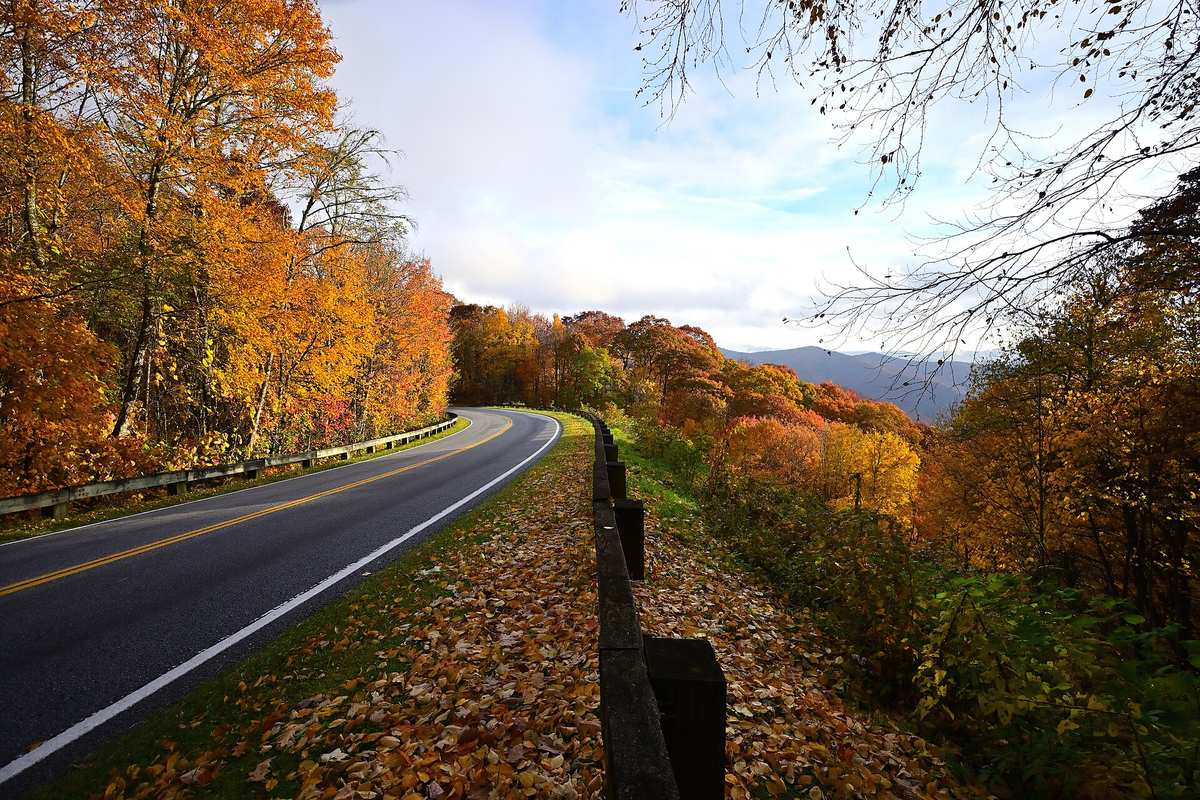

Late October is when the Great Smoky Mountains put on their longest show. The park runs from 875 to 6,643 feet in elevation1, and that spread of height means fall color arrives in stages, ridge first and valley last, rather than all at once. Add more than 100 tree species and many deciduous shrubs1, and the season stretches over weeks.
Why the color comes in waves
The high ridges go first. At the top, the park says, color changes can begin as early as mid-September1, and the first trees to turn are yellow birch, American beech, mountain maple, hobblebush and pin cherry1. In a September 23, 2025 release, the park explained that these elevation changes allow the peak color season to stretch over several weeks2, with the high slopes changing first and the lower ones following later.
The park gives two rough windows. Above 4,000 feet, color usually develops from early to mid-October1. Below 4,000 feet, at the middle and lower elevations, the most brilliant displays usually come between mid-October and early November1. That puts late October in the middle of the lower window, when the high ridges may already be past their best and the valleys are coming on. The park also cautions that the timing of peak color varies from year to year1.
The lower slopes bring the heavy hitters. The park lists sugar maple, scarlet oak, sweetgum, red maple, yellow poplar and hickories1 among the trees with the most vivid color down low, which is why a drive that starts on ridges past their peak can end in a valley still burning orange and red.
What turns a leaf
Most of the color was there all summer. Connecticut's state forestry office explains that chlorophyll is green and there is so much of it in a grown leaf that it gives the leaf its green color3. The yellow and orange pigments, carotenoids, sit in the leaf all year under that green. When chlorophyll breaks down in the fall, the yellow and orange carotenoids show through3.
Reds work differently. They are made fresh in autumn, when sugars trapped in the leaves form the red pigments, anthocyanins3, and the same page notes that brighter light means more anthocyanin. The brightest colors develop, the page says, when autumn days are bright and cool, and the nights chilly, but not freezing3. Among the familiar reds it names red maple, dogwood, red oak, scarlet oak and sassafras3, and it describes the golden bronze of beech3.
Where to look
The park points visitors to a handful of drives. The Foothills Parkway1 runs in sections just outside the park boundary, and the park service lists three completed segments open to drivers4 (Cosby to I-40, Walland to Wears Valley, and Chilhowee to Walland). Lakeview Drive1 is the quiet pick, with glimpses of Fontana Lake. Cades Cove Loop Road and Roaring Fork Motor Nature Trail1 are both one-way and scenic, and both are busy enough that the park tells drivers to expect delays.
For the high country, there is Newfound Gap Road (US 441), which the park describes as a 31-mile National Scenic Byway5. It is open year-round, weather permitting6. Kuwohi Road, formerly Clingmans Dome Road6, climbs toward the park's highest point, where the Kuwohi Observation Tower7 stands 45 feet tall at the end of a paved but steep walk of about a mile round trip. The park warns that clouds, precipitation, and cold temperatures are common at Kuwohi7, with temperatures 10 to 20 degrees Fahrenheit cooler than the nearby lowlands, so a jacket belongs in the car.
The Blue Ridge Parkway1 begins just outside the park on the North Carolina side. As of 7 a.m. on October 22, 2026, the parkway's road status page listed the stretch from milepost 393.6 to 469.1, ending at US 441 at the park, as open8, though it notes that status can change through the day.
Roads with closing dates
Several secondary roads in the park close for the season soon. On the park's 2026 schedule, Heintooga Ridge Road runs through October 316, Parson Branch Road and Rich Mountain Road through November 96, and Kuwohi Road, Roaring Fork Motor Nature Trail and Little Greenbrier Road through November 296. Kuwohi Road can also close at any time for snow, ice, and other hazardous weather6. Cades Cove Loop Road is open sunrise to sunset daily6.
As of the park's temporary closures page, last updated October 15, 2026, the Carlos Campbell Overlook on Newfound Gap Road9 was closed while crews assessed cracks in the pavement and sidewalk, and Mingus Mill9 was closed for rehabilitation work. Laurel Falls Trail remains closed, with reopening expected sometime in 20279.
Parking, fees and crowds
Great Smoky Mountains charges no entrance fee11. Parking is another matter. Since March 1, 202311, a tag has been required for all vehicles parking for longer than 15 minutes10. As listed by the park on October 22, 2026 (page last updated October 8, 2026), a tag costs $5 a day, $15 a week or $40 a year10. Tags are not location-specific10, so one covers any lot in the park, though it does not guarantee a space. Each tag covers one vehicle and must carry that vehicle's license plate number, and America the Beautiful passes are not accepted in place of a parking tag10.
Daily and weekly tags are sold online through recreation.gov and at visitor centers, participating retailers and the park's tag machines, which take credit cards only. The annual tag comes through Smokies Life10. Vehicles with state-issued disability placards or plates do not need a parking tag10. The park also honors national free entrance days, and on the free days of October 27 and November 1110, 2026, no parking tag is needed.
Expect company. In its 2025 fall release, the park called itself consistently the most visited national park in the country2 and named October one of its busiest months2. Its advice that year was to consider arriving before 8 a.m. or after 4 p.m.2, dress in layers, and keep at least 50 yards from bears and elk.
Trivia
- What does the Cherokee name Kuwohi mean? Mulberry place12.
- On what date did the U.S. Board on Geographic Names vote to restore the Kuwohi name? September 18, 202412, at the request of the Eastern Band of Cherokee Indians.
- Besides being the highest point in the Smokies, what two other distinctions does Kuwohi hold? It is the tallest point in Tennessee and the third-highest summit east of the Mississippi River12.
- About how long is the ramp to the Kuwohi Observation Tower? 375 feet7. The tower dates to 1959 and is listed on the National Register of Historic Places.
- When did Congress authorize the Foothills Parkway? February 22, 19444. The full corridor is 72 miles.
- What 1951 deed condition is the reason the Smokies cannot charge an entrance fee? Tennessee transferred Newfound Gap Road and Little River Road to the park with a restriction preventing tolls on either road11, and federal law bars entrance fees where tolls on primary park roads are prohibited.
- About how much of the park land came from logging companies? About 85 percent, from 18 logging companies11.
- How long is the Blue Ridge Parkway? 469 miles13.
Sources
- Fall Colors, Great Smoky Mountains National Park, National Park Service. Accessed October 22, 2026.
- It's Beginning to Feel Like Fall in the Smokies, National Park Service news release, September 23, 2025. Accessed October 22, 2026.
- Why Leaves Change Color, Connecticut Department of Energy and Environmental Protection, Forestry. Accessed October 22, 2026.
- Foothills Parkway, National Park Service. Accessed October 22, 2026.
- Newfound Gap Road to Reopen Ahead of Schedule Following Major Repairs, National Park Service news release, September 12, 2025. Accessed October 22, 2026.
- Seasonal Road Schedule, Great Smoky Mountains National Park, National Park Service. Accessed October 22, 2026.
- Kuwohi Observation Tower, National Park Service. Accessed October 22, 2026.
- Blue Ridge Parkway Road Status and Closures, National Park Service. Accessed October 22, 2026.
- Temporary Road and Facility Closures, Great Smoky Mountains National Park, National Park Service. Accessed October 22, 2026.
- Annual Parking Tag, Great Smoky Mountains National Park, National Park Service. Accessed October 22, 2026.
- Why No Entrance Fee?, Great Smoky Mountains National Park, National Park Service. Accessed October 22, 2026.
- Kuwohi Name Restored to the Highest Peak in the Smokies, National Park Service news release, September 18, 2024. Accessed October 22, 2026.
- Blue Ridge Parkway, National Park Service. Accessed October 22, 2026.