The Day of Two Noons: Railroads Set Standard Time, Nov. 18, 1883
Key Points
- The Library of Congress dates the Day of Two Noons to November 18, 1883, when railroad station clocks were reset to standard time, which makes November 18, 2026 the 143rd anniversary.
- The Law Library of Congress says railroad officials voted for William F. Allen's plan at the General Time Convention in Chicago on October 11, 1883.
- Congress put standard time into federal law with the Act of March 19, 1918, which divided the continental United States into five zones.
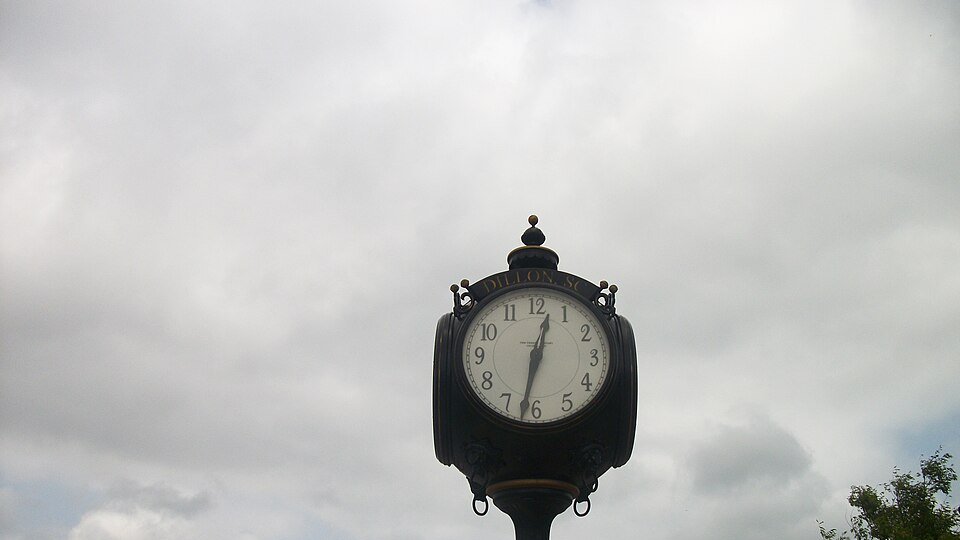

The Library of Congress dates the Day of Two Noons to November 18, 1883, when individual railroad station clocks were reset as standard-time noon was reached within each time zone2. That makes Wednesday, November 18, 2026 the 143rd anniversary. Before then, the Law Library of Congress says, local time was a regional affair set by the sun.
Every town its own noon
The Law Library of Congress says cities set their clocks by the sun crossing the meridian, which left more than 144 local times in North America. Railroads kept their own precise time, and the blog counts an estimated 80 different time zones by the early 1880s1. Passengers had to track the standards used for each railroad, and stations kept several clocks for them1.
The Library of Congress research guide says the confusion grew more dangerous as routes multiplied, and that different company times could lead to wrecks and many deaths2. The Union Pacific Railroad Museum adds that Congress considered and rejected a national standard time in 1809, 1870 and 1872, so the railroads in the United States and Canada took the matter into their own hands3.
The plan and the vote
The railroads adopted a version proposed by William F. Allen, editor of the Traveler's Official Railway Guide, whose system had five time zones named Intercolonial, Eastern, Central, Mountain and Pacific2. The Law Library of Congress says the General Time Convention met at the Grand Pacific Hotel in Chicago on October 11, 1883, where Allen presented his plan, based on mean sun time on the 75th, 90th, 105th and 120th meridians west of Greenwich, each an hour apart. Most railroad officials voted for it, and railroad clocks were to be set to the new standard at noon on November 18, 18831.
Charles F. Dowd had proposed regional time zones earlier, and the blog dates his plan of four zones to an 1870 pamphlet1. The research guide dates his first proposal to 1863 and says it was never accepted2. The two Library of Congress pages differ on that year, so the year is left as each page gives it.
Why there were two noons
The railroads asked city governments to follow, newspapers printed instructions for adjusting watches and maps of the new zones, and the United States Naval Observatory and the Allegheny Observatory in Pittsburgh agreed to send telegraph signals so companies could synchronize1. On November 18, 1883, the clock struck noon twice in several cities, once at the previous local time and once at the new standard time1.
The Union Pacific museum explains that in the eastern part of each zone there was a noon by sun time, then another when clocks and watches were set back to railroad time3. The research guide says every railroad clock was reset, even those that had already passed noon2.
Not everyone cheered
The Law Library of Congress says most people found the new system convenient, but some objected to what they saw as a violation of the natural order, and quotes the Indianapolis Sentinel predicting that people would have to marry and die by railroad time1. The Union Pacific museum says some citizens felt they were being robbed of daylight, and others wanted one time for the whole country or a 24-hour clock3.
From railroad time to federal law
The Act of March 19, 1918, titled An Act To save daylight and to provide standard time for the United States, divided the continental United States into five zones4. The blog says the law placed the authority to set zone boundaries with the Interstate Commerce Commission and created daylight saving time, which was repealed after World War I1. The guide adds that the Uniform Time Act of 1966 was enacted on April 13 to promote uniform observance of time within the standard time zones2.
Trivia
- What was the Day of Two Noons? November 18, 18832, when railroad station clocks were reset to standard time.
- In what city did railroad officials vote on the plan on October 11, 1883? Chicago1, at the Grand Pacific Hotel.
- Which man, editor of the Traveler's Official Railway Guide, devised the adopted plan? William F. Allen2.
- Which two observatories agreed to send telegraph signals for the change? The United States Naval Observatory and the Allegheny Observatory in Pittsburgh1.
- In what year did Congress pass the Standard Time Act? 19184, on March 19.
Sources
- Whose Time is it Anyway? A Brief History of Standardized Time Zones in the United States, Charlotte Milliken, In Custodia Legis (Law Library of Congress), November 2024. Accessed November 15, 2026.
- The Day of Two Noons, This Month in Business History, Library of Congress Research Guides. Accessed November 15, 2026.
- Time is of the essence ... or the railroad?, Union Pacific Railroad Museum. Accessed November 15, 2026.
- An Act To save daylight and to provide standard time for the United States, March 19, 1918, 40 Stat. 450, U.S. Government Publishing Office. Accessed November 15, 2026.