Theodore Roosevelt in Panama: The First Presidential Trip Abroad, 1906
Key Points
- Roosevelt left Washington on 8 November 1906, and the State Department's Office of the Historian dates his departure from the U.S. to 9 November.
- He spent 14 to 17 November in Panama, which the Office of the Historian calls the first visit abroad by any president.
- He chose November because it was the rainiest month, when the canal work went forward at the greatest disadvantage.
- He spent an entire day in the Culebra Cut, counted some 25 steam shovels at work, and credited chief engineer John Stevens with admirable results.
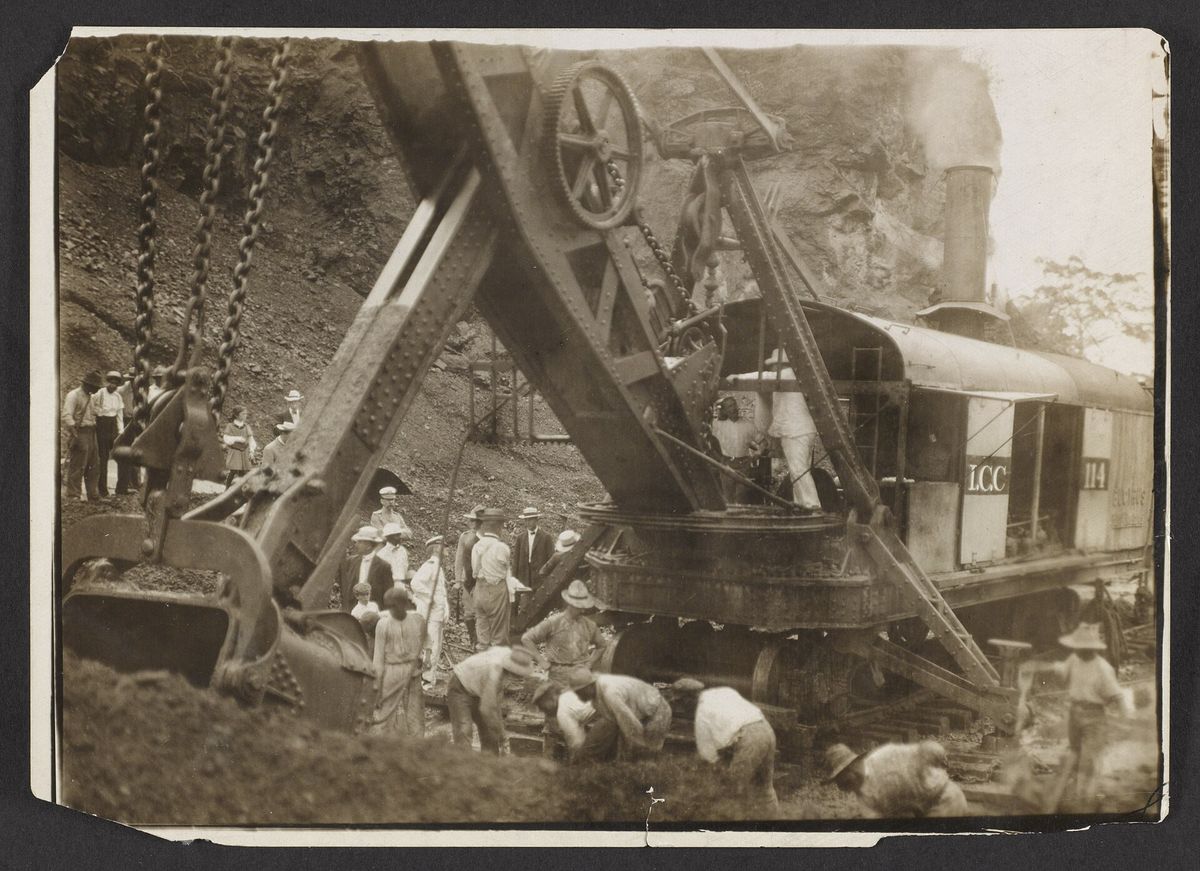

In November 1906, a sitting American president left the country for the first time. Theodore Roosevelt left Washington on 8 November 1906. The Morning Oregonian's dispatch from Washington, dated that day, reported that he arrived at the navy yard shortly before 4 o'clock10 and boarded the yacht Mayflower, which was to take the party down to meet the battleship Louisiana, and History.com also starts the trip on 8 November3. The State Department's Office of the Historian dates his departure from the U.S. to the next day, recording that he departed the U.S. on 9 November 1906 and returned on 26 November1. Its remarks on the visit call it the "First visit abroad by any President or President-elect."1 On the way south Roosevelt wrote home about life aboard ship, and the Theodore Roosevelt Center holds a letter to his son Kermit about his experiences aboard the Louisiana8. The 120th anniversary of the Louisiana's arrival off Colon falls on Saturday, 14 November 2026.
The Miller Center's introduction to his later report says the President and Mrs. Roosevelt went "to inspect the building of the Panama Canal"2.
Why he picked the wettest month
The timing was deliberate, and Roosevelt explained it himself. In his message to Congress on 17 December 1906 he wrote: "I chose the month of November for my visit partly because it is the rainiest month of the year, the month in which the work goes forward at the greatest disadvantage, and one of the two months which the medical department of the French Canal Company found most unhealthy."2
The same message says that right after the Louisiana anchored there was "a violent storm of wind and rain"2. Roosevelt reported 1.05 inches of rain in fifteen minutes at Cristobal, and 10.24 inches in all over the six days ending at noon on 16 November2. The river rose in flood higher than at any time in fifteen years and tore out the track in one place, and he concluded: "It would have been impossible to see the work going on under more unfavorable weather conditions."2
Three days ashore
"The U. S. S. Louisiana, on which I was, anchored off Colon about half past two on Wednesday afternoon, November 14."2 On Thursday morning the party landed at about half past seven and went slowly over the line of the Panama Railway2. The rest of that day took in a tug trip out to the islands at the Pacific entrance where the dredging would end, dinner at one of the Commission's eating houses, the hospital at Ancon, the Zone police and the schools.
Friday belonged to the excavation. "On Friday morning we left the hotel at 7 o'clock and spent the entire day going through the Culebra cut,"2 he wrote. Saturday began at 8 o'clock with another pass through the cut, a stop to see the Marines and an inspection of the proposed dam site at Gatun, then the reservoir, a fire department demonstration and, in the evening, a reception on one of the Colon docks given by the American employees on the Isthmus2. He went back aboard ship "at about half past 9 on Saturday evening, November 17."2 In all, as he put it, "I was three days ashore."2
Inside the Culebra Cut
"The main work is now being done in the Culebra cut."2 Roosevelt described one spot where "the entire side of a hill had been taken out recently by twenty-seven tons of dynamite, which were exploded at one blast."2 At another, he wrote, the canal bed had "been sunk about two hundred feet below what it originally was."2
He noted that "In the rainy season the steam shovels can do but little in dirt, but they work steadily in rock and in the harder ground,"2 and counted "some twenty-five at work during the time I was on the Isthmus."2 He also compared the newest dump cars, holding 25 to 30 yards of earth apiece2, with the few older cars still in use, which held only 12. To show that the wet months were not wasted, he gave the monthly excavation figures: "In August, 242,000 cubic yards; in September, 291,000 cubic yards, and in October, 325,000 cubic yards."2
The steam shovel picture
The best known pictures from the trip show Roosevelt on one of those shovels. The White House Historical Association's caption for a photo of the tour says he toured the Culebra Cut, examined the huge steam shovels at work, and was seen climbing aboard them6 without trying to avoid the mud. The Theodore Roosevelt Center holds an Underwood & Underwood postcard from 1906 titled "President Roosevelt Running an American Steam Shovel at Culebra Cut, Panama Canal"7. The Smithsonian places the shovel at the Pedro Miguel lock site12, at the southern end of the cut. The White House Historical Association dates the photograph to 16 November11, the Friday Roosevelt spent in the cut, and the New York Times ran "The President Climbs a Canal Steam Shovel"11 on its front page the next morning.
History.com also argues that the visit as a whole helped boost morale3 on a project that had been hit by worker accidents and disease. Roosevelt's own message says only that the party "watched the different steam shovels working."2
Stevens, Gorgas and 25,000 workers
The engineer running the excavation was John Stevens. PBS's American Experience says he was appointed chief engineer in 19055, took the threat of mosquito-borne yellow fever seriously when most senior officials did not, and backed a design of locks, dams and an artificial lake after concluding that a sea level canal was impossible. Roosevelt's message credits the digging to "the Chief Engineer, Mr. Stevens, who has already shown admirable results"2. Stevens did not stay to finish it. PBS says the pressure of the job led to his resignation in 19075.
Sanitation was the other half of the job. Roosevelt wrote that the health work "was from the outset under the direction of Dr. W. C. Gorgas"2, and PBS's presentation of the message shows the sanitation work under Gorgas covered mosquito control, drainage and clearing brush4. Roosevelt judged that "Just at present the health showing on the Isthmus is remarkably good"2 and put the size of the workforce simply: "At present twenty-five thousand men are engaged on the task."2 The message also recommended replacing the seven member Isthmian Canal Commission with a single commissioner4.
A precedent that stuck
History.com describes the trip as the start of a new era in presidential diplomacy3. The Office of the Historian's record of Roosevelt's travels holds a single entry: Colon and Panama City, 14 to 17 November 19061.
Trivia
- Where else did Roosevelt's 17 day tour go besides Panama, according to History.com? Puerto Rico. History.com describes the trip as a 17 day tour of Panama and Puerto Rico3.
- What salute was Roosevelt given in the Culebra Cut? A Presidential salute of twenty-one charges of dynamite2, by his own account.
- Where did the Roosevelts sleep during the visit? At the Hotel Tivoli, at Ancon2, on a hill just outside Panama City but inside the Canal Zone.
- Which Panamanian leader formally received Roosevelt? President Amador2, who also gave a dinner and reception in Panama.
- Who did Roosevelt appoint as chief engineer after Stevens, and when? Colonel George Washington Goethals, appointed on 26 February 19075, according to PBS.
- How long is the Culebra Cut stretch through the Continental Divide? The Panama Canal Authority puts it at 8.75 miles, from Gamboa on the north to Pedro Miguel on the south9.
- When did the first slide of the American effort hit the cut? The Panama Canal Authority says it came at Cucaracha on 4 October 19079, when some 500,000 cubic yards of material moved into the cut after several days of unusually heavy rain.
- What names did some of the Louisiana's seven-inch guns carry, according to Roosevelt's 11 November 1906 letter to his son Archie? Victor, Invincible, Peacemaker, Skidoo, Tedd and The Big Stick13.
Sources
- U.S. Department of State, Office of the Historian, “Travels of the President: President Theodore Roosevelt”. Accessed November 5, 2026.
- Theodore Roosevelt, “December 17, 1906: Message Regarding Conditions in Panama,” Miller Center, University of Virginia. Accessed November 5, 2026.
- HISTORY.com Editors, “Teddy Roosevelt travels to Panama,” HISTORY, This Day in History, November 8. Accessed November 5, 2026.
- PBS American Experience, “Roosevelt’s Message to Congress,” The Panama Canal. Accessed November 5, 2026.
- PBS American Experience, “Chief Engineers of the Panama Canal,” The Panama Canal. Accessed November 5, 2026.
- White House Historical Association, “President Roosevelt tours the Panama Canal cut,” photograph, November 1906, Theodore Roosevelt Collection, Harvard College Library. Accessed November 5, 2026.
- Underwood & Underwood, “President Roosevelt Running an American Steam Shovel at Culebra Cut, Panama Canal,” postcard, 1906, Marple Collection, Theodore Roosevelt Center at Dickinson State University. Accessed November 5, 2026.
- Theodore Roosevelt, “Letter from Theodore Roosevelt to Kermit Roosevelt,” 11 November 1906, Theodore Roosevelt Center at Dickinson State University. Accessed November 5, 2026.
- Panama Canal Authority, “Culebra Cut”. Accessed November 5, 2026.
- “President Is Off to See Big Ditch,” Morning Oregonian (Portland), 9 November 1906, page 1, Historic Oregon Newspapers. Accessed November 5, 2026.
- Catherine Forslund, “Off for the Ditch,” White House Historical Association. Accessed November 5, 2026.
- Smithsonian Institution Libraries, “Make the Dirt Fly!” exhibition. Accessed November 5, 2026.
- Theodore Roosevelt, Letters to His Children, ed. Joseph Bucklin Bishop (1919), Project Gutenberg eBook 6467, letter to Archie, 11 November 1906. Accessed November 5, 2026.