Vin Fiz Reaches Pasadena: First U.S. Coast-to-Coast Flight, 1911
Key Points
- Calbraith Perry Rodgers landed at Pasadena, California, on November 5, 1911, 49 days after leaving Sheepshead Bay, New York, in a Wright EX biplane.
- The National Air and Space Museum says Hearst's 30-day prize limit had expired when Rodgers reached Kansas City, Missouri, and that he kept flying anyway.
- The museum says the airplane is displayed at the Steven F. Udvar-Hazy Center in Virginia, with free admission and $15 parking as read on November 2, 2026.
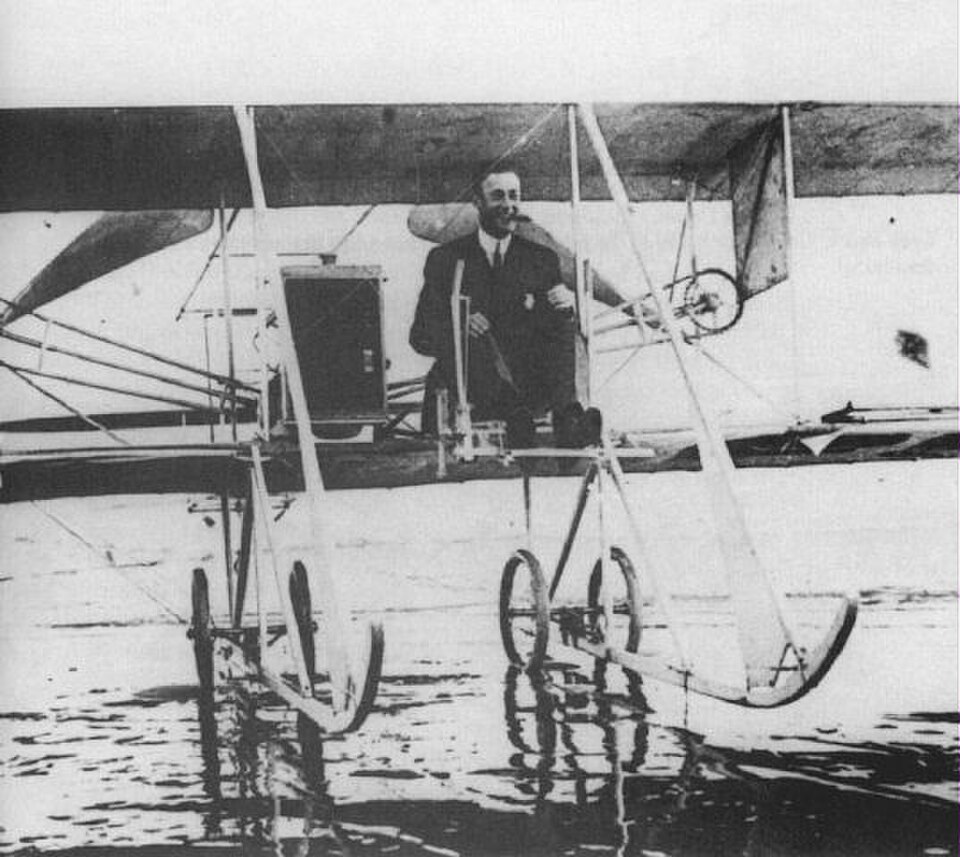

Calbraith Perry Rodgers landed his Wright EX biplane at Pasadena, California, on November 5, 1911, 49 days after taking off from Sheepshead Bay, New York1. The 115th anniversary falls on Thursday, November 5, 2026. The museum calls the flight the first crossing of the United States by airplane, and the aircraft the Smithsonian displays under its name is now free to see in Virginia4.
A prize, a soda and a train
Publisher William Randolph Hearst offered $50,000 for the first flight across the United States in 30 days or less, an offer good for one year beginning on October 10, 19101. Rodgers was one of three competitors in September 1911. Robert Fowler left San Francisco on September 11 and gave up after three failed attempts to cross the Sierras, and James Ward left the East Coast on September 13 and quit within about a week, still in New York State1.
Rodgers found a sponsor in the Armour Company of Chicago, which was introducing a grape soft drink called Vin Fiz. Armour provided a special train with cars for his family and crew and a "hangar" car, a rolling workshop of spare parts, and the museum records that the company would pay him five dollars for every mile flown east of the Mississippi and four dollars for every mile west of it1. The Centennial of Flight essay gives a slightly different figure, three to five dollars a mile and a total of $23,0002, so the exact payment depends on which account is used. The National Air and Space Museum adds that the soda's logo on the plane marked the first time an airplane was used for commercial advertising3.
The route, by rail line
The plane had no compass, so Rodgers followed railroad tracks, and on more than one occasion he picked the wrong line and had to regroup3. He reportedly landed around 70 times, including at least 16 crashes, and the plane was rebuilt at least twice2. The museum's own count is over 15 crashes and four engine explosions3. The sources count the crashes differently, which is why both figures are given here as the sources state them.
When Hearst's 30-day limit ran out, Rodgers had reached only Kansas City, Missouri. He kept going anyway, heading south into Texas and then across the southern United States toward Pasadena, the official end point1. He reached Pasadena 19 days after the deadline2.
November 3 to 5, 1911
On November 3, shortly after passing Imperial Junction, California, at about 4,000 feet, an engine cylinder exploded, damaged a wing and drove steel shards into Rodgers's right arm. He glided about six miles back to Imperial Junction and landed safely1. The plane was repaired by the next day, and he took off for Pasadena on November 4, but more engine trouble put him down at Banning, about halfway to the finish1.
On November 5 he flew again, made brief stops at Beaumont and Pomona, and reached Pasadena to a hero's welcome1. About 20,000 people watched the landing2. Pasadena was not the Pacific, though. He wanted to finish at the ocean, and Long Beach was chosen as the final stop1.
The last miles to the sea
He left Pasadena for Long Beach on November 12 but engine failure forced him down near Covina Junction, and after a repair he went down again near Compton in a serious crash that badly hurt him and heavily damaged the plane. He took off again on December 10, still needing crutches, and landed at Long Beach, where the Vin Fiz was rolled into the surf so the Pacific lapped over its wheels1.
The museum puts the distance at 6,914 kilometers (4,321 miles) in 82 hours and 4 minutes of flying time, an average of 51.5 miles per hour1. Counted from the Sheepshead Bay takeoff to the beach, the trip took 84 days, and that essay gives the distance as approximately 4,000 miles, noting that authorities differ2. Rodgers died on April 3, 1912, when he crashed into the surf at Long Beach in a different airplane, a Wright Model B, a few months after finishing1. The museum says the precise cause remains undetermined.
Seeing the Vin Fiz now
The Smithsonian acquired the airplane from the Carnegie Museum in 1934 and restored it in 1960. It is on display in Interwar Military Aviation at the Steven F. Udvar-Hazy Center in Chantilly, Virginia1. The museum cautions that almost nothing of the airplane that left Sheepshead Bay remained by the end of the journey, so the object is built from components that were, at various points, part of the Vin Fiz, and its engine is a wooden mock-up1.
As read on the museum's visit page on November 2, 2026, admission to the Udvar-Hazy Center is free with no passes required, parking is $15, and the center is open 10 am to 5:30 pm every day but December 254. Check the museum's page for current terms before a visit. This page links no store and earns nothing from any link.
Trivia
- What was the name of the soft drink that sponsored the flight? The grape soda Vin Fiz1, made by the Armour Company of Chicago.
- How many days passed between the takeoff and the Pasadena landing? 49 days1, from September 17 to November 5, 1911.
- Which California town did Rodgers glide back to after a cylinder exploded on November 3? Imperial Junction1, about six miles away.
- How many days late was Rodgers for the Hearst prize deadline when he reached Pasadena? 19 days2.
- Where is the Vin Fiz displayed now? At the Steven F. Udvar-Hazy Center4 in Chantilly, Virginia, in Interwar Military Aviation.
Sources
- Wright EX Vin Fiz, National Air and Space Museum, Smithsonian Institution. Accessed November 2, 2026.
- Vin Fiz - the First U. S. Transcontinental Flight, Richard F. Baker, Centennial of Flight (centennialofflight.net). Accessed November 2, 2026.
- How a Brand New Pilot (and Grape Soda) Made History Crossing the U.S., National Air and Space Museum, May 21, 2025. Accessed November 2, 2026.
- Steven F. Udvar-Hazy Center visit page, National Air and Space Museum. Accessed November 2, 2026.