The War of the Worlds Broadcast at 88: Myth and Facts
Key Points
- Orson Welles's The War of the Worlds aired live on CBS at 8 pm Eastern on October 30, 1938, and Friday, October 30, 2026, is its 88th anniversary.
- Howard Koch was assigned the adaptation on October 24, and CBS lawyers pushed for about 28 changes in phrasing, such as Langley Field becoming Langham Field.
- The broadcast was announced as fiction four times, and a Hooper survey that night phoned 5,000 households, and 2 percent of those who answered said they were listening to the play.
- Historians say the panic was greatly exaggerated by newspapers of the day.
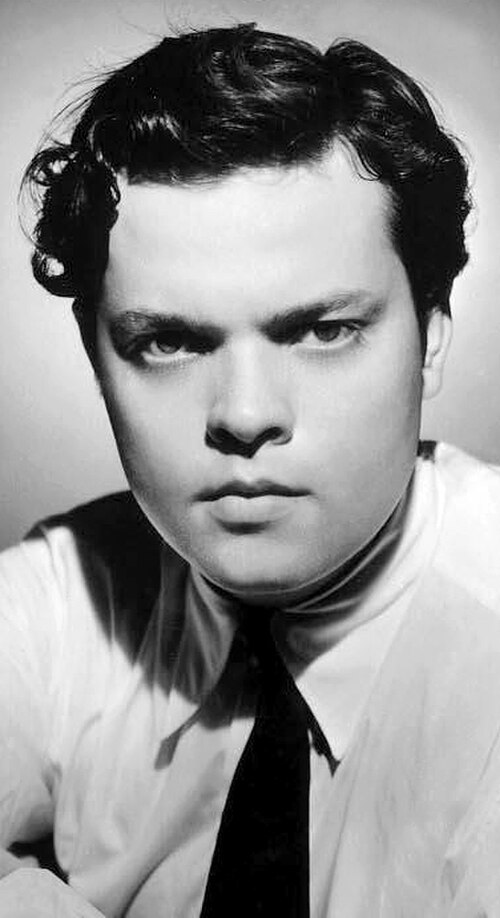

Friday, October 30, 2026, is the 88th anniversary of The War of the Worlds, the Halloween radio play Orson Welles directed and narrated. It aired live at 8 pm Eastern on October 30, 1938, on CBS1, as the 17th episode of The Mercury Theatre on the Air, and it is remembered for the idea that it frightened a nation. The bigger story is how that idea took hold.
A script written in a week
The play adapted H. G. Wells's novel, and Howard Koch wrote the adaptation, moving the story from 19th-century England to the United States, with the first spacecraft landing in Grovers Mill, New Jersey1. According to the timeline in that account, Koch was assigned the job on October 241. On the night of October 25 he phoned producer John Houseman in what Houseman called "deep distress," unsure he could make it credible as radio. A first draft was finished on October 26, the cast read it on October 27, and the writers reworked it that night to add more news bulletins and real place names.
CBS lawyers pushed back. The network insisted on about 28 changes in phrasing1 because naming real institutions could be actionable. The Hotel Biltmore became the nonexistent Park Plaza, and Langley Field became Langham Field. To voice the reporter at the landing site, actor Frank Readick repeatedly played the recording of Herbert Morrison's report on the Hindenburg disaster1 before the broadcast.
What listeners heard
The show opened as an ordinary evening of dance music, then broke in with bulletins about explosions on Mars and an object falling on a farm in Grovers Mill1. A field reporter described creatures emerging and a heat ray before his line went dead. The first break came about thirty minutes after Welles's introduction1, after a reporter on a Manhattan rooftop described poison smoke and fell silent. The last segment ran about 16 minutes and ended, as in the novel, with the Martians dying of microbes.
The play was not unannounced. Announcements that it was a dramatization of a work of fiction were made on the full CBS network at four points during the broadcast1, and the New York Times listed it that day among the evening's plays. Welles closed by saying the show was the Mercury Theatre's way of "dressing up in a sheet and jumping out of a bush and saying 'Boo!'" and assured listeners, "If your doorbell rings and there's nobody there, that was no Martian; it's Halloween."
The morning after
CBS learned of the public reaction while the show was still on the air. The next morning Welles apologized at a hastily called news conference, and no punitive action was taken1. Within three weeks, newspapers had published at least 12,500 articles about the broadcast1, and the 23-year-old Welles became known to the general public.
How big was the panic?
Probably much smaller than the headlines said. Many newspapers assumed that the large number of phone calls and scattered reports of listeners rushing about or fleeing their homes proved a mass panic, but such behavior was never widespread1. A C. E. Hooper survey that night phoned 5,000 households. Two percent said they were listening to the radio play, and no one said they were listening to a news broadcast1. Of the nearly 2,000 letters sent to Welles and the FCC and held by the University of Michigan and the National Archives, roughly 27% came from frightened listeners or people who witnessed any panic1, according to historian A. Brad Schwartz's analysis.
The popular explanation that listeners tuned away from the rival Chase and Sanborn Hour and missed the introduction also gets less support than the legend suggests. Schwartz concluded that very few frightened listeners had switched over from that show1. Newspapers, meanwhile, exaggerated the rare cases of actual fear and confusion to play up the idea of a nationwide panic as a means of discrediting radio1, a new competitor for advertising money. American University media historian W. Joseph Campbell wrote in 2003 that the panic and mass hysteria associated with the broadcast did not occur on anything approaching a nationwide dimension1.
Some effects were real and local. Telephone lines and power failed at a cement company substation in Concrete, Washington, a coincidence that sent the town's name around the world on the newswire1. In Cleveland, announcer Jack Paar, later host of The Tonight Show, told callers on the phone and on air, "The world is not coming to an end. Trust me."1
Trivia
- On which network and at what time did The War of the Worlds air on October 30, 1938? CBS, at 8 pm Eastern1.
- Which New Jersey village did the adaptation make the landing site? Grovers Mill1.
- What did CBS change Langley Field to in the script? Langham Field1.
- According to the Hooper survey, what share of the respondents said they were listening to the play? Two percent1.
- Which town's phone and power failure turned into a worldwide news story that night? Concrete, Washington1.
Sources
- The War of the Worlds (1938 radio drama), Wikipedia. Accessed October 26, 2026.