ARPANET Says LO, 1969: The First Message From UCLA to SRI
Key Points
- On 29 October 1969, Charley Kline at UCLA tried to log in to an SRI computer while Leonard Kleinrock supervised and Bill Duvall worked at the SRI end.
- Only the “l” and the “o” got through before the system crashed, so the first message is remembered as “lo”, and Kleinrock says the full login worked about an hour later.
- Kleinrock and the IEEE milestone give the time as 10:30 p.m., while a 2009 Computer History Museum release says Kline typed at around nine p.m.
- By the end of 1969, four host computers at UCLA, SRI, UC Santa Barbara and the University of Utah formed the initial ARPANET.
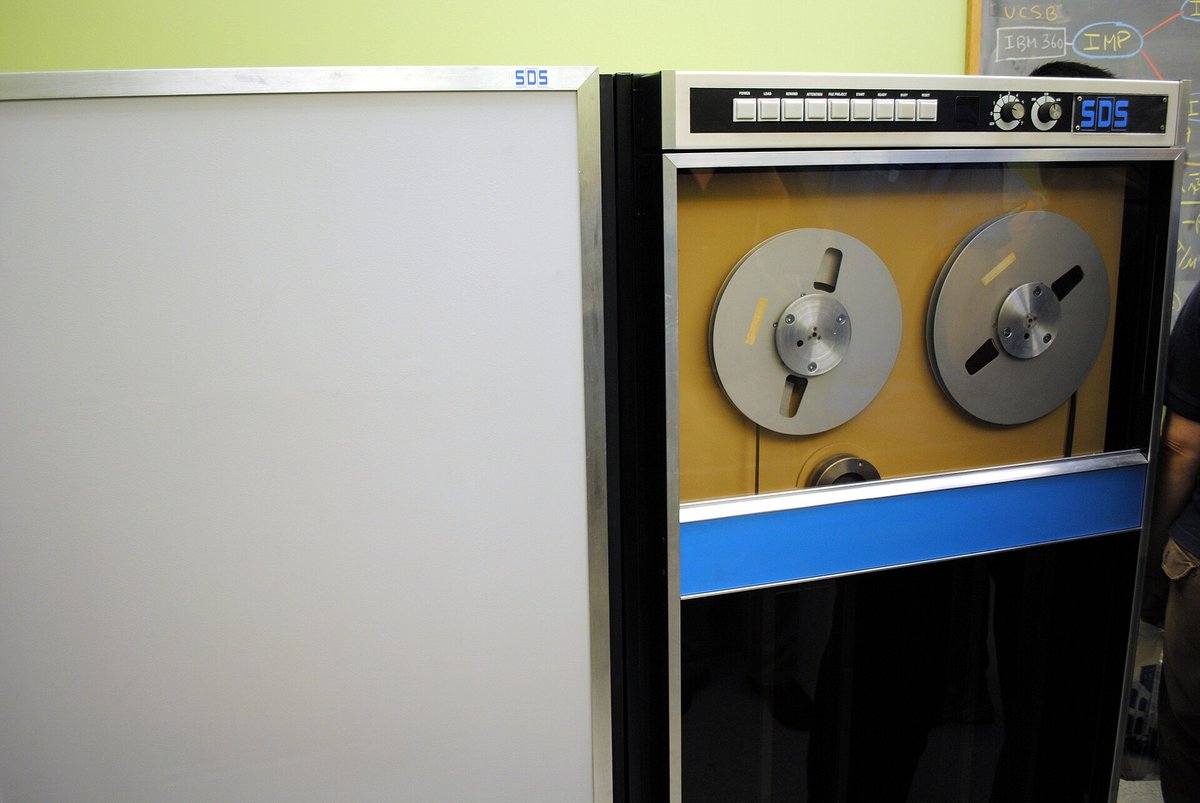

On the night of 29 October 1969, a student programmer at UCLA tried to log in to a computer at the Stanford Research Institute in Menlo Park, California3. Two letters made it across before the system crashed. Those two letters, “lo”, are remembered as the first message sent over the network that grew into the internet. Thursday, 29 October 2026, is the 57th anniversary.
Who was in the room
Leonard Kleinrock, a UCLA professor, was supervising student programmer Charley Kline1 at the UCLA end. At the other end sat Bill Duvall1, another programmer, at the SRI machine. In Kleinrock’s account for ICANN, the two men talked over telephone headsets2 so they could communicate by voice as the message was being transmitted.
The UCLA lab was Room 3420 on the third floor of Boelter Hall7, part of what is now the UCLA Samueli School of Engineering. UCLA had been picked as the site of the first Interface Message Processor largely because of Kleinrock’s work on queuing theory and network measurement, and the lab also served as the network’s Network Measurement Center7.
What happened that night
Kline was to “login”1 to the SRI computer from UCLA. Kline typed an “l” and asked whether it had arrived, and the reply came back, “Got the l”2. The “o” went the same way. Then Kline typed a “g”, and, in Kleinrock’s words for ICANN, “the system crashed!”2 So the first message, he writes, was “the prescient word ‘lo’”2, as in “lo and behold!”
Accounts differ on the time. Kleinrock’s page says the attempt “took place at 22:30 hours on October 29, 1969,”1 and draws on an excerpt from the IMP Log1 kept at UCLA. The IEEE milestone in Boelter Hall uses the same time, reading that “At 10:30 p.m., 29 October 1969, the first ARPANET message was sent from this UCLA site to the Stanford Research Institute.”7 A 2009 Computer History Museum release tells it a little differently. In that version Kline typed “LOGIN” “at around nine p.m.”3, the letters “LO” reached SRI before the crash, and “the connection was fully in place by 10:30 p.m.”3 Kleinrock’s page says the team managed the full login about an hour later1.
The machines
At UCLA the message started on the UCLA SDS Sigma 7 Host computer1. At SRI it landed on the SRI SDS 940 Host computer1. Each host connected to the network through an Interface Message Processor, or IMP, which the Computer History Museum describes as “the interface between the ARPANET (a predecessor to the Internet) and a computer connected to the network.”5
The IMPs came from Cambridge’s BBN Technologies (formerly Bolt, Beranek, and Newman)3. In 1969, Frank Heart put together a team at BBN to write the IMP software4 and to specify changes to the Honeywell DDP-516 minicomputer they were built on. The Computer History Museum notes that the Honeywell 516 inside its own early IMP has “only 12,000 words of memory”5. UCLA’s engineering school calls the one in Boelter Hall “the refrigerator-size machine that sent the groundbreaking communication”8.
The IMP was new that fall. According to the history that Kleinrock and other network pioneers wrote for the Internet Society, BBN put the first IMP in place at UCLA6 in September 1969, when the first host computer was connected. The test with SRI followed a month later.
Four nodes by the end of 1969
SRI was home to Doug Engelbart’s project on “Augmentation of Human Intellect”6, which the Internet Society history says provided a second node6. The Computer History Museum adds that Engelbart started the Network Information Center at SRI, “a library as well as the repository of data the network needed to run.”5
The same history says “Two more nodes were added at UC Santa Barbara and University of Utah,”6 with Glen Culler and Burton Fried at UCSB displaying mathematical functions6 and Robert Taylor and Ivan Sutherland at Utah working on 3-D representations6 over the net. By the end of 1969, four host computers were linked into the initial ARPANET6.
Bill Duvall, looking back for the museum’s 40th anniversary, described the world they started from: “In the 1960s, computers were not interconnected and most were not even interactive.”3
What came after
In December 1970 the Network Working Group finished the first host-to-host protocol for the network, the Network Control Protocol (NCP)6. Hosts on the ARPANET spoke NCP until January 1, 19836, when the network moved its host protocol from NCP to TCP/IP.
Kleinrock had pictured something like this early. In 1969 he predicted the spread of “computer utilities,”2 which, “like present electric and telephone utilities, will service individual homes and offices across the country.”2
UCLA opened the Leonard Kleinrock Internet Heritage Site and Archive8 at 3420 Boelter Hall in 2011, and the IEEE milestone there says the sharing of information digitally from this first node “launched the Internet revolution.”7
Trivia
- Who wrote RFC 1, the first document in the Request for Comments series, and what was it called? Steve Crocker of UCLA, under the title “Host Software”9.
- On what date was RFC 1 issued? 7 April 19699.
- What did the Computer History Museum’s early IMP cost? $82,2005.
- In what month of 1968 did BBN win the IMP project, according to the Computer History Museum timeline? December4.
- Who wrote the basic email send and read software at BBN in March 1972, according to the Internet Society history? Ray Tomlinson6.
- On what date was the IEEE milestone at UCLA dedicated? 29 October 20097.
- On what date did UCLA issue a press release about the coming network? July 3, 19692.
Sources
- Leonard Kleinrock, The First Words on the Internet, lk.cs.ucla.edu. Accessed October 26, 2026.
- Leonard Kleinrock, The First Message Transmission, ICANN Blog, 29 October 2019. Accessed October 26, 2026.
- The Computer History Museum, SRI International, and BBN Celebrate the 40th Anniversary of First ARPANET Transmission, Computer History Museum, 27 October 2009. Accessed October 26, 2026.
- Internet History of 1960s, Computer History Museum. Accessed October 26, 2026.
- Networking Takes Off, Revolution: The First 2000 Years of Computing, Computer History Museum. Accessed October 26, 2026.
- Barry M. Leiner, Vinton G. Cerf, David D. Clark, Robert E. Kahn, Leonard Kleinrock, Daniel C. Lynch, Jon Postel, Larry G. Roberts and Stephen Wolff, A Brief History of the Internet, Internet Society, 1997. Accessed October 26, 2026.
- Milestones: Birthplace of the Internet, 1969, IEEE, Engineering and Technology History Wiki. Accessed October 26, 2026.
- Archive Illuminates UCLA’s Place in Internet History, UCLA Samueli Newsroom, 9 November 2011. Accessed October 26, 2026.
- Steve Crocker, RFC 1: Host Software, UCLA, 7 April 1969, RFC Editor. Accessed October 26, 2026.