Bangka Slow Loris, Last Recorded in the 1930s, Is Found Alive
Key Points
- A study published in October 2026 in Spixiana reports that the Alobi Wildlife Rescue Center rescued more than 90 Bangka slow lorises on Bangka Island since 2015 and released 86 of them.
- The IUCN Red List classes the species as Critically Endangered (Possibly Extinct), and the authors call for the IUCN to reassess the Possibly Extinct tag.
- Rescues came from all four regencies of Bangka and from the city of Pangkal Pinang, on an island that has been a center of tin mining for more than three centuries.

A small, big-eyed primate that scientists had not documented in nearly a century, by Re:wild's account3, has been on Bangka Island all along. A study published in October 2026 in the journal Spixiana reports that the Alobi Wildlife Rescue Center rescued more than 90 Bangka slow lorises2 (Nycticebus bancanus) from different parts of the island since 2015, and released 86 of them. "The Bangka slow loris is still alive," Timon Glaw, one of the study's authors, told Reuters1 in a story published October 20.
The IUCN Red List classes it as Critically Endangered (Possibly Extinct), and the listing gives 1937 as the year the species was last seen2, according to the paper. Re:wild lists it among its lost primates4 under the name Sody's or Bangka slow loris, alongside four other primates.
Who did the work
The paper, titled "Neglected but still alive," has five authors: Langka Sani, Endi Riadi and Andre Septian of the Alobi Wildlife Rescue Center in Pangkal Pinang, Jochen Menner of the Taman Safari Prigen Conservation Breeding Ark in East Java, and Glaw, its corresponding author, of the Haus des Meeres Aqua Terra Zoo in Vienna. It appears in Spixiana volume 49, issue 1, pages 119 to 1282.
The study began with a conversation in Java, according to a press release from Re:wild dated October 213. Menner told Glaw the species was listed as possibly extinct, then put him in touch with Alobi, which had years of documented encounters that the scientific record lacked.
"We are glad to contribute to the scientific record to show that the Bangka slow loris is not lost, but the species is still very close to extinction," Sani, Alobi's director, said in the release3.
What the rescue records show
Between 2015 and August 2025, Alobi took in the lorises after calls from residents or authorities by phone, WhatsApp or social media2. Of the 43 animals with detailed records, all rescued since 2021, sixteen were found after entering houses or gardens, seven had burns consistent with an electric shock, six were picked up from roads, five came from the local wildlife trade or from captivity, three were found in plantations, one was tangled in a fence and one had been attacked by a dog; for four there is no record of how they were found. At least three died. One, rescued in October 2024 in Namang, was found eating guavas in a garden2.
Rescues came from all four regencies of Bangka and from the city of Pangkal Pinang, which suggests the species may still occur across much of the island. Rescue reports cluster near settlements and roads, and an animal handed over after weeks in someone's home may not have been caught where it was reported, so the records do not reveal how large or fragmented the populations are2.
Released animals went to seven sites chosen for remaining forest and some degree of legal or practical protection. The largest numbers went to Bukit Mangkol forest park (37), Permisan (22) and Gunung Menumbing forest park (15)2. No one has yet tracked how released Bangka lorises fare, and in other slow loris species, survival after release has been reported as relatively low.
How the trail went cold
The 1937 date probably traces back to a paper by H. J. V. Sody, "On the mammals of Banka," which examined three adult males but gave no collection dates or precise localities. Some mammals collected for Sody were obtained by forestry officers between November 1930 and September 19322, so the last historical record may be older than 1937. Glaw told Reuters that "for decades, there was no reliable information on whether the species survived on the island," and placed the last records1 between 1930 and 1932.
The paper lists earlier hints: a photograph in a 2022 field guide to Indonesia's primates, an unpublished 2021 bachelor's thesis on two lorises at Alobi, and three iNaturalist observations2 from 2023 to 2026. Benji Barca of Re:wild said in the release3: "A species can disappear from the scientific record without disappearing from the lives of the people who share its home."
A species only recently recognized
For decades this loris was filed as a subspecies, first of the Sunda slow loris and later of the Bornean slow loris. A 2013 study by Munds, Nekaris and Ford compared face mask patterns on Bornean lorises and supported recognizing four species5: N. menagensis, N. bancanus, N. borneanus and the newly described N. kayan. That study also placed N. bancanus in southwestern Borneo, while the IUCN treats it as endemic to Bangka. The new paper says molecular confirmation2 of the species is still needed, and that it is not yet clear whether slow lorises on Belitung and Borneo belong to it.
Like the other slow lorises, it is venomous. A 2013 review in the Journal of Venomous Animals and Toxins including Tropical Diseases calls slow lorises the only primates which harbour toxins6. A threatened loris raises its arms, mixes fluid from a gland on the arm with saliva, and delivers it with a bite. The review says bites from these animals, which weigh roughly 300 grams to 2 kilograms, are intensely painful and in extreme cases can cause anaphylactic shock in people. Its authors see defense against parasites and other lorises as the likelier main use, rather than killing prey.
An island shaped by tin
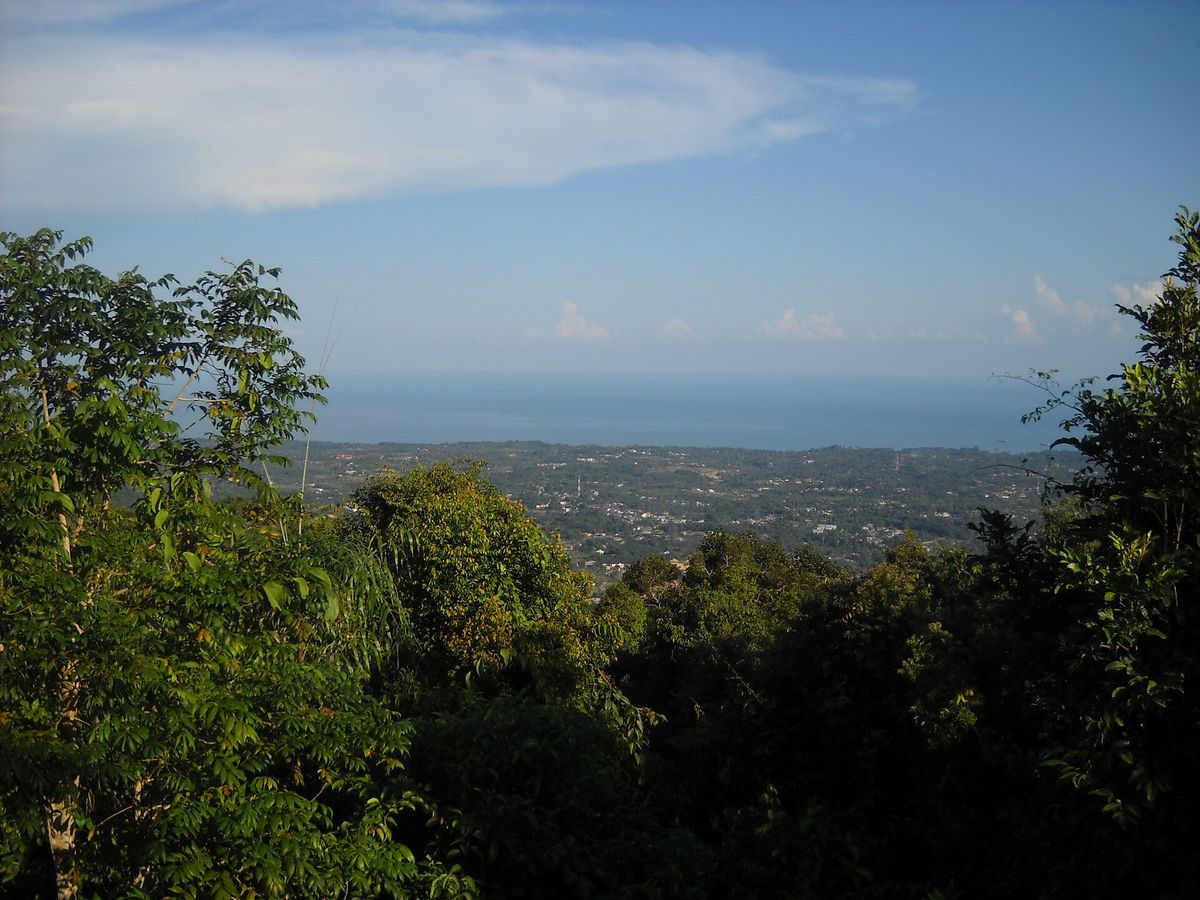
Bangka lies off the southeast coast of Sumatra, covers about 12,000 square kilometers and has more than one million people. It has been a globally important center of tin mining for more than three centuries2, and the paper cites an estimate that the loris's forest habitat shrank by 62% between 2000 and 2012. During a visit to Bukit Mangkol on July 31, 2023, the authors saw a forest fire that two unknown people had set on purpose, and small-scale tin mining by locals. A few hours of searching there turned up no lorises, though it was not a systematic survey.
In the Re:wild release3, Sani names illegal tin mining and land clearing for oil palm plantations as the forces shrinking the loris's habitat.
Trade is a separate pressure. Slow lorises are often trafficked as pets, and in June 2007 the parties to CITES, meeting in The Hague, moved them to Appendix I, which bans commercial trade7. Alobi staff say demand on Bangka seems smaller than elsewhere in Indonesia, though many rescued animals had been kept for days, weeks or months2 before being handed over.
What comes next
The authors recommend protecting suitable habitat, continuing monitored releases under IUCN guidelines and starting a breeding program that would include animals that cannot be released. They also call for targeted surveys on Bangka, Belitung and Borneo, and for the IUCN to reassess the Possibly Extinct tag2. "Bringing the Bangka slow loris back onto the scientific radar is only the first step," Glaw said in the release3.
Trivia
- Who first described the Bangka slow loris, and where did the description appear? M. W. Lyon, in 19062, in the Proceedings of the United States National Museum.
- Which place on Bangka is the type locality of the species? Klabat Bay2, probably the same as Kelabat Bay, in the north of the island.
- How many upper incisors do Bangka and Bornean slow lorises have, compared with lorises on Sumatra and Java? Two, against four2, one reason the authors doubt the rescued animals were brought in from those islands.
- Slow loris venom contains a protein that resembles which well-known allergen? Fel d 1, the cat allergen6.
- What unusual structure does the Bangka slow loris have beneath its main tongue? A specialized second tongue1, which helps clean its toothcomb.
- Which country proposed the 2007 CITES ban on commercial trade in slow lorises? Cambodia7.
- Which small mammal, listed as Data Deficient, is also considered endemic to Bangka? The Bangkan treeshrew (Tupaia discolor)2.
Sources
- Will Dunham, Feared extinct, Bangka slow loris primate rediscovered in Indonesia, Reuters, 20 October 2026 (as carried by KFGO). Accessed October 23, 2026.
- Langka Sani, Endi Riadi, Andre Septian, Jochen Menner and Timon Glaw, Neglected but still alive: Further evidence for the continued existence of the Bangka Slow Loris (Nycticebus bancanus) on Bangka Island, Indonesia (Primates: Lorisidae), Spixiana 49 (1): 119 to 128, October 2026. Accessed October 23, 2026.
- Re:wild, Venomous primate thought lost to science for nearly a century turns up in gardens and on roads across Indonesia, press release, Asia Research News, 21 October 2026. Accessed October 23, 2026.
- Re:wild, Lost primates, Search for Lost Species. Accessed October 23, 2026.
- Rachel A. Munds, K. A. I. Nekaris and Susan M. Ford, Taxonomy of the Bornean slow loris, with new species Nycticebus kayan (Primates, Lorisidae), American Journal of Primatology 75 (1): 46 to 56, January 2013 (PubMed abstract). Accessed October 23, 2026.
- K. A. I. Nekaris, Richard S. Moore, E. Johanna Rode and Bryan G. Fry, Mad, bad and dangerous to know: the biochemistry, ecology and evolution of slow loris venom, Journal of Venomous Animals and Toxins including Tropical Diseases 19: 21, 2013 (PubMed Central). Accessed October 23, 2026.
- Mongabay, Cuddly primate trade banned, 11 June 2007. Accessed October 23, 2026.