Beavers Return to Loch Ness Waters After About 500 Years
Key Points
- A family of six beavers was released on 4 November 2026 at a lochan on Trees for Life’s Dundreggan estate in Glenmoriston, in the Loch Ness catchment.
- NatureScot granted the licence on 30 October, and Trees for Life says the Ness Beaver Project aims for at least 15 family groups at up to 10 sites around Loch Ness over three years.
- Loch Ness was the last recorded site of Scotland’s beavers about 500 years ago, before they were hunted to national extinction.
- A survey of Tayside and Forth reported on 16 November 2026 found 349 confirmed beaver territories, up from 251 in 2020/21.
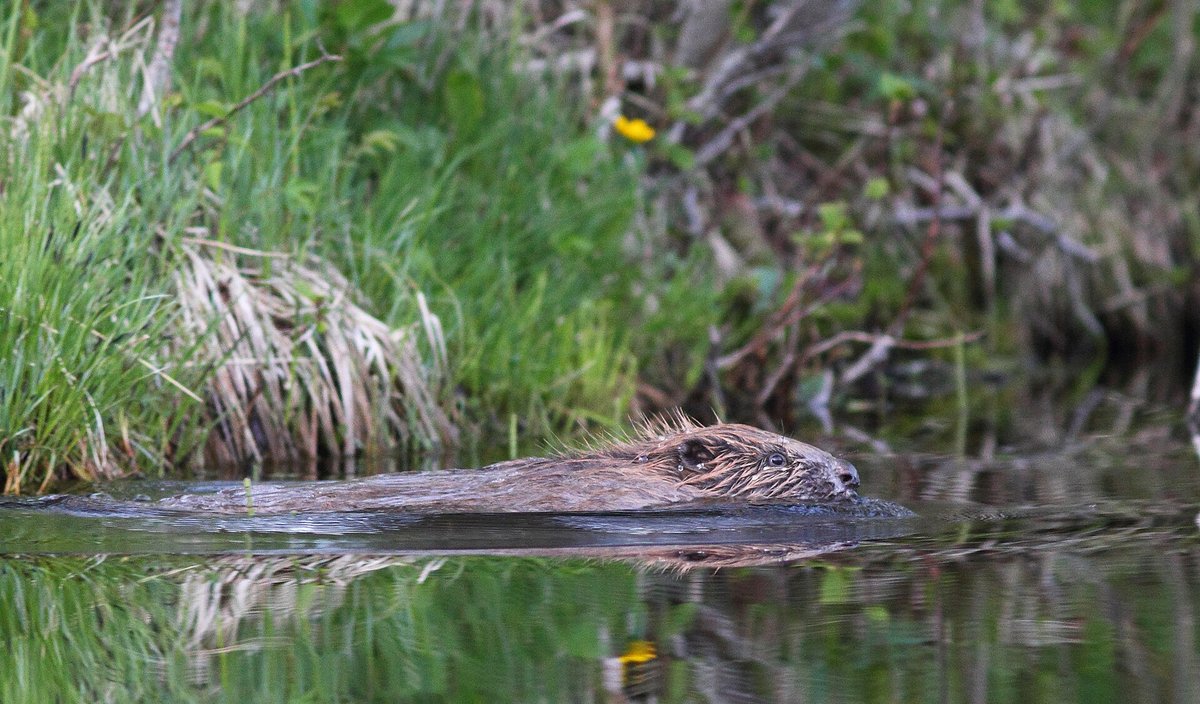

Beavers are back in the waters around Loch Ness. A family of six was released on 4 November 20262 at a lochan on Trees for Life’s 10,000-acre Dundreggan rewilding estate in Glenmoriston, in the Loch Ness catchment. It is the first release of the Ness Beaver Project1, a partnership between the charities Trees for Life and Beaver Trust. Loch Ness was the last recorded site of Scotland’s beavers2 about 500 years ago, before the animals were hunted to national extinction.
NatureScot, Scotland’s nature agency, granted the licence for the release on 30 October2, after Trees for Life applied during the summer.
The family at Dundreggan
The group is made up of a mother beaver, a couple of juveniles that are around two years old3, and three young born earlier in the year. The family was caught on Tayside, where Trees for Life chief executive Steve Micklewright said it was causing problems for farmers3. Before the move, the beavers had health checks at the specialist beaver holding facility at Five Sisters Zoo2, near West Calder.
Watching them after the release, Micklewright said: “I can see them swimming and very calm, which is a really good sign.”3 Trees for Life plans guided tours at Dundreggan2 once the animals have settled. A locally based beaver officer and Beaver Trust staff will give ongoing support, and a monitoring and mitigation group is to be set up.
The plan for Loch Ness
Trees for Life says the project aims for at least 15 beaver family groups, reintroduced at up to 10 sites in lochs, lochans and rivers around Loch Ness1, including land managed by Forestry and Land Scotland, over the next three years. It is designed so that the new populations can connect and grow2 across suitable habitat. Future release sites will be announced once the beavers have been safely released.2
The area was identified by NatureScot in 2022 as one of Scotland’s most suitable catchments for beavers1. Trees for Life says it has more than 3,000 hectares of suitable woodland1, along with wetlands and freshwater habitats, and a “low risk of negative impacts and high potential for nature restoration.”1 Feasibility work was carried out by Dr Alan Puttock and Dr Roisin Campbell-Palmer of Beaver Trust. Before applying, the two charities held community discussions and drop-in events about the opportunities and concerns for waterbodies close to the loch between Fort Augustus and Lochend1.
Trees for Life says the last record of beavers in Scotland places them around Loch Ness, “as featured in the Chronicles of Scotland from 1526”1.
Funders include Trees for Life supporters and its Missing Species Appeal, the Forest Peace Foundation, the Fred Foundation, Rewilding Europe’s European Wildlife Comeback Fund2, Rewilding Britain’s Rewilding Innovation Fund and Wilderness Scotland1.
How beavers came back to Scotland
Scotland’s first official beaver reintroduction trial took place in 20092. Beavers became a protected species under Scottish law on 1 May 20196, and from that date shooting or moving one has needed a licence from the nature agency, then called Scottish Natural Heritage. The agency described lethal control as “a last resort when beavers are having a serious impact and there is no other satisfactory solution.”6
In the two years before November 2021, more than 200 beavers were subject to licensed culls7 in Scotland, authorised to protect farms, woodland and infrastructure judged to be at risk. In November 2021 the Scottish Government said it would support expanding the population by trapping beavers and moving them to suitable areas8, including places outside their existing range. Lorna Slater, then the biodiversity minister, said: “Beavers were driven to extinction in Scotland.”8 The first licence to move beavers to the edge of their range went to Argaty Red Kites7, a working farm in Perthshire, with the animals coming from agricultural land in Tayside.
How many beavers there are
The latest count covers the core range, not the whole country. A survey of the Tayside and Forth regions, carried out between 2024 and 2026 and reported on 16 November 20264, found 349 confirmed beaver territories and 56 more possible ones (405 if all are confirmed). Earlier surveys found 39 territories in 2012, 114 in 2017/18 and 251 in 2020/21.
Surveyors covered 2,397km4 of waterways and recorded more than 20,000 confirmed signs of beaver activity. Half of the recorded activity was in waterside woodland and 28% on agricultural land; in 2020/21 the split was 41% on farmland and 34% in waterside woodland. Because group sizes vary, researchers did not give a figure for the overall Scottish beaver population. The 2020/21 survey had put the Tayside population at an estimated 954 beavers5. Campbell-Palmer said growth is slowing as the core catchments become more occupied, while NatureScot mammal adviser Dr Roo Campbell said the population is “continuing to expand into new areas.”4
Trivia
- Who gave the Eurasian beaver its scientific name, Castor fiber, and when? Carl Linnaeus, in 175810, in Systema Naturae.
- Roughly how many Eurasian beavers were left worldwide in the early 20th century? About 1,20010, in eight separate sub-populations. By 2020 there were at least 1.5 million.
- Which rodent is heavier on average than the Eurasian beaver? The capybara10. The Eurasian beaver is the largest rodent native to Eurasia and appears to be the second heaviest in the world by known average weights.
- How many chromosomes does a Eurasian beaver have, compared with a North American beaver? 48 against 4010.
- How long is a Eurasian beaver pregnancy, on average? About 107 days10, with one litter a year of about three kits on average.
- Loch Ness holds more water than which other lakes combined? All the lakes in England and Wales11, with a volume of about 7.5 cubic kilometres.
- Which engineer was behind the Caledonian Canal, which runs through Loch Ness? Thomas Telford11. Building the canal raised the loch’s surface by about 1.2 metres.
- When did the Dundreggan Rewilding Centre open fully to the public? On 15 April 20239, with displays in English and Gaelic.
Sources
- Ness Beaver Project, Trees for Life. Accessed November 18, 2026.
- Joseph Kennedy, Historic return of beavers to waters around Loch Ness, The Highland Times, 6 November 2026. Accessed November 18, 2026.
- Danyel VanReenen (Press Association), Beaver family released at Loch Ness 500 years after last sighting, Forestry Journal, November 2026. Accessed November 18, 2026.
- Ryan McDougall (Press Association), Beaver population in parts of Scotland continuing to expand, The Irish News, 16 November 2026. Accessed November 18, 2026.
- Public asked for help as new beaver survey gets underway, NatureScot, 22 October 2024. Accessed November 18, 2026.
- Beavers protection, Scottish Natural Heritage (now NatureScot), 31 May 2019. Accessed November 18, 2026.
- Leoma Williams, Translocation of Scottish beavers given the green light, Discover Wildlife, 10 November 2021. Accessed November 18, 2026.
- New measures to expand beaver numbers and restore biodiversity, Scottish Legal News, 25 November 2021. Accessed November 18, 2026.
- World’s first rewilding centre opens near Loch Ness, Trees for Life, 14 April 2023. Accessed November 18, 2026.
- Eurasian beaver, Wikipedia. Accessed November 18, 2026.
- Loch Ness, Wikipedia. Accessed November 18, 2026.