Bank Indonesia Holds Its Key Rate at 5.75% and Raises the Deposit Rate
Key Points
- Bank Indonesia held the BI-Rate at 5.75% at its meeting of 20 and 21 October 2026, kept the lending facility rate at 6.50% and raised the deposit facility rate by 25 basis points to 5.00%.
- The BI-Rate has stood at 5.75% since 18 June 2026, and October was its fourth hold in a row.
- The bank also raised its incentives for DNDF currency hedging and will cut the reserve requirement for conventional banks from 9% to 7% in two steps, on 1 November and 1 December 2026.
- Annual inflation was 3.28% in September 2026, inside the target range of 1.5% to 3.5%, and Bank Indonesia projects growth of 4.9% to 5.7% for 2026.
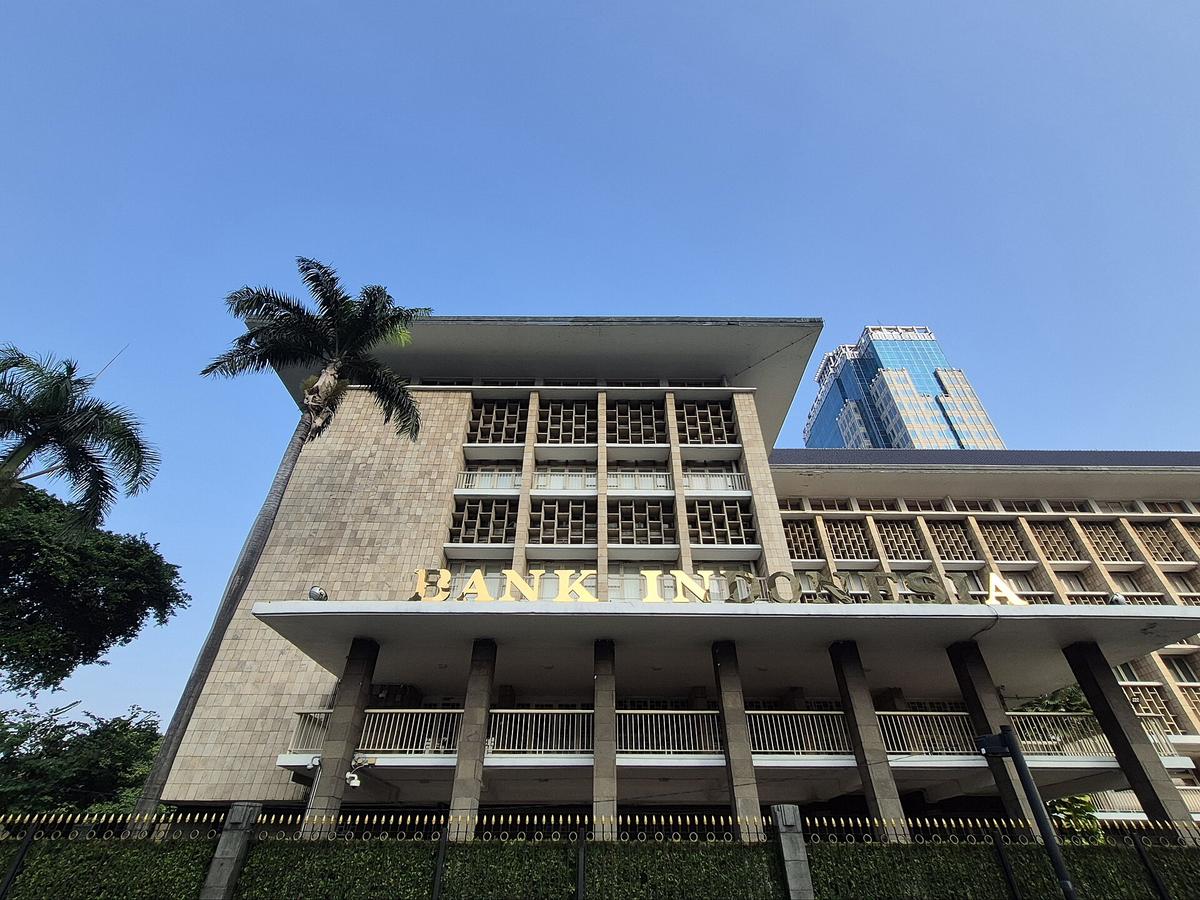

Bank Indonesia left its main interest rate unchanged in October 2026 and raised the floor beneath it. At the end of a two day meeting of its Board of Governors on 20 and 21 October 2026, the central bank held the BI-Rate at 5.75%1, kept the lending facility rate at 6.50% and raised the deposit facility rate to 5.00%. The deposit rate move was an increase of 25 basis points2, or a quarter of a percentage point. Alongside the rates came larger incentives for currency hedging and a staged cut to the share of funds banks must keep at the central bank.
The BI-Rate has stood at 5.75% since 18 June. Bank Indonesia's own rate table shows it rising from 4.75% in April 2026 to 5.25% in May, 5.50% on 9 June and 5.75% on 18 June3, followed by holds in July, August, September and October, which makes this the fourth hold in a row.
What the three rates do
Bank Indonesia runs monetary policy with three published rates. The BI-Rate is the headline policy rate, which the bank describes as the main policy instrument that influences economic activity4, and it is put into practice through reverse repo transactions with a tenor of seven days5. The other two are standing facilities that banks can use to manage their liquidity at the end of each day. The deposit facility is the placement of rupiah funds6 by banks at Bank Indonesia, and the lending facility is the provision of rupiah funds from Bank Indonesia to banks.
Together the two facilities work like a corridor. A bank with spare rupiah at the close of business can place it with Bank Indonesia at the deposit facility rate, and a bank that runs short can borrow from Bank Indonesia at the lending facility rate. Bank Indonesia says it steers rates in the overnight interbank money market6 around the BI-Rate. Before this meeting the corridor ran from 4.75% to 6.50%7, as set at the September meeting. With the deposit facility at 5.00%, both edges now sit 0.75 percentage points from the 5.75% BI-Rate, and banks earn more on rupiah they park overnight.
Why Bank Indonesia says it acted
The central bank says the decision remains consistent with the strategy to stabilise the Rupiah exchange rate1 and with keeping inflation within its target of 2.5% plus or minus 1 percentage point in 2026 and 2027. Antara, the Indonesian state news agency, reported that the rate decision was paired with stronger incentives for hedging under the Domestic Non Deliverable Forward (DNDF) scheme, with the aims of attracting foreign capital inflows2, keeping the rupiah stable and deepening domestic money and foreign exchange markets.
Bank Indonesia's 2018 regulation defines a DNDF as a standard foreign currency against rupiah forward transaction8 settled through a fixing mechanism in the domestic market. No principal changes hands, and the two sides settle only the difference between the agreed forward rate and a reference rate on a set date. Bank Indonesia is now increasing the premium reduction from 25% to 40% for 6-month tenors and from 30% to 45% for 12-month tenors1, which lowers the cost of hedging with it. It says its incentives for foreign inflows, which cover swap and DNDF hedging with Bank Indonesia as well as local currency transactions, and have been in place since June, have successfully attracted foreign capital inflows totalling USD9.9 billion1 as of 20 October 2026.
For conventional commercial banks, Bank Indonesia is reducing the reserve requirement from 9% to 7% incrementally1, by one percentage point on 1 November and another on 1 December 2026, and for Islamic banks from 7.5% to 5.5% on the same dates. It will also cut its macroprudential liquidity incentive for banks from 6% to 5% on 1 December. The bank says its macroprudential and payment system policies remain oriented towards maintaining economic growth momentum1.
What the rupiah has done
The rupiah was recorded at Rp17,985 per US dollar on 20th October 20261, according to Bank Indonesia, a fall of 0.61% from the end of September. Databoks, a Katadata data service, noted that the currency had strengthened until mid-September 20269 before turning weaker. Bank Indonesia's JISDOR reference rate, its daily benchmark for the dollar, reached Rp18,052 on 16 October10 and Rp18,050 on 19 October, then eased to Rp18,006 on 20 October and Rp17,986 on 21 October. At that 21 October rate, one million rupiah was worth about US$55.60.
On 21 October, Destry Damayanti, who was sworn in as Governor of Bank Indonesia18 on 2 September 2026, told reporters that the bank was watching capital flows after the index provider MSCI opened a consultation on reclassifying Indonesia from an emerging market to a standalone market11, with a decision expected by the end of June 2027. "We continue to keep a close watch on developments in our capital market11," she said. Antara reported that Bank Indonesia regards the rupiah's decline as within a relatively normal range11 given pressures across the region. At the end of September 2026, Indonesia's international reserves1 stood at USD146.3 billion.
Why a central bank watches its currency
Bank Indonesia's mandate covers achieving rupiah stability4, the stability of the payment system and the stability of the financial system, in support of sustainable growth. The bank defines rupiah stability as having two aspects12, stable prices for goods and services at home and a stable exchange rate against other currencies. A weaker exchange rate cuts against the second aspect, and Bank Indonesia presents the October decision as consistent with the strategy to stabilise the Rupiah exchange rate1.
Inflation and growth
Consumer prices are rising a little faster than they were, though still inside the target range of 1.5% to 3.5%. Annual CPI inflation, measured by Statistics Indonesia (BPS), was 3.28% in September 202613. Bank Indonesia's release sets that against 3.19% in August1, with core inflation at 2.84% and volatile food prices up 5.03% on the year.
Growth has held up. BPS reported that the economy grew 5.29% year on year14 in the second quarter of 2026, faster than the 5.12% recorded a year earlier, and 5.45% over the first half of the year. Bank Indonesia projects growth of 4.9% to 5.7% for 20261.
Indonesia and its central bank
The World Bank puts Indonesia's economic output at US$1.45 trillion in 202515, its population at about 285.7 million and its growth that year at 5.1%. Bank Indonesia is an independent state institution12, and its law describes it as free from interference by the government or other parties unless a law says otherwise. Its Board of Governors is made up of a governor, a senior deputy governor and up to seven deputy governors16, and its policy meetings go by the Indonesian name Rapat Dewan Gubernur (RDG)7.
Trivia
- On what date was Bank Indonesia officially established as the central bank? On 1 July 195317.
- Which bank, founded in 1828, later became Bank Indonesia? De Javasche Bank17, which Bank Indonesia describes as the first circulation bank in Asia.
- What share of De Javasche Bank did the Indonesian government buy to nationalise it? 97% of its shares17.
- Which law gave Bank Indonesia central bank independence? Act No. 23 of 199917.
- Which body took over bank supervision from Bank Indonesia under Act No. 21 of 2011? The Financial Services Authority (OJK)17, leaving Bank Indonesia responsible for macroprudential policy.
- When did Bank Indonesia adopt its inflation targeting framework? On 1 July 20054.
- What was the BI-Rate called before it was renamed on 21 December 2023? The BI 7-Day Reverse Repo Rate (BI7DRR)5.
- Which overnight interbank rate does Bank Indonesia use as its operational target? IndONIA, the Indonesia Overnight Index Average4.
Sources
- Bank Indonesia, BI-Rate Held at 5.75%: Strengthening Stability, Supporting Economic Growth, News Release No. 28/233/DKom, 21 October 2026. Accessed October 21, 2026.
- Rizka Khaerunnisa and Kuntum Khaira, BI rate holds at 5.75 percent, deposit facility rate at 5 percent, ANTARA News, 21 October 2026. Accessed October 21, 2026.
- Bank Indonesia, BI-Rate (statistics indicator table). Accessed October 21, 2026.
- Bank Indonesia, Monetary. Accessed October 21, 2026.
- Bank Indonesia, BI-Rate. Accessed October 21, 2026.
- Bank Indonesia, Monetary Operation. Accessed October 21, 2026.
- Bank Indonesia, BI-Rate Tetap 5,75%: Memperkuat Stabilitas, Mendorong Pertumbuhan Ekonomi, News Release No. 28/193/DKom, 23 September 2026. Accessed October 21, 2026.
- Bank Indonesia, Peraturan Bank Indonesia Nomor 20/10/PBI/2018 tentang Transaksi Domestic Non-Deliverable Forward, 2018. Accessed October 21, 2026.
- Erlina Fury Santika, BI-Rate Unchanged at 5.75%, Deposit Facility Rises to 5% in October 2026, Databoks (Katadata), 21 October 2026. Accessed October 21, 2026.
- Bank Indonesia, Jakarta Interbank Spot Dollar Rate (JISDOR). Accessed October 21, 2026.
- Rizka Khaerunnisa and Yashinta Difa, BI monitors capital outflows after MSCI's Indonesia market proposal, ANTARA News, 21 October 2026. Accessed October 21, 2026.
- Bank Indonesia, Profile. Accessed October 21, 2026.
- Nabilah Muhamad, Indonesia's Annual Inflation Rate Rose in September 2026, Databoks (Katadata), 1 October 2026. Accessed October 21, 2026.
- Bernama, Indonesia's Q2 2026 GDP growth accelerates to 5.29pct, New Straits Times, 5 August 2026. Accessed October 21, 2026.
- World Bank, Indonesia (World Bank Open Data). Accessed October 21, 2026.
- Bank Indonesia, Organization. Accessed October 21, 2026.
- Bank Indonesia, History of Bank Indonesia. Accessed October 21, 2026.
- CNN Indonesia, Destry Damayanti Resmi Jabat Gubernur Bank Indonesia 2026-2031, 2 September 2026. Accessed October 21, 2026.