Barbados Eliminates Mother-to-Child Transmission of HIV, WHO Says
Key Points
- WHO announced on 30 October 2026 that Barbados has eliminated mother-to-child transmission of HIV as a public health problem, after an independent assessment.
- From 2022 to 2024, no new HIV infections resulting from mother-to-child transmission were reported among infants born in Barbados.
- Over the three years assessed, "98% of pregnant women received antenatal care, 98% were tested for HIV, and 98% of pregnant women living with HIV received antiretroviral treatment".
- Barbados is now one of 26 countries and territories that WHO recognizes for eliminating mother-to-child transmission of HIV, syphilis or hepatitis B, or for being on track to do so. Fifteen of them, Barbados included, are in the Americas.
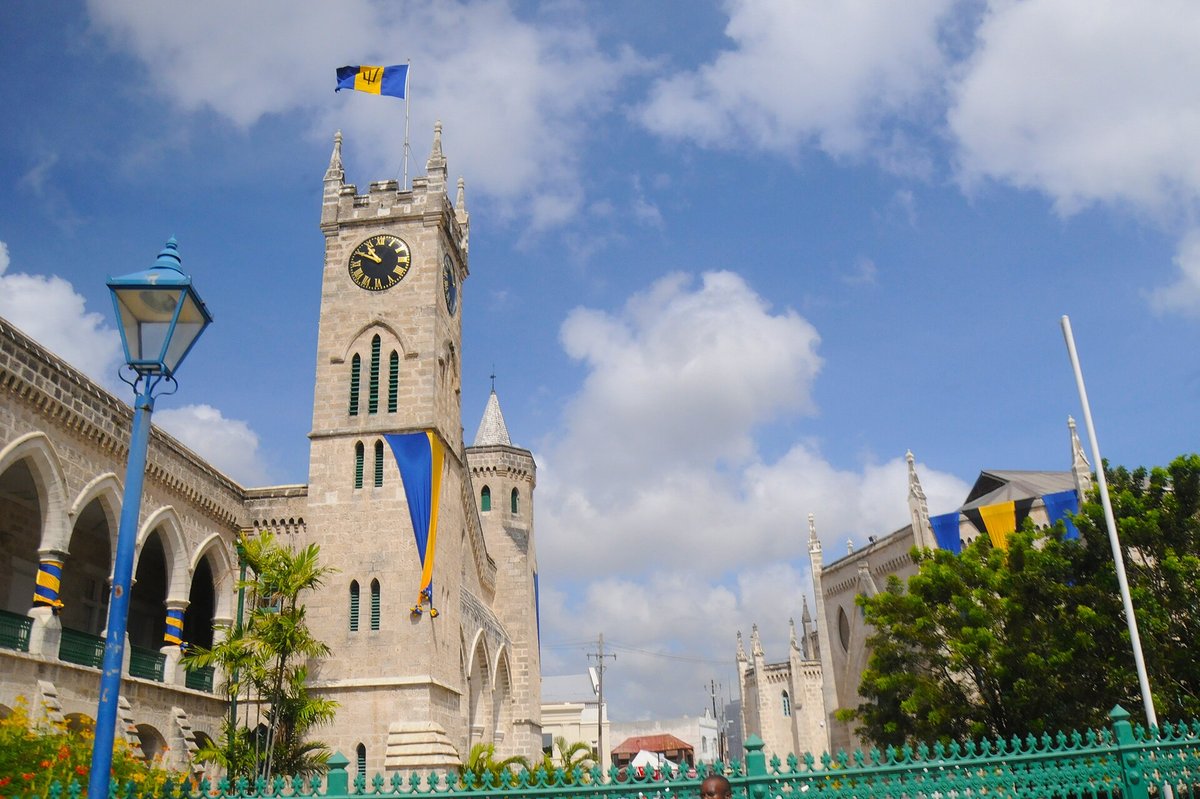

On 30 October 2026, the World Health Organization announced that Barbados has eliminated mother-to-child transmission of HIV as a public health problem1, after an independent assessment confirmed the country had met the global targets. From 2022 to 2024, no new HIV infections resulting from mother-to-child transmission were reported among infants born on the island.
WHO Director-General Dr Tedros Adhanom Ghebreyesus said, in the joint WHO and Pan American Health Organization (PAHO) release, that "Barbados has shown what universal health coverage looks like in practice: free services for every pregnant woman, regardless of nationality, and care that respects her rights and privacy."1
What elimination means
Elimination does not mean zero cases. When WHO validated the first country in 2015, it explained that because treatment to prevent transmission is not 100% effective4, elimination is defined as cutting transmission to such a low level that it no longer constitutes a public health problem. WHO uses the word validation for the formal finding that a country has met the criteria, and countries have been able to apply for validation since 20152. The guidance that sets out the criteria is now in its third version, dated 202113, which added hepatitis B to HIV and syphilis.
WHO reported that Brazil, validated in December 2025, met the HIV criteria by reducing vertical transmission of HIV to below 2% and achieving over 95% coverage5 for prenatal care, routine HIV testing and timely treatment for pregnant women living with HIV. The current guidance sets the case target at 50 or fewer new paediatric HIV infections per 100 000 live births13, a transmission rate below 2% in populations that do not breastfeed or below 5% in those that do, and coverage of 95% or more for antenatal care, testing and treatment. Impact indicators must be met for at least one year and process indicators for two consecutive years. In Brazil's case, independent experts carried out the evaluation, and WHO's Global Validation Advisory Committee5 then assessed their findings and recommended validation.
How transmission happens, and how it is stopped
WHO estimates that 1.3 million women and girls living with HIV become pregnant each year6. Without intervention, the chance that HIV passes from mother to child during pregnancy, labour, delivery or breastfeeding ranges from 15% to 45%. When antiretroviral medicines are given to both mothers and children through the stages when infection can occur, WHO has said the risk drops to just over 1%4.
WHO's fact sheet says pregnant women with HIV should start antiretroviral therapy as soon as possible7, which protects their own health and helps prevent transmission to the fetus before birth or through breast milk. Testing babies is harder than testing adults. For children under 18 months, rapid antibody tests are not enough, and virological testing must be provided as early as birth or at 6 weeks of age7.
What the assessment found in Barbados
Coverage was high on every measure. Over the three years assessed, 98% of pregnant women received antenatal care, 98% were tested for HIV, and 98% of pregnant women living with HIV received antiretroviral treatment1. Each figure is above the 95% coverage level in WHO's guidance13.
Barbados, a country of 282,623 people in 202510 according to World Bank data, provides universal health care through public clinics and hospitals. The Queen Elizabeth Hospital accounts for about 93% of births1. HIV testing and treatment are free for all pregnant women, HIV-exposed babies receive early testing and follow-up care, and testing is voluntary and confidential. The WHO assessment found no evidence of coercive reproductive health practices1 involving women living with HIV. That matters because WHO's validation work is meant to ensure services respect and protect the human rights2 of women living with any of the conditions.
From 30 September to 3 October 2025, a PAHO team and a regional laboratory expert worked with a national health team on a pre-assessment exercise9 that mirrored an official evaluation. They visited the Queen Elizabeth Hospital, polyclinics and a private health care facility, and visited laboratories to check their testing and diagnostic services against the required standards.
Dr Jarbas Barbosa, Director of PAHO, called the result "a proud moment for Barbados, the Caribbean, and the global effort to end AIDS in children."1 Lisa Cummins, Barbados Minister of Health and Wellness, said the milestone "allows mothers to be able to have the benefit of treatment during pregnancy"1.
The Americas lead the count
As of 30 October 2026, Barbados is one of 26 countries and territories worldwide1 that WHO recognizes for eliminating mother-to-child transmission of HIV, syphilis or hepatitis B, or for being on track to do so. Fifteen of them, Barbados included, are in the Americas, which PAHO calls the global leader in these achievements. Recent certifications in the Americas before Barbados include the Bahamas and Turks and Caicos in 2026, Brazil in 2025, and Jamaica and Saint Vincent and the Grenadines in 2024.
Earlier names on the list include Anguilla, Antigua and Barbuda, Bermuda, Cayman Islands, Montserrat, and Saint Kitts and Nevis in 20175, along with Dominica and Belize. Over 2015 to 2024, more than 50 000 pediatric HIV infections have been averted5 in the Americas through the initiative to eliminate mother-to-child transmission. The broader EMTCT Plus Initiative5, run with UNICEF and UNAIDS, seeks to eliminate mother-to-child transmission of HIV, syphilis, hepatitis B and congenital Chagas disease.
WHO's wider Triple Elimination Initiative bundles the services that make this possible, including testing for HIV, syphilis and HBV in antenatal care clinics3, safe delivery, follow-up of exposed infants with a hepatitis B vaccine birth dose, and lifelong treatment and care for mothers living with HIV.
The global picture
Worldwide, UNAIDS reports that new HIV infections among children fell from 300 000 in 2010 to 93 000 in 20258, a decline of 69%, and that 87% of pregnant women living with HIV had access to antiretroviral medicines to prevent transmission to their child in 2025. The same fact sheet says progress among children has stalled in recent years8. About 1.3 million children aged 0 to 14 were living with HIV in 2025, and 55% of them had access to treatment.
Keeping the status
WHO adds that keeping validation is equally important2 as earning it, and requires sustained programme efforts to prevent new infections in infants, children and adults. PAHO lists what Barbados will need to hold on to the certification: continued investment, updated guidelines, stronger health information systems, expanded HIV-syphilis testing, and improved follow-up1 for women and children. The certification covers HIV. During the 2025 pre-assessment, PAHO's team also reviewed vaccination, diagnosis and treatment, and surveillance services9 that are critical to preventing transmission of syphilis and hepatitis B as well, the other two infections in WHO's triple elimination framework.
Trivia
- Which country was the first in the world to receive WHO validation for eliminating mother-to-child transmission of HIV and syphilis? Cuba, on 30 June 20154.
- Which country became the first to achieve "triple elimination" of mother-to-child transmission of HIV, syphilis and hepatitis B? The Maldives, announced by WHO on 13 October 202514.
- Which country became the first in the European Union to eliminate mother-to-child transmission of HIV and syphilis? Denmark, on 27 February 202615.
- Which organization set the first goal for eliminating vertical transmission, and in what year? The Pan American Health Organization, in 20102.
- Which was the first country of more than 100 million people to be certified for eliminating vertical transmission of HIV? Brazil5, according to UNAIDS Executive Director Winnie Byanyima.
- On what date did the CDC report five cases of Pneumocystis pneumonia among young men treated at three Los Angeles hospitals? 5 June 198111, in its Morbidity and Mortality Weekly Report.
- How many people have acquired HIV since the start of the epidemic, according to UNAIDS? 92.0 million8, by its 2025 estimate.
- Which PAHO office has its headquarters in Barbados, and when was it set up? The Office for the Eastern Caribbean Countries, established in September 200612.
Sources
- Pan American Health Organization and World Health Organization, Barbados eliminates mother-to-child transmission of HIV, news release, 30 October 2026. Accessed October 30, 2026.
- World Health Organization, Validation of elimination of mother-to-child transmission of HIV, syphilis and hepatitis B. Accessed October 30, 2026.
- World Health Organization, Triple elimination initiative of mother-to-child transmission of HIV, syphilis and hepatitis B. Accessed October 30, 2026.
- World Health Organization, WHO validates elimination of mother-to-child transmission of HIV and syphilis in Cuba, news release, 30 June 2015. Accessed October 30, 2026.
- World Health Organization, WHO validates Brazil for eliminating mother-to-child transmission of HIV, news release, 18 December 2025. Accessed October 30, 2026.
- World Health Organization, Mother-to-child transmission of HIV, Global HIV Programme. Accessed October 30, 2026.
- World Health Organization, HIV and AIDS, fact sheet, 27 July 2026. Accessed October 30, 2026.
- UNAIDS, Global HIV and AIDS statistics, fact sheet (2025 data). Accessed October 30, 2026.
- Pan American Health Organization, Barbados prepares for certification to end mother-to-child transmission of HIV, Syphilis, and Hepatitis B, 3 October 2025. Accessed October 30, 2026.
- World Bank, World Development Indicators, Population, total, Barbados (last updated 8 October 2026). Accessed October 30, 2026.
- Centers for Disease Control and Prevention, Pneumocystis Pneumonia, Los Angeles, Morbidity and Mortality Weekly Report 30 (21), 5 June 1981. Accessed October 30, 2026.
- Pan American Health Organization, Barbados and the Eastern Caribbean Countries. Accessed October 30, 2026.
- World Health Organization, Global guidance on criteria and processes for validation: elimination of mother-to-child transmission of HIV, syphilis and hepatitis B virus, third edition, 2021. Accessed October 30, 2026.
- World Health Organization, Maldives becomes the first country to achieve triple elimination of mother-to-child transmission of HIV, syphilis and hepatitis B, news release, 13 October 2025. Accessed October 30, 2026.
- World Health Organization, Denmark becomes first country in the European Union to eliminate mother-to-child transmission of HIV and syphilis, news release, 27 February 2026. Accessed October 30, 2026.