The Bystander Effect: What the Genovese Story Got Wrong
Key Points
- The bystander effect is the finding that people are less likely to help in an emergency when others are around.
- A 2007 paper in American Psychologist reported no evidence for 38 witnesses, or that witnesses observed the murder or remained inactive in the Kitty Genovese case.
- A 2011 meta-analysis of over 7,700 participants found an overall effect size of g = -0.35, smaller in situations seen as dangerous.
- A 2020 paper using surveillance video from three countries found that in 9 of 10 public conflicts at least one bystander helped.

The bystander effect is the finding that people are less likely to help in an emergency when other people are around.1 The idea was first proposed in 1964 after the murder of Kitty Genovese, and John Darley and Bibb Latané demonstrated it in the laboratory in 1968.1 Yet the story that gave the field its start, the tale of 38 witnesses who did nothing, is not supported by the archive evidence, according to a 2007 paper in American Psychologist.4
The night that started it
On March 13, 1964, 28-year-old bartender Catherine "Kitty" Genovese was stabbed and murdered while walking home from work at 3 a.m. in Queens, New York.1 According to a sensationalized article in The New York Times, 38 witnesses watched the stabbings but did not intervene or even call the police until after the attacker fled and Genovese had died.1 The account drew wide public attention, and Darley and Latané attributed the lack of help to diffusion of responsibility: because each witness saw others witnessing the same event, they assumed someone else would take responsibility.1
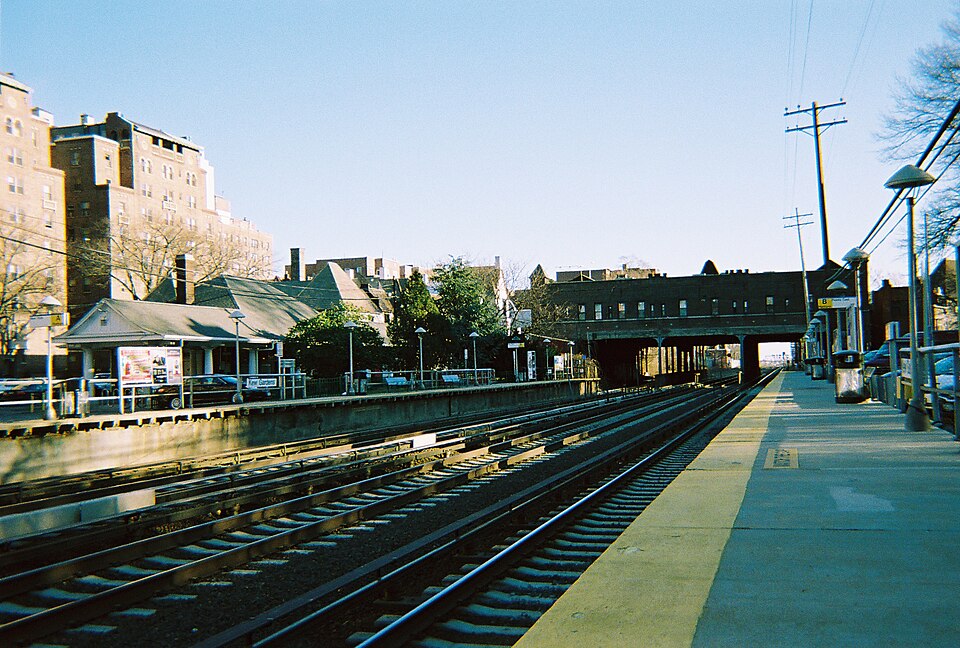
Wikipedia's article on the murder says she parked in the Kew Gardens Long Island Rail Road station lot, about 100 feet from the door of her apartment building, and was attacked near the back of that building5. The station house appears in the photo above.
The smoke-filled room
In a 1968 experiment, Columbia University students waited in a room alone, with two strangers or with three strangers to complete a questionnaire, while smoke was pumped in through a wall vent to simulate an emergency.1 Students working alone noticed the smoke almost immediately, within 5 seconds, while students in groups took longer, up to 20 seconds, to notice it.1
Darley and Latané's 1968 findings on diffusion of responsibility suggest that when people believe others are around, they are less likely or slower to help a victim because they believe someone else will take responsibility.1 People may also assume that other bystanders are better qualified to help, such as doctors or police officers, and that their own help would be unneeded.1
What the 38 witnesses story gets wrong
In 2007, Rachel Manning, Mark Levine and Alan Collins argued in American Psychologist that the story of the 38 witnesses is not supported by the available evidence.4 Using archive material, they reported no evidence for the presence of 38 witnesses, or that witnesses observed the murder, or that witnesses remained inactive.4
The authors drew a line between the robust bystander research tradition and the story of the 38 witnesses, and argued that the story had become a modern parable.4 They also argued that the story plays a key role in psychology textbooks, and that telling it has served to limit the scope of inquiry into emergency helping.4 In 2016, The New York Times called its own reporting flawed, saying the original story grossly exaggerated the number of witnesses and what they had perceived.1
The 2011 meta-analysis
A 2011 meta-analysis in Psychological Bulletin by Fischer and colleagues pooled bystander research from the 1960s to 2010.2 Its data came from over 7,700 participants and 105 independent effect sizes, with an overall effect size of g = -0.35, and the negative sign means a bystander's presence lowered helping on average.2
The effect was smaller when a situation was perceived as dangerous compared with non-dangerous, when perpetrators were present, and when the costs of intervening were physical rather than non-physical.2 The authors say this fits the arousal-cost-reward model, which proposes that dangerous emergencies are recognized faster and more clearly as real emergencies, producing higher arousal and more helping.2
The review also found situations where bystanders gave welcome physical support to a potential helper, and the effect shrank when the bystanders were exclusively male, when they were naive rather than passive confederates or only virtually present, and when they were not strangers.2
What cameras recorded in real conflicts
A 2020 paper in American Psychologist by Philpot and colleagues described the largest systematic study of real-life bystander intervention in public conflicts captured by surveillance cameras.3 Using video from the United Kingdom, the Netherlands and South Africa (N = 219), the authors found that in 9 of 10 public conflicts at least one bystander, and typically several, did something to help.3
Intervention was similarly likely in the three countries, which differ greatly in levels of perceived public safety, and a larger bystander presence went with a greater likelihood that someone would intervene.3 The authors argued that it is time for psychology to change the narrative away from an absence of help and toward what makes intervention successful or unsuccessful.3
Two findings that can both stand
The camera paper asked whether at least one person among those present helped, in place of whether each individual did.3 The meta-analysis, by contrast, found that people were on average less likely to help when others were present.2 Those are different questions, so both findings can hold at once. A crowd can lower the odds that any single person steps in while still leaving good odds that somebody does.
Trivia
- On what date in 1964 was Kitty Genovese murdered? March 131.
- In the 1968 smoke experiment, which university's students were the participants? Columbia University1.
- What overall effect size did the 2011 meta-analysis report? g = -0.352.
- In how many of 10 public conflicts did at least one bystander help in the camera footage? Nine3.
- Which journal published the 2007 paper calling the story of the 38 witnesses a parable? American Psychologist4.
Sources
- Bystander effect, Wikipedia. Accessed November 3, 2026.
- Fischer P, Krueger JI, Greitemeyer T, et al. The bystander-effect: a meta-analytic review on bystander intervention in dangerous and non-dangerous emergencies. Psychological Bulletin, 2011. Accessed November 3, 2026.
- Philpot R, Liebst LS, Levine M, Bernasco W, Lindegaard MR. Would I be helped? Cross-national CCTV footage shows that intervention is the norm in public conflicts. American Psychologist, 2020. Accessed November 3, 2026.
- Manning R, Levine M, Collins A. The Kitty Genovese murder and the social psychology of helping: the parable of the 38 witnesses. American Psychologist, 2007. Accessed November 3, 2026.
- Murder of Kitty Genovese, Wikipedia. Accessed November 3, 2026.