NASA Mars Simulation Crew Set to Exit Habitat After 378 Days
Key Points
- NASA says the four CHAPEA Mission 2 volunteers are scheduled to exit their simulated Mars habitat in Houston on Saturday, October 31, 2026, after 378 days.
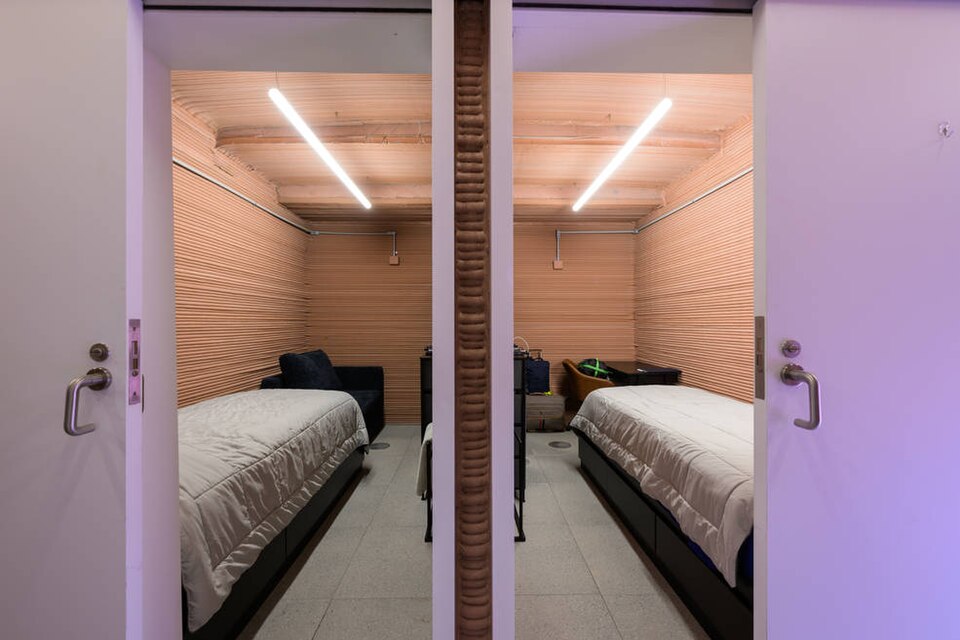
- NASA says the 1,700-square-foot habitat is 3D printed, with four private crew quarters, a medical station and food-growing areas.
- NASA says the crew's simulated mission includes resource limits, isolation, equipment failures and communication delays, and a two-week simulated communications blackout reported in May 2026.
- NASA says two weeks of post-mission evaluations will follow, and the data can inform food systems, medical care and planning for Moon and Mars missions.

NASA says the four volunteers of its second Crew Health and Performance Exploration Analog (CHAPEA) mission will leave their simulated Mars habitat on Saturday, October 31, 2026, after 378 days of isolation at the Johnson Space Center in Houston1. NASA says live coverage of the exit begins at 3 p.m. EDT1. This piece reports what NASA had published about the mission as of the morning of October 31, 2026, before the scheduled 3 p.m. EDT exit, so it does not describe the exit itself. Check NASA's pages for what happened.
The crew
NASA names the crew as Ross Elder, mission commander; Ellen Ellis, medical officer; Matthew Montgomery, science officer; and James Spicer, flight engineer2. NASA says they stepped inside on October 19, 2025, marking the start of the agency's second 378-day simulated Mars mission4. The first mission ran from June 25, 2023 to July 6, 2024, and NASA's page for it calls it the first of three one-year simulated Mars missions7.
What the habitat is
NASA describes the habitat as a 3D-printed structure of 1,700 square feet, built with ICON's Vulcan construction system from a material it calls lavacrete5. Its listed features are four private crew quarters, dedicated workstations, a medical station, common lounge areas, and a galley with food-growing stations5. NASA gives its reason for printing it: future settlements could be built with additive construction, which would cut the need to launch large quantities of building material on many flights, something NASA calls cost prohibitive5.
How a simulated year works
NASA says the crew leaves the habitat only for simulated "Marswalks" outside it, wearing spacesuits on a simulated Mars surface of red sand, while staying inside the building that houses CHAPEA at Johnson4. Planned activities include high-tempo Marswalks, robotic operations, habitat maintenance, physical exercise and crop cultivation4. NASA says the aim is to make the analog as Mars-realistic as feasible, with stressors such as resource limits, isolation, equipment failure and heavy workloads6.
NASA's announcement of the start lists 22-minute communication delays among the stressors4, while its one-year update says the data could help build decision-support systems for communication delays lasting up to 45 minutes each way2. The two figures come from two different NASA pages. The pages do not say whether the 22-minute figure is one way or round trip, and "each way" appears only with the 45-minute figure.
A blackout and a halfway mark
On May 7, 2026, NASA reported that the crew had passed 200 days of the 378 and was in a simulated two-week loss-of-signal period that mimics the communications blackout when Mars moves behind the Sun3. During that blackout, NASA says, the crew works without contact with mission control, using preplanned procedures and available resources3. Montgomery is quoted as saying that limited resources, whether tools, equipment, software, supplies or no internet, bound what you have to solve problems3.
What NASA hopes to learn
NASA says the crew will spend two weeks after exit in post-mission evaluations and debriefs with its scientists, which it says will help scientists learn what it takes for crews to adapt to long-duration routines2. The agency says the data could show how limited food and exercise systems affect its ability to meet mission goals, including spacewalks on Mars2. It adds that the data can help flight doctors and psychologists strengthen medical care and behavioral support, and can inform food system design, the use of crew time and Deep Space Network bandwidth1.
Michael Stenger, chief scientist of NASA's Human Research Program, is quoted as saying the mission has been valuable in starting to teach NASA the requirements for year-long missions, including medical and psychological care across communication delays2. Sara Whiting, the project scientist, is quoted as saying extended-duration missions are relatively rare in NASA's history to date3.
What the simulation is, and is not
NASA says the crew stays isolated inside the building that houses CHAPEA at Johnson even during the Marswalks4. NASA's own description says the results are meant to characterize the risk of the planned exploration food system design in relation to crew health and performance, and to inform standards, vehicle mass and volume requirements, and resource trades6. NASA's description frames the results as inputs to planning for long missions.
Trivia
- How many days long is CHAPEA Mission 2? 378 days4.
- On what date did the second crew enter the habitat? October 19, 20254.
- How large is the 3D-printed habitat? 1,700 square feet5.
- What role does Ellen Ellis hold on the crew? Medical officer2.
- On what date did the first CHAPEA mission end? July 6, 20247.
Sources
- NASA Invites Media to Crew Completion of Yearlong Mars Simulation, NASA media advisory M26-083, October 27, 2026 (updated October 28, 2026). Accessed October 31, 2026.
- NASA's Simulated Mars Crew Marks One Year Inside Habitat, NASA Human Research Program, October 19, 2026. Accessed October 31, 2026.
- NASA's Simulated Mars Mission Marks 200 Days Inside Habitat, NASA Human Research Program, May 7, 2026. Accessed October 31, 2026.
- CHAPEA Crew Begins Stay Inside NASA's Mars Habitat for Second Mission, NASA Human Research Program, November 25, 2025. Accessed October 31, 2026.
- CHAPEA habitat page, NASA, accessed October 31, 2026. Accessed October 31, 2026.
- About CHAPEA, NASA, accessed October 31, 2026. Accessed October 31, 2026.
- CHAPEA Mission 1, NASA, accessed October 31, 2026. Accessed October 31, 2026.
- File:CHAPEA habitat (1).jpg, Wikimedia Commons. Accessed October 31, 2026.