Rewilded Cheetahs in South Africa Add 36 Cubs and 19 Grand Cubs
Key Points
- A paper in Conservation Science and Practice followed 12 captive-origin cheetahs released into seven fenced reserves in South Africa and monitored from 2019 to 2021.
- Three of the 12 died of natural causes, and the paper reports that "all females successfully mated within the first 4 months post-release."
- The released cheetahs have contributed toward 36 first-generation and 19 second-generation cubs, 33 of which reached independence.
- The IUCN Red List classes the cheetah as Vulnerable, with a global population tentatively estimated at about 6,500 mature individuals.
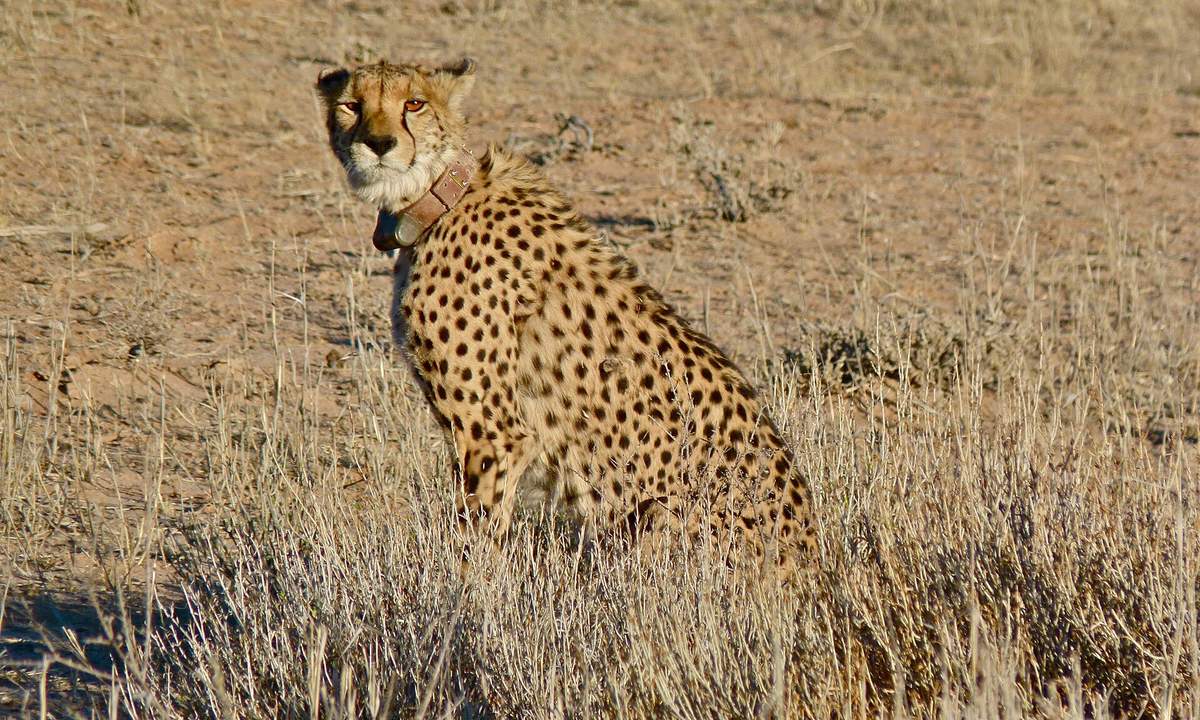

Twelve cheetahs of captive origin were released into fenced reserves in South Africa, and within six months all of them had settled into stable home ranges. A paper in the journal Conservation Science and Practice reports that the released cats have contributed toward 36 first-generation and 19 second-generation cubs1, and that 33 of those cubs reached independence and joined the wild-born population. The Wildlife Society summarized the findings on October 21, 2026, and called the second generation "grand cubs"2.
Adding captive-raised animals to wild populations is still argued over. The authors open by noting that such supplementation "remains controversial due to the influence of captivity on natural behaviors"1, and that judging a release fairly takes measurable results from monitoring after the animals go out.
Who ran the study
The paper, "Successful phased-release reintegration of captive-origin cheetah for metapopulation supplementation," was published online on August 9, 20261, in volume 8, issue 9 (September 2026). Its seven authors, led by Allison A. Muller, list affiliations with the Department of Conservation Ecology and Entomology at Stellenbosch University, the Reintegration Unit of Ashia Cheetah Conservation in Paarl, the Endangered Wildlife Trust, the University of Groningen in the Netherlands, Zambeze Delta Conservation in Mozambique and African Parks Network.
Ashia runs a cheetah center about a 45-minute drive from Cape Town5, which it describes as the setting for the first phase of its reintegration and reintroduction program, where cheetahs are prepared for release on game reserves and national parks in Africa. The group says it supports "the reintegration of unrelated mother-reared captive origin cheetah"6 along with the rehabilitation of orphaned and injured wild cheetahs.
What the monitoring found
After phased-release training, 12 collared cheetahs went into seven fenced reserves that are part of the managed metapopulation and were monitored intensively from 2019 to 20211. The Wildlife Society's summary says the cats wore GPS collars2.
Within six months, each animal's monthly home range size, its overlap with the others and its habitat use had stabilized1, and the clear departures from that pattern matched confirmed denning events. To check that the cats were feeding themselves, the team paired a body condition score designed for the metapopulation's cheetahs with an analysis of kill-site clusters, backing up direct sightings of the cats eating prey. The authors present the combination as a novel monitoring tool1.
Three of the 12 cheetahs died of natural causes1 during the monitoring period. On breeding, the paper's own words are that "all females successfully mated within the first 4 months post-release"1. Cheetahs give birth after a gestation of about three months, according to the IUCN Red List assessment3 of the species.
Why fenced reserves need managing
The IUCN assessment explains that cheetahs in reserves smaller than 1,000 square kilometers that are surrounded by impermeable fencing need intensive management, such as frequent translocation3 for genetic reasons. Ashia describes the result as a metapopulation managed "across more than 70 fenced reserves in South Africa"6, with cheetahs moved between protected areas to keep the gene pool healthy.
The Endangered Wildlife Trust launched what was first called the Cheetah Metapopulation Project in 2011. It is now the Cheetah Range Expansion Project4, with the stated aims of increasing cheetah numbers, reducing conflict between cheetahs and people, and creating genetically diverse populations. The trust reports that the southern African metapopulation grew from 274 cats in December 2012 to more than 400 in 20234.
The IUCN, which put the metapopulation at around 330 cheetahs citing a 2018 study, leaves these animals out of its global population estimate3 because they are intensively managed. It adds that well-managed populations of this kind, where cheetahs can behave naturally and hunt, can make a valuable contribution to wild populations by supplying animals for well-planned restorations.
A source for other countries
The trust widened its project in 2017 to include other southern African countries, working with African Parks to return cheetahs to Liwonde National Park in Malawi4. In December 2023, three male cheetahs moved from Liwonde to South Africa and two females from South Africa went to Liwonde, where they were released on December 30. The trust called the exchange the first time4 since reintroductions to neighbouring countries began that a protected area receiving reintroduced cheetahs had sent animals back to the South African source population.
The new paper makes the case that captive-origin cheetahs can feed the same system. The cubs of the released cats, the authors write, supplemented growth while "providing critical demographic and genetic resilience"1.
Where the species stands
The IUCN Red List classes the cheetah as Vulnerable3, in an assessment dated May 17, 2021 and published in 2022, and every published assessment back to 1986 has given the same category. The assessment tentatively estimates the global population at about 6,500 mature individuals and projects a 37% decline (21% to 51%) over three generations3, roughly 15 years, between 2017 and 2032. In Zimbabwe, the one large area with reliable estimates from two points in time, numbers fell 85% over 15 years.
Cheetahs now occur in only 9% of their past range3, with their remaining strongholds in southern and eastern Africa. Southern Africa holds a tentative 3,526 mature individuals, most of them in one large transboundary population covering southern Botswana, Namibia, southern Angola, northern South Africa and southwestern Mozambique. About 75% of the resident range in that region lies outside protected areas3, mostly on land ranched for livestock.
How the cub numbers compare
Wild cheetah cubs face long odds. In Kgalagadi Transfrontier Park, where the photo above was taken, the IUCN assessment puts cub survival from birth to independence at 35.7%3, and attributes most of the deaths there to predation. Among the rewilded cheetahs' offspring, 33 of the 55 cubs counted had reached independence at the time of the paper. The two figures do not compare like for like, since the reserves, predators and time frames differ. The paper's summary also does not say how many of the other 22 cubs were still young or had died.
What it does and does not show
The authors call their work a case study of short-term translocation success1, built on 12 animals in seven reserves, and they argue that evaluating such releases quickly through monitoring directly informs how carnivores are managed after release. The Wildlife Society reads the results as showing that captive-bred cheetahs can succeed in the wild in areas already populated with wild cheetahs2.
Trivia
- The English word cheetah comes from which language, and what does the original word mean? From the Hindi Chita, meaning "spotted one"3.
- What does the genus name of the cheetah, Acinonyx, refer to? Its semi-retractile claws3.
- Which two living cats are the closest relatives of the cheetah? The puma and the jaguarundi3, which share its tribe, Acinonychini.
- How long do cheetah cubs stay with their mother, on average? About 18 months3, according to the IUCN assessment, after which they roam with their littermates for about six more months.
- In the Serengeti, what share of cheetah cubs died before independence in the work the IUCN cites? 95%3, mostly because of predation.
- What is the longest recorded lifespan of a wild female cheetah? 14 years and five months3, against 10 years for males.
- How many cheetah subspecies did Kitchener and colleagues recognize in 2017? Four3, in southern and eastern Africa, northeastern Africa, western and northwestern Africa, and southwestern Asia and India.
Sources
- Allison A. Muller, Willem Briers-Louw, Marna Smit, Nynke Wemer, Olivia Sievert, Alison J. Leslie and Vincent N. Naude, Successful phased-release reintegration of captive-origin cheetah for metapopulation supplementation, Conservation Science and Practice 8 (9): e70377, published online 9 August 2026. Accessed October 28, 2026.
- The Wildlife Society, Captive-born cheetahs released into game reserves are breeding, 21 October 2026. Accessed October 28, 2026.
- S. M. Durant, R. Groom, A. Ipavec, N. Mitchell and L. Khalatbari, Acinonyx jubatus, The IUCN Red List of Threatened Species 2022: e.T219A124366642 (reproduced as CITES-CMS/ACI2/Inf.10). Accessed October 28, 2026.
- Endangered Wildlife Trust, First Cheetah swop in the EWT-led Cheetah Range Expansion Project, 22 February 2024. Accessed October 28, 2026.
- Ashia Cheetah Conservation, home page. Accessed October 28, 2026.
- Ashia Cheetah Conservation, Research and Conservation. Accessed October 28, 2026.