China Economy Grows 4.5% in Third Quarter, Topping Forecast
Key Points
- China's economy grew 4.5% in the third quarter of 2026 compared with a year earlier, up from 4.3% in the second quarter, the National Bureau of Statistics reported on 19 October 2026.
- Over January to September, output reached 107,107.1 billion yuan, up 4.6% at constant prices, within the 2026 target of 4.5 to 5 percent growth.
- Quarter on quarter, GDP increased 1.2% in the third quarter, while real estate development investment fell 20.6% and goods trade rose 18.8% over the nine months.
- The IMF projects China's growth at 4.5% in 2026 and 4.0% in 2027, against 2.3% for the United States and 1.1% for the euro area in 2026.
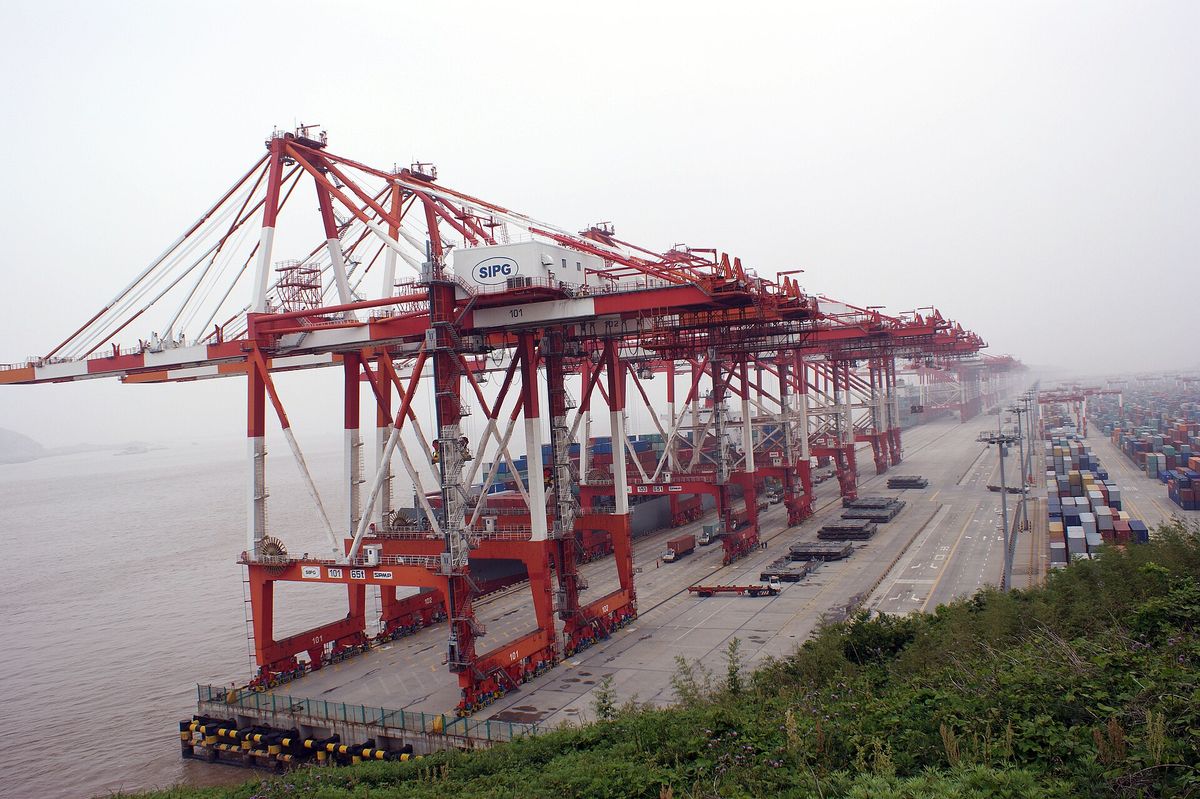

China's economy grew 4.5% in the third quarter of 20261 compared with the same quarter a year earlier, the National Bureau of Statistics (NBS) reported on Monday, 19 October 2026. That was a pickup from 4.3% in the second quarter1, which Reuters described as a more than three year low3. Over the first nine months of the year, output reached 107,107.1 billion yuan, up 4.6% at constant prices1, about US$16.0 trillion at the Federal Reserve's rate of 6.6920 yuan per US dollar on 9 October 20267.
The quarter came in slightly ahead of expectations. Economists polled by Reuters had looked for 4.4% growth3, according to the agency's report as published by The Star. The NBS calls its figures a preliminary estimate1, so they can be revised as fuller data arrive.
How China reports growth
Gross domestic product, or GDP, measures the monetary value of final goods and services produced in a country in a given period of time8, such as a quarter or a year, the International Monetary Fund (IMF) says. Economists usually watch real GDP, which is adjusted for inflation8 so that a rise in prices does not look like a rise in output.
China's headline number compares a quarter with the same quarter a year before, at constant prices1. The NBS also publishes a seasonally adjusted quarter on quarter figure, which compares a quarter with the one just before it. By that measure, GDP increased by 1.2 percent1 in the third quarter, up from 0.9% in April to June3. The bureau notes that its seasonal adjustment model1 revises earlier quarter on quarter numbers with each release.
What drove the quarter
Services and manufacturing led, while property and investment held the total back. All figures are for January to September, compared with the same period of 2025.
- Industry. Industrial value added rose 5.3%1, and 5.5% in September alone. Manufacturing value added grew 5.7%1, faster than the economy as a whole. Equipment manufacturing grew 10.2%1 and high tech manufacturing 14.3%1.
- Services. The service sector expanded 5.2%1 and, at 62,825.5 billion yuan, made up almost 59% of total output. Information transmission, software and IT services grew 10.4%1, and leasing and business services 12.3%.
- Shoppers. Retail sales of consumer goods reached 37,000.1 billion yuan, up 1.1%1, and also rose 1.1% in September, which Reuters noted was above the 0.6% economists expected3. Spending on services grew faster, with retail sales of services up 5.0%1, and online retail sales of goods and services reached 15,147.1 billion yuan, up 4.4%1.
- Trade. Goods trade totalled 39,939.9 billion yuan, up 18.8%1 (about US$5.97 trillion at the 9 October rate). Exports rose 16.4% and imports 22.3%, and trade in September alone grew 27.5%1. Exports of mechanical and electrical products were up 23.7%1. Reuters said strong exports3 drove growth.
- Investment. Fixed asset investment came to 33,411.5 billion yuan, down 7.2%1. Excluding real estate development it fell 4.2%, and manufacturing investment was down 2.1%1, while investment in high tech industries grew by 4.9 percent1.
- Property. Real estate development investment fell 20.6%1. The floor space of new commercial buildings sold dropped 13.2%, and the value of those sales 13.9%1.
Households saw steadier numbers. Per capita disposable income rose 5.3% in nominal terms and 4.4% after inflation1, and the surveyed urban unemployment rate was 5.2% in September1, 0.1 percentage point lower than in August. Consumer prices rose 0.9%1 over the nine months and factory gate prices 2.3%.
Xinhua, the state news agency, reported that NBS deputy head Mao Shengyong told a media conference the economy added 5.7 trillion yuan in output2 over the nine months (about US$852 billion), the largest increase for that stretch in five years. Xinhua also reported that what officials call new growth drivers contributed more than 40% of growth2, according to preliminary estimates.
Measured against the target
Beijing's 2026 government work report set a goal of GDP growth of 4.5 to 5 percent, while striving for better in practice4. Growth of 4.6% for January to September3 sits within that range, Reuters noted. The same report aimed for consumer price growth of around 2 percent4, above the 0.9% recorded so far this year.
The quarterly path this year has been 5.0% in the first quarter1, 4.3% in the second and 4.5% in the third. For 2025 as a whole, the IMF's tables put China's growth at 5.0%6. Reuters reported that policymakers have expanded support for home buyers, allocated 550 billion yuan in unused debt quotas3 (about US$82 billion) and drawn on an 800 billion yuan policy based financing tool for infrastructure (about US$120 billion), while holding off on large scale stimulus.
How it compares with other big economies
The IMF published its October 2026 World Economic Outlook on 13 October 20265, six days before the Chinese data. It projects global growth of 3.1% in 20265, rising to 3.4% in 2027. For China, the Fund projects 4.5% growth in 2026 and 4.0% in 20276. Its 2026 projections for the United States (2.3%) and the euro area (1.1%)6 are lower.
Chinese goods imports grew 22.3%1 over the nine months, faster than exports. Exports, at 23,197.9 billion yuan1, still exceeded imports of 16,742.0 billion yuan, and Reuters reported that the trade surplus is on track to exceed last year's record US$1.2 trillion3.
Trivia
- When was China's National Bureau of Statistics declared established? On 7 August 19529.
- In which city was the People's Bank of China founded in December 1948? In Shijiazhuang, Hebei Province10, and the renminbi was put into circulation at the same time.
- On what date was the Shanghai Stock Exchange established? On 26 November 199011, with formal operations starting on 19 December that year.
- In which year did China pass Japan as the world's second largest economy by nominal GDP? In 2010, when China's US$5.88 trillion12 topped Japan's US$5.47 trillion, ending Japan's 42 years in second place.
- Of the products the NBS highlighted for January to September 2026, which grew fastest? 3D printing devices, up 62.5%1, ahead of lithium ion batteries (39.5%) and industrial robots (29.1%).
- What share of China's GDP came from primary industry, such as farming, over the first nine months of 2026? About 5.5%, or 5,899.4 billion yuan1 of the total.
Sources
- National Bureau of Statistics of China, National Economy was Generally Stable with New Achievement Made in High-Quality Development in the First Three Quarters, 19 October 2026. Accessed October 19, 2026.
- Xinhua, China's GDP expands 4.5 pct year on year in Q3, 19 October 2026. Accessed October 19, 2026.
- Reuters, China's Q3 GDP growth accelerates to 4.5%, beating forecast, The Star, 19 October 2026. Accessed October 19, 2026.
- The State Council of the People's Republic of China, China releases full text of government work report, 13 March 2026. Accessed October 19, 2026.
- International Monetary Fund, World Economic Outlook, October 2026: Resilience Under Strain, Urgent Choices, 13 October 2026. Accessed October 19, 2026.
- International Monetary Fund, World Economic Outlook, October 2026, Online Statistical Appendix Tables A. Accessed October 19, 2026.
- Federal Reserve Bank of St. Louis, FRED, China / U.S. Foreign Exchange Rate (DEXCHUS). Accessed October 19, 2026.
- Tim Callen, Gross Domestic Product: An Economy's All, Finance and Development, International Monetary Fund. Accessed October 19, 2026.
- National Bureau of Statistics of China, A Brief History of Statistics in New China: Conclusion (in Chinese), 22 February 2023. Accessed October 19, 2026.
- People's Bank of China, A Brief History of the People's Bank of China. Accessed October 19, 2026.
- Shanghai Stock Exchange, Overview. Accessed October 19, 2026.
- Al Jazeera, Chinese economy overtakes Japan, 14 February 2011. Accessed October 19, 2026.