China Producer Prices Rise 5.7% in October as CPI Eases to 0.7%
Key Points
- China's consumer price index rose 0.7% in October 2026 from a year earlier, down from 0.9% in September, and was flat from September; core CPI rose 0.8%.
- Food prices were 2.9% lower than a year earlier, with fresh vegetables down 16.9% and pork down 8.6%, while in Xinhua's words “Gasoline prices surged 22.4 percent year on year”.
- Factory gate prices rose 5.7% year on year, up from 5.0% in September, and the NBS named imported and seasonal factors as the first feature of the monthly rise, led by energy related industries.
- For October 2025, Xinhua reported CPI up 0.2% and the producer price index down 2.1%.

Consumer prices in China rose slowly in October 2026 while prices at the factory gate climbed at their fastest pace in more than four years. The National Bureau of Statistics (NBS) reported on Monday, 9 November 2026, that the consumer price index rose 0.7% from a year earlier and was flat from September1. On the same day it reported that the producer price index for industrial products rose 5.7% year on year and 0.7% month on month2. Xinhua described consumer inflation that “remained mild in October”4 while factory gate prices rose at a faster pace.
What the two indexes measure
The consumer price index, or CPI, tracks what households pay. The NBS describes it as a measure of how the prices of consumer goods and services bought by residents change over time1. Its survey covers 8 broad categories and 268 basic classifications, from food, tobacco, alcohol and dining out to clothing, housing, transport and communication, education, culture and recreation, and health care.
The producer price index, or PPI, looks one step earlier in the chain. The bureau says its factory gate index reflects the prices industrial enterprises get when their products are first sold2, and a second index tracks the prices those firms pay for inputs. The output survey covers 41 major industrial divisions and more than 1,300 basic product classifications, collected from more than 40,000 industrial enterprises. CPI is closer to a shopping basket, and PPI is closer to a price list for coal, crude oil, chemicals, metals and manufactured goods.
Consumer prices in October
The 0.7% annual rate was 0.2 percentage points lower than in September3, which puts September at 0.9%. Core CPI, which leaves out food and energy, rose 0.8% year on year, also 0.2 points below the month before. Across January to October, consumer prices averaged 0.9% above the same period of 20251.
Food pulled the headline down. The NBS table shows food prices 2.9% lower than a year earlier1, while nonfood prices were 1.5% higher. Within food, fresh vegetables fell 16.9% and pork fell 8.6%, and the bureau estimates the vegetable decline alone took about 0.31 points off the CPI. The egg category moved the other way, up 10.1% on the year. For the change from September, the NBS statistician Dong Lijuan pointed to suitable weather3 behind lower egg, fresh vegetable and fresh fruit prices, and to ample supply behind cheaper aquatic products and pork.
Energy pushed in the opposite direction. In Xinhua's words, “Gasoline prices surged 22.4 percent year on year”4, adding about 0.63 percentage points to the annual CPI rate. The NBS interpretation says that lifted energy prices in the index from 7.3% in September to 9.9% in October3. Transport and communication was the fastest rising of the eight broad categories, up 5.5%1, and health care rose 2.4%, while housing slipped 0.3%.
Producer prices in October
The factory gate index rose 5.7% from October 2025, 0.7 percentage points faster than in September3, when the rate was 5.0%. The monthly gain of 0.7% was 0.5 points smaller than September's. The purchase price index, which covers what factories pay for materials and fuel, rose 7.9% year on year and 1.1% month on month2. For January to October, factory gate prices averaged 2.7% above a year earlier.
The NBS explanation centers on energy. Dong Lijuan's note names imported and seasonal factors3 as the first feature of the month. Rising international energy prices lifted domestic oil and gas extraction prices by 6.0% and coal mining and washing by 2.7% from September, and demand for power station coal and gas ahead of the winter heating season added to it. Six industries together added about 0.61 points to the monthly PPI change, which the bureau says was more than 80% of the total. On the year, Xinhua reported that “coal mining and washing prices jumped 36.6 percent”4 and oil and natural gas extraction prices rose 35 percent.
Not every factory price rose. The NBS breakdown shows mining up 27.9%, raw materials up 11.6% and processing up 3.5%2, while prices of consumer goods leaving the factory slipped 0.1%, with food down 1.6% and clothing down 1.3%.
What drives each index
The gap between 5.7% and 0.7% is 5.0 percentage points. Production materials account for almost all of the producer index's rise. The bureau estimates that production materials, up 7.4%, added about 5.77 points2 to the October PPI rate, slightly more than the whole index rose. Consumer goods at the factory gate subtracted about 0.03 points.
In the CPI, the NBS interpretation3 shows energy up 9.9% while food fell 2.9% and services rose 0.7% on the year1, and the bureau estimates that falling food prices took about 0.49 points off the annual rate.
How 2026 got here
An October review by Shen Yun, a deputy director at the NBS, lists the monthly path. The PPI fell 1.4% in January and 0.9% in February5, turned positive at 0.5% in March, reached 2.8% in April, ran between 3.5% and 4.1% from May to August, and hit 5.0% in September. The same review shows CPI at 0.2% in January and 1.3% in February, between 1.0% and 1.2% from March to June, 0.5% in July, then 0.8% in August and 0.9% in September.
When the September figure came out, Anadolu reported that 5.0% was the PPI's “fastest increase since June 2022”6. In June 2022 the NBS had reported factory gate prices up 6.1 percent year on year7, and a month later the rate had dropped to 4.2 percent8. October's 5.7% is above every reading since that June, which makes it the highest in a little over four years.
A year earlier factory gate prices were falling. For October 2025, Xinhua reported CPI up 0.2 percent year on year9, core CPI up 1.2 percent, and the PPI down 2.1 percent year on year9. In twelve months the factory gate rate moved from a 2.1% decline to a 5.7% rise, while headline consumer inflation rose by half a point and core CPI eased.
What officials said
Xinhua reported that the NBS spokesperson Wang Guanhua said that, while major economies have seen sharp price increases, China's price gains remain relatively mild4. It also reported that Liu Fang, a researcher with the National Development and Reform Commission, expects prices to continue a mild upward trend as policies to stabilize growth, expand domestic demand and support businesses are further implemented.
Trivia
- In what year was China's National Bureau of Statistics established? 195210, in August. Today it is a deputy ministerial level agency directly under the State Council.
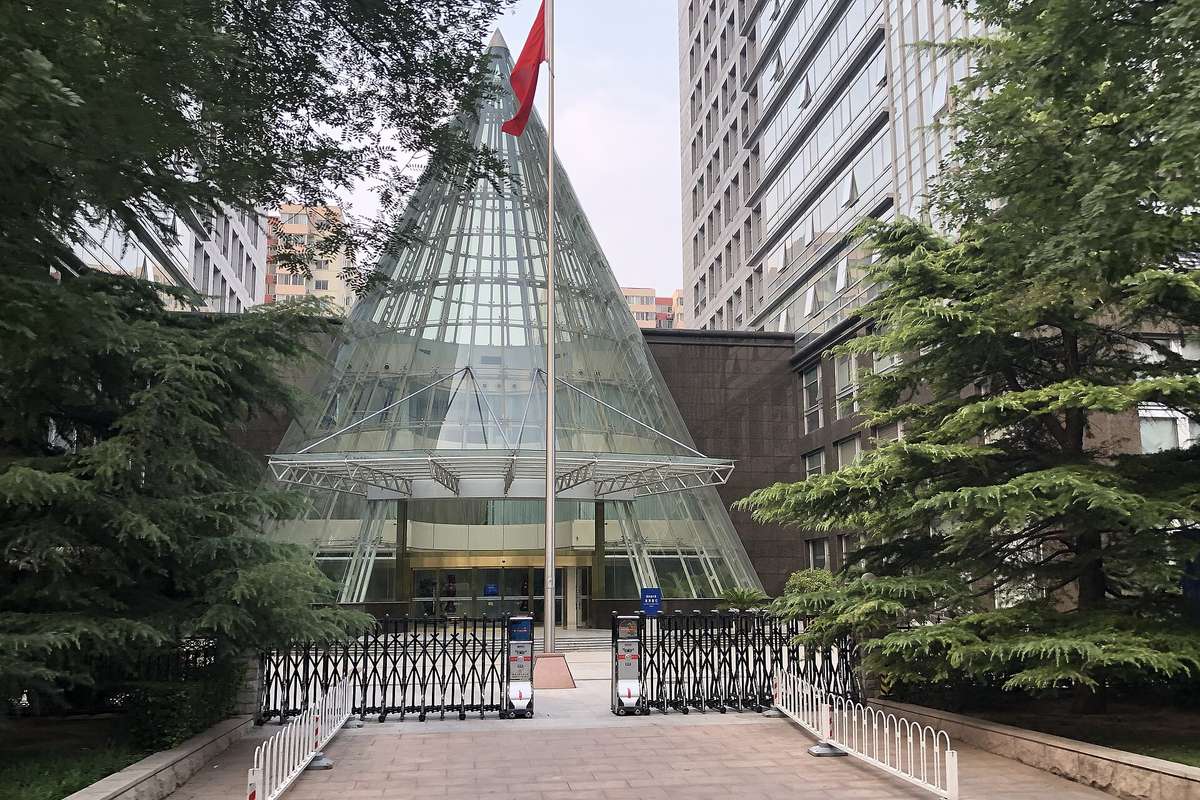
- On which Beijing street does the NBS have its headquarters? 57 Yuetan South Street10, in Xicheng District.
- Of the items the NBS statistician named, which consumer product rose fastest on the year in October 2026? Data storage devices, up 45.4%3, ahead of tablet computers at 29.3%.
- How much did hotel accommodation prices rise from September to October 2026, with National Day holiday travel? 6.5%3, with airfares up 3.3% and travel agency fees up 2.4%.
- Since January 2026, which year serves as the base period for China's CPI? 20251. The bureau estimates the change shifted year on year CPI rates by about 0.06 percentage points on average.
- Roughly how many price collection points feed China's CPI survey? Nearly 120,0001, in about 500 cities and counties across 31 provinces, regions and municipalities.
- How much did beef prices rise in China in the year to October 2026? 8.7%1, with mutton up 5.8%.
- By how much did China's industrial purchase price index rise year on year in June 2022? 8.5 percent7.
Sources
- National Bureau of Statistics of China, 2026年10月份居民消费价格同比上涨0.7% (Consumer prices in October 2026 up 0.7% year on year), 9 November 2026. Accessed November 9, 2026.
- National Bureau of Statistics of China, 2026年10月份工业生产者出厂价格同比上涨5.7% 环比上涨0.7% (Producer prices in October 2026 up 5.7% year on year and 0.7% month on month), 9 November 2026. Accessed November 9, 2026.
- Dong Lijuan, National Bureau of Statistics of China, 2026年10月份CPI同比继续上涨 PPI环比涨幅回落 (interpretation of the October 2026 CPI and PPI data), 9 November 2026. Accessed November 9, 2026.
- Xinhua, Economic Watch: China's consumer prices maintain mild recovery in October, 9 November 2026. Accessed November 9, 2026.
- Shen Yun, National Bureau of Statistics of China, 前三季度CPI保持温和上涨 PPI波动上行 (CPI rose mildly and PPI rose with fluctuations in the first three quarters), 20 October 2026. Accessed November 9, 2026.
- Anadolu Agency, China's producer inflation hits highest level since June 2022, A News, 14 October 2026. Accessed November 9, 2026.
- National Bureau of Statistics of China, Producer Prices in the Industrial Sector for June 2022, 13 July 2022. Accessed November 9, 2026.
- National Bureau of Statistics of China, Producer Prices in the Industrial Sector for July 2022, August 2022. Accessed November 9, 2026.
- Xinhua, Economic Watch: China's latest CPI, PPI data point to steady economic momentum, 9 November 2025, via Shanghai Stock Exchange. Accessed November 9, 2026.
- National Bureau of Statistics of China, Wikipedia. Accessed November 9, 2026.