Chiricahua Becomes Arizona's Fourth National Park
Key Points
- The Chiricahua National Park Act was signed into law on October 20, 2026, redesignating Chiricahua National Monument in southeastern Arizona as a national park.
- The park covers about 12,000 acres in southeastern Arizona and is the state's fourth national park.
- The designation changes the name and status, and the Interior Department says the National Park Service's commitment to protecting the land and its cultural heritage is unchanged.
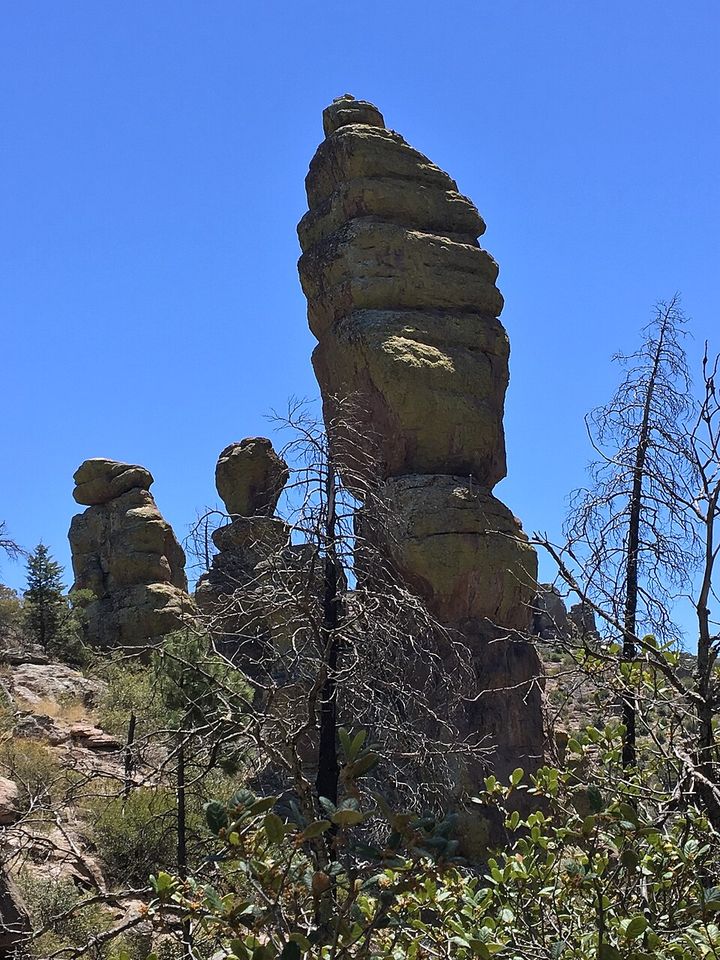

The Chiricahua National Park Act was signed into law on October 20, 2026, changing Chiricahua National Monument in southeastern Arizona into Chiricahua National Park1. The Associated Press counts it as the nation's 64th national park3, and the fourth in Arizona2.
What the park protects
The park covers about 12,000 acres near Willcox, in the Chiricahua Mountains. The Interior Department calls the range a sky island where desert, grassland and forest ecosystems meet1. The Associated Press describes its rock spires as formations created by an ancient volcanic eruption3. The Associated Press reports that Native people called the area the Land of Standing-Up Rocks, and early settlers called it Wonderland of Rocks3.
The Interior Department says the park protects towering rhyolite rock spires and balanced rocks formed by an ancient volcanic eruption roughly 27 million years ago. It lists hiking, wildlife viewing, birding and stargazing among the things the area offers, and says the area supports remarkable biodiversity1. The Associated Press puts the park at 19 square miles and says the name Chiricahua comes from the surrounding mountains3.
The Interior Department describes the area as the homeland of the Chiricahua Apache1. President Calvin Coolidge made the site a national monument in 1924 under the Antiquities Act, and President Franklin D. Roosevelt expanded it in 19383. The Interior Department adds that the park preserves thousands of years of human history, including the legacy of early homesteading families at Faraway Ranch1. The National Park Service says Faraway Ranch was the home of Swedish immigrants Emma and Neil Erickson, who settled on a 160-acre homestead after marrying in January 1887. Neil became the first ranger for the Chiricahua Forest Reserve in 1903, and after their daughter Lillian married Ed Riggs in 1923 the property was built up for a guest ranch operation4.
How a monument becomes a park
The Antiquities Act, signed on June 8, 1906, was the first U.S. law to give general legal protection to cultural and natural resources of historic or scientific interest on federal lands, and it gave the President authority to establish national monuments from existing federal lands5. According to National Park Service leadership quoted by the Interior Department, Chiricahua has been part of the National Park System for more than a century1. The change came through a law, the Chiricahua National Park Act, which the President signed on October 203. The redesignation changes the name and status, and the sources describe no new land added.
What changes and what does not
The main change is the designation and the name. The Interior Department says the National Park Service's commitment to protecting the land and its cultural heritage is unchanged, and that hiking, camping, scenic drives and wildlife viewing continue1. Willcox Mayor Greg Hancock sees a chance to draw more tourism to his city and called the designation "more than a change in name"2.
Interior Secretary Doug Burgum said the designation will shine a national spotlight on the area and create opportunities to welcome more visitors and strengthen local economies1. Visitors can find current information at nps.gov/chir, the release says1.
The bill was sponsored by Representative Juan Ciscomani, an Arizona Republican, and had broad bipartisan support3. Senator Mark Kelly, a Democrat, also co-sponsored it2. Kelly called it a historic day for Arizona and said making Chiricahua a national park had been a priority of his since he first came to the Senate3.
The funding question
The Associated Press notes that the redesignation comes amid deep cuts to the National Park Service workforce, and that maintenance projects at many sites, including Chiricahua, have been ranked low priority by officials3. The sources do not say whether the new status will change staffing or funding.
Tribal access
Some tribes historically did not support the designation because they worried about losing access to the area for ceremonies. Ciscomani promised that visitors and traffic would not interfere with tribal members' right to pray and worship freely. Kelly said in a statement that written protections will keep tribal members' access for traditional and cultural uses2.
What to know before visiting
The National Park Service gives 13063 E Bonita Canyon Rd as the GPS address and says to select Visitor Center in navigation. It says to take Highway 186 from Willcox or Highway 181 from the southwest to stay on pavement. The park's page, updated October 21, 2026, says hiker's transport is not running and that the Chiricahua National Park passport stamp is in production6. The park's history page highlights 8 miles of trails among the rock formations and a scenic drive to the Wonderland of Rocks7.
Trivia
- Which president made Chiricahua a national monument in 1924? Calvin Coolidge3.
- Under which law was the monument created? The Antiquities Act3.
- About how many acres does the park cover? About 12,0001.
- What did Native people call the area, according to the Associated Press? The Land of Standing-Up Rocks3.
- Which Apache group's homeland is the park? The Chiricahua Apache1.
Sources
- Chiricahua National Monument Becomes America's Newest National Park, U.S. Department of the Interior, October 21, 2026. Accessed October 25, 2026.
- Jill Ryan, Chiricahua National Monument is now Arizona's 4th national park, KJZZ, October 21, 2026. Accessed October 25, 2026.
- Chiricahua's towering spires now stand as Arizona's newest national park, The Associated Press and AZFamily Digital News Staff, October 20, 2026. Accessed October 25, 2026.
- Faraway Ranch, Chiricahua National Park, National Park Service, last updated January 22, 2025. Accessed October 31, 2026.
- Antiquities Act of 1906, Archeology Program, National Park Service. Accessed October 31, 2026.
- Basic Information, Chiricahua National Park, National Park Service, last updated October 21, 2026. Accessed October 31, 2026.
- History & Culture, Chiricahua National Park, National Park Service, last updated October 17, 2026. Accessed October 31, 2026.