Coffee Prices Ease as USDA Sees a Record World Crop for 2026/27
Key Points
- The USDA Foreign Agricultural Service forecasts world coffee production for 2026/27 at "a record 189.7 million" bags of 60 kilograms, 10.8 million more than the year before.
- Brazil shipped 5,326,944 bags of coffee abroad in October 2026, the biggest month in Cecafé's records.
- The ICO composite price averaged 261.26 US cents per pound in October 2026, about 26% below its February 2025 average of 354.32 cents.
- The US average price of ground roast coffee was US$9.249 a pound in October 2026, still about 39% above October 2024.
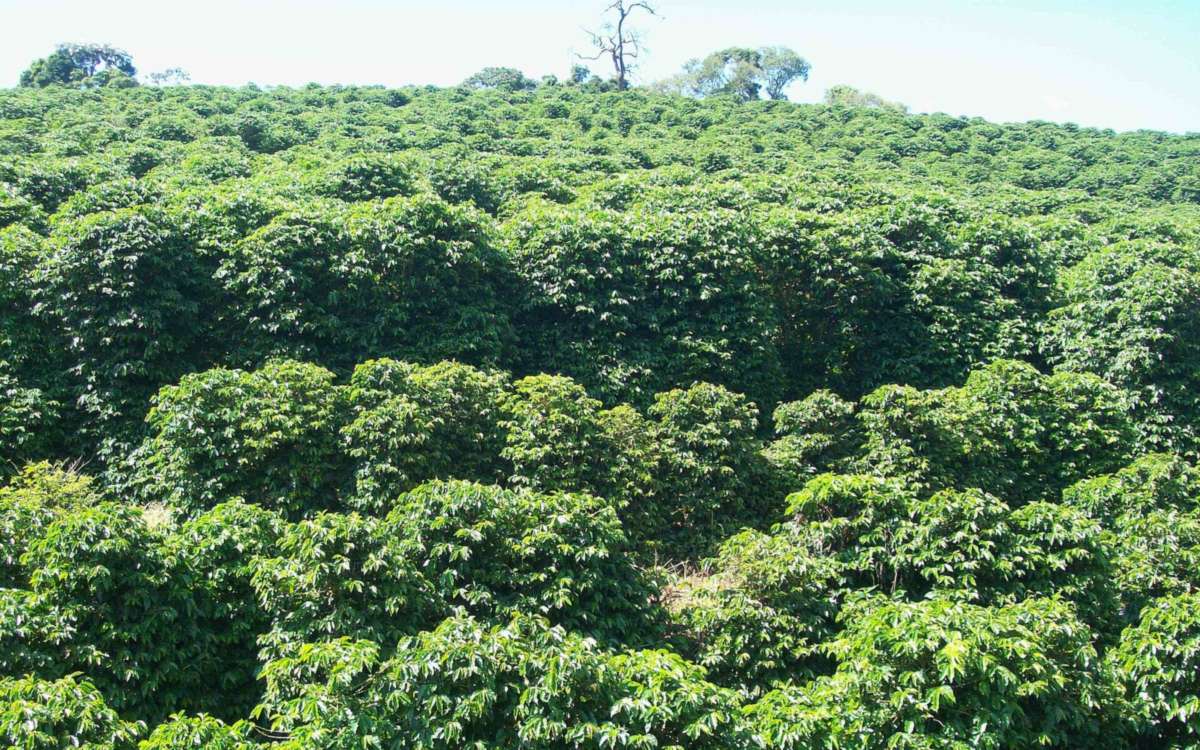

Coffee markets are pulling in two directions. In July the US Department of Agriculture's Foreign Agricultural Service (FAS) forecast world coffee production for 2026/27 at "a record 189.7 million" bags1 of 60 kilograms, 10.8 million more than the year before. Brazil, the largest grower, shipped 5,326,944 bags abroad in October 20265, the biggest month in the records of its exporters' council, Cecafé. Yet the International Coffee Organization (ICO) found that its benchmark price averaged 261.26 US cents per pound in October 20262, only 0.3% below September, as arabica edged up while robusta slipped and a 1 October reweighting of the index trimmed the composite by about 2.5 cents.
How far prices have come down
The ICO Composite Indicator Price (I-CIP) rolls the main types of green, unroasted coffee into a single figure. In February 2025 it averaged 354.32 US cents per pound4, and the ICO headlined that month's report "I-CIP breaches highest monthly prices on record". The October 2026 average sits about 26% below that peak. Writing in July 2026, the FAS noted that "Coffee prices dropped 25 percent in the last 7 months as additional supplies became available"1, measured on the same ICO index. After a rebound in July that held through August, the composite fell 8.7% in September3, and the ICO wrote that "Increased availability from Brazil's harvest and expectations of ample supply weighed on prices."
Arabica and robusta moved apart
Most of the world's coffee comes from two species. Arabica trades in New York on the Coffee "C" contract, which Intercontinental Exchange (ICE) calls "the world benchmark for Arabica coffee"6. Robusta trades in London, on a contract ICE describes as "the global benchmark for the pricing of physical Robusta Coffee"7. In October 2026, by the ICO's count, New York arabica futures rose 1.6% to an average 285.10 US cents per pound2, while London robusta futures fell 1.1% to an average 152.56 US cents per pound.
The ICO put it briefly. "Tight certified stocks supported Arabica prices, while improving supply availability weighed on Robustas."2 Certified stocks are graded coffee held in exchange warehouses, ready for delivery against futures. In New York they fell to 0.23 million bags at the end of October, "the lowest end-of-month level since January 2002"2. London's robusta stocks went the other way, rising to 1.13 million bags, their highest since July 2025. Robusta exports have surged. The ICO counted more than 50 million bags of robusta green bean exports2 in the 2025/26 coffee year for the first time on record, led by Vietnam, whose robusta exports rose 26.7% to 26.37 million bags.
Why the 2026/27 crop looks so large
Brazil sits at the center of the forecast. The FAS expects its combined harvest to reach a record 71.9 million bags in 2026/271 (July 2026 to June 2027). Arabica is forecast to rebound 9.5 million bags to 47.5 million, "ending a 5-year period of underperformance due to adverse weather conditions." The FAS credits timely rain during flowering in September and October 2025 with near-record yields in Minas Gerais, the state that grows over 70% of Brazil's arabica. Brazil's robusta, by contrast, is forecast to slip 600,000 bags to 24.4 million after a record harvest the year before.
Arabica trees also follow a rhythm the FAS calls biennial: they "naturally alternate between high-yielding on-years and lower-yielding off-years"1, and in Brazil, under normal conditions, an on-year crop can rise 5 to 10 million bags. Conab, Brazil's national crop agency, raised its estimate for the 2026/27 crop to a record 67.6 million bags3 on 24 September, according to the ICO, still below the FAS forecast of 71.9 million.
Elsewhere, the FAS forecasts Vietnam at a record 32.5 million bags1 and Colombia up 900,000 bags to 13.4 million, while Indonesia drops 1.0 million bags to 11.4 million. On the other side of the ledger, it expects world consumption to reach a record 179.7 million bags and ending stocks to rise for a second year to 26.3 million, still "below the long-term average." The ICO's own balance sheet, which runs from October to September, shows a surplus of 3.0 million bags for 2025/262 after four straight deficits. In September the ICO put that surplus in context: "a 3.0-million-bag surplus is less than one week's global consumption."3
Brazil's record October
Cecafé's October figures show the new crop reaching ports. Shipments were up 28.4% from 4.149 million bags in October 20255, and export revenue of US$1.786 billion was also a monthly record. Cecafé said (in Portuguese) that new crop coffee arrived in larger volumes from September and October because rain in the coffee belt had delayed this year's harvest. Exports for the first four months of the 2026/27 crop year, July to October, reached 16.591 million bags, up 19.7%.
Shipments to the United States rose 119% in October alone5. Cecafé links the US rebound to the full removal of US tariffs on Brazilian coffee, adding that soluble coffee was taxed until July 2026. Lower prices also show in the export bill. The average shipment brought US$345.64 per bag so far in 20265, 9.5% less than in 2025, partly because cheaper conilon and robusta made up about 18% of shipments against under 11% a year earlier. Brazil's currency weakened too. The ICO noted the US dollar bought R$5.17 on 30 September and R$5.43 on 30 October2, and called the real's slide after Brazil's election runoff bearish for prices.
Weather still sets the tone
The next crop is already flowering. The ICO reports that recent rains in Brazil have been supporting flowering2, but it also flags delayed crop treatments and less synchronized flowering, "which will possibly lead to a more complicated harvest in 2027." Citing the US National Oceanic and Atmospheric Administration (NOAA), the ICO adds an "83% chance of a historic-strength El Niño through January-March 2027". Policy plays a part as well: the ICO says preparations for the European Union's deforestation regulation "may have supported recent coffee shipments into the EU"2, though the size of that effect is uncertain.
What it means at the grocery store
Shelf prices have barely started to follow. The US Bureau of Labor Statistics average price for 100% ground roast coffee was US$9.249 a pound in October 20268, down from US$9.723 in April 2026 but still about 39% above the US$6.644 of October 2024. The consumer price index for coffee fell from 299.101 in September 2026 to 287.972 in October9 (not seasonally adjusted), a drop of about 3.7%, yet October's index was still about 3.1% above September 2025 (the BLS published no October 2025 figure).
Part of the gap is timing. A May 2026 analysis by StoneX's Coffee Network noted that many roasters "secured coffee at higher prices"10 during the 2024 to 2025 rally, "meaning those costs are only now working their way through to consumers," and that energy, packaging and labor costs "all remain elevated compared to pre-pandemic levels."
Trivia
- How many pounds of coffee does one ICE Coffee "C" futures contract cover? 37,500 pounds6.
- From which contract month will coffee from Vietnam become deliverable against the Coffee "C" contract? From the May 2027 expiry, at a 600 point discount6.
- How much robusta does one London Robusta Coffee futures contract cover? Ten tonnes7, priced in US dollars per metric tonne.
- In what year was the International Coffee Organization established, and under whose aegis? In 1963, under the aegis of the United Nations11, after the first International Coffee Agreement was approved in 1962.
- When did Cecafé's export records begin? In January 19905.
- Which African country does the FAS forecast to harvest a record 12.1 million bags in 2026/27? Ethiopia1, where over half of the cultivated area has been replaced with higher-yielding varieties in the last four years.
- Which country ranked second among buyers of Brazilian coffee from January to October 2026? Germany5, with 3.812 million bags, behind the United States.
Sources
- USDA Foreign Agricultural Service, Coffee: World Markets and Trade, July 2026. Accessed November 11, 2026.
- International Coffee Organization, Coffee Market Report, October 2026. Accessed November 11, 2026.
- International Coffee Organization, Coffee Market Report, September 2026. Accessed November 11, 2026.
- International Coffee Organization, Coffee Market Report, February 2025. Accessed November 11, 2026.
- Cecafé, Brasil exporta recorde de 5,3 milhões de sacas de café em outubro, 11 November 2026. Accessed November 11, 2026.
- ICE, Coffee C Futures. Accessed November 11, 2026.
- ICE, Robusta Coffee Futures. Accessed November 11, 2026.
- U.S. Bureau of Labor Statistics via FRED, Average Price: Coffee, 100%, Ground Roast, All Sizes (Cost per Pound/453.6 Grams) in U.S. City Average (APU0000717311). Accessed November 11, 2026.
- U.S. Bureau of Labor Statistics via FRED, Consumer Price Index for All Urban Consumers: Coffee in U.S. City Average (CUUR0000SEFP01). Accessed November 11, 2026.
- Alexis Rubinstein, Retail prices stay elevated as futures fall, exposing a deepening disconnect in the coffee market, StoneX Coffee Network, 18 May 2026. Accessed November 11, 2026.
- International Coffee Organization, About us. Accessed November 11, 2026.