Consumer Credit Rose at a 6.4% Annual Rate in September
Key Points
- The Federal Reserve reported that consumer credit rose at a seasonally adjusted annual rate of 4.2 percent in the third quarter of 2026 and 6.4 percent in September.
- Total consumer credit outstanding was $5,224.4 billion in September, with revolving credit at $1,368.5 billion and nonrevolving credit at $3,856.0 billion.
- The report excludes loans secured by real estate, so mortgages are not counted.
- The Fed's table lists the third quarter 2026 credit card rate at 21.19 percent for all accounts and 22.36 percent for accounts assessed interest.
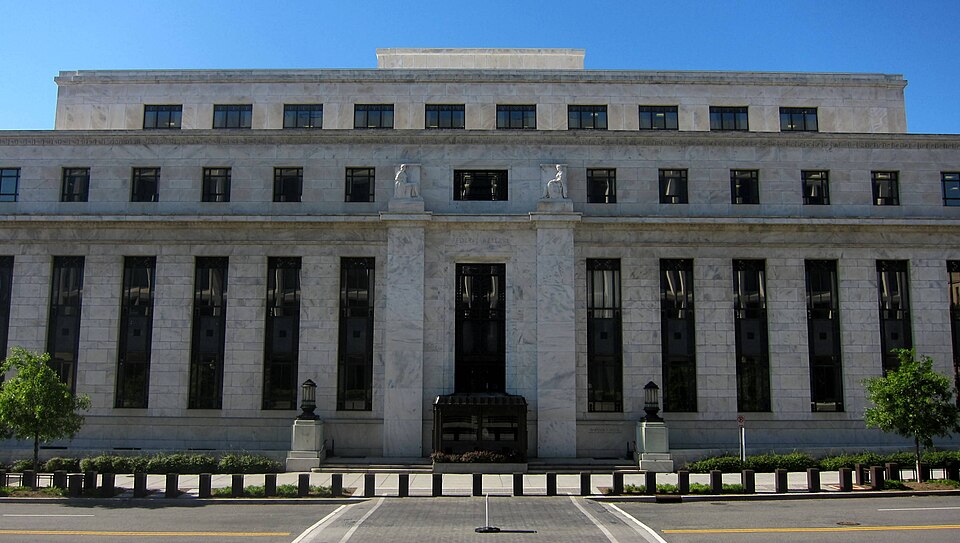

The Federal Reserve Board released its G.19 Consumer Credit report for September 2026 on Friday, November 6, 2026, at 3 p.m. Eastern1. It says consumer credit increased at a seasonally adjusted annual rate of 4.2 percent during the third quarter, and at an annual rate of 6.4 percent in September1. The release lists the September figures as preliminary and the July and August figures as revised1.
What the report counts
The Fed describes consumer credit as most credit extended to individuals, excluding loans secured by real estate1. That means credit cards and car loans count, and a mortgage does not. The report splits the total into revolving credit and nonrevolving credit, and the Fed defines nonrevolving credit as motor vehicle loans and all other loans not in the revolving group, such as loans for mobile homes, education, boats, trailers or vacations1.
The Fed notes that its percent changes are at a simple annual rate and are calculated from unrounded data1. A monthly figure written as an annual rate is the monthly change scaled up to a full year, so a single month can look large or small next to a quarter or a year.
The September figures
Total consumer credit outstanding, seasonally adjusted, was $5,224.4 billion in September, compared with $5,196.6 billion in August and $5,188.4 billion in July1. Revolving credit stood at $1,368.5 billion in September and nonrevolving credit at $3,856.0 billion1. Subtracting August from September in the Fed's table gives a monthly increase of $27.8 billion for the total, $16.3 billion for revolving credit and $11.6 billion for nonrevolving credit. Those three differences are simple arithmetic on the published levels, not figures the Fed printed.
By the Fed's annual-rate measure, revolving credit rose 14.5 percent in September after a 4.4 percent decline in August and a 2.4 percent increase in July1. Nonrevolving credit rose at annual rates of 3.6 percent in September, 4.1 percent in August and 4.7 percent in July1. The total rose 6.4 percent in September, 1.9 percent in August and 4.1 percent in July1.
In dollar flows, the Fed lists total consumer credit at an annual rate of $334.1 billion in September, made up of $195.6 billion in revolving credit and $138.5 billion in nonrevolving credit1. August's flow was $98.3 billion in total, with revolving credit at negative $59.6 billion1.
The third quarter and earlier periods
For the third quarter, revolving credit increased at an annual rate of 4.1 percent and nonrevolving credit at 4.2 percent1. The table lists the total at 2.6 percent in the first quarter of 2026, 3.1 percent in the second quarter and 4.2 percent in the third quarter1. For full calendar years it lists 5.7 percent for 2021, 7.7 percent for 2022, 2.7 percent for 2023, 2.0 percent for 2024 and 2.2 percent for 20251.
Outstanding consumer credit at the end of the third quarter of 2026 was $5,224.4 billion, up from $5,098.8 billion at the end of 2025 and from $4,512.7 billion at the end of 20211.
Who holds the debt
The Fed also publishes who holds consumer credit, on a not seasonally adjusted basis. In September 2026 the total was $5,192.1 billion, held as follows: depository institutions $2,109.2 billion, the federal government $1,632.9 billion, credit unions $739.2 billion, finance companies $700.8 billion and nonprofit and educational institutions $10.0 billion1. For revolving credit, depository institutions held $1,218.1 billion of the $1,323.2 billion total1. The federal government's holdings appear only in the nonrevolving category, and the Fed's footnote says they include student loans originated under the Federal Direct Loan Program and the Perkins Loan Program, plus certain Federal Family Education Loan Program loans the government purchased1.
Two memo lines, released for quarter-end months, show student loans at $1,884.6 billion and motor vehicle loans at $1,589.8 billion in September 20261. The Fed says the memo student loan line includes loan balances that are not included in the nonrevolving balances1.
Interest rates in the report
The Terms of Credit table, not seasonally adjusted, gives commercial bank rates by quarter. For the third quarter of 2026 it lists the 60-month new car loan rate at 7.54 percent, the 72-month rate at 7.17 percent, the 24-month personal loan rate at 11.90 percent, and credit card plans at 21.19 percent across all accounts and 22.36 percent for accounts assessed interest1. The second quarter of 2026 figures were 7.14, 6.97, 11.86, 20.94 and 22.15 percent in the same order1. A year earlier, in the third quarter of 2025, the credit card rate for all accounts was 21.39 percent and for accounts assessed interest 22.83 percent1.
The Fed defines these as annual percentage rates under Regulation Z, and says the new car and personal loan rates are simple unweighted averages of each bank's most common rate in the first calendar week of the middle month of the quarter1. For credit cards, the all-accounts rate is the stated rate averaged across all credit card accounts at all reporting banks, and the assessed-interest rate is the annualized ratio of finance charges to the balances that were charged interest1. The finance company new car loan rates were not yet available for the third quarter1.
How to read it
The report measures balances and the rates banks report. It covers only the credit types listed above, so mortgages are outside it, and the tables carry no delinquency rates. The September monthly figures are preliminary, which is why the release marks each column as preliminary or revised. These are published figures and the Fed's own description of them, not a forecast and not advice. The Fed notes the release is generally issued on the fifth business day of each month1.
Trivia
- At what seasonally adjusted annual rate did the Fed say consumer credit increased in September 2026? 6.4 percent, compared with 4.2 percent for the third quarter as a whole1.
- What was total seasonally adjusted consumer credit outstanding in September 2026? $5,224.4 billion1.
- What does the G.19 report leave out, according to the Fed? Loans secured by real estate1.
- What was the credit card rate for all accounts in the third quarter of 2026, according to the Terms of Credit table? 21.19 percent, up from 20.94 percent in the second quarter1.
- Which holder group had the largest share of not seasonally adjusted consumer credit in September 2026? Depository institutions, at $2,109.2 billion, ahead of the federal government at $1,632.9 billion1.
Sources
- Consumer Credit - G.19, September 2026, Board of Governors of the Federal Reserve System, November 6, 2026. Accessed November 7, 2026.
- G.19 Consumer Credit, September 2026 (PDF), Board of Governors of the Federal Reserve System, November 6, 2026. Accessed November 7, 2026.