More Than $500 Million Pledged for Species Recovery as COP17 Opens
Key Points
- COP17, the UN Biodiversity Conference, opened in Yerevan, Armenia, on 19 October 2026 and runs to 30 October.
- Nine private funders and organizations committed more than $500 million over the next five years to recover the most threatened species.
- Colombia and Armenia launched CARES, a coalition of governments working on species recovery.
- A UN report found fewer than half of the national targets assessed by parties on track at the halfway point to 2030.

The UN Biodiversity Conference, known as COP17, officially opened in Yerevan5, the capital of Armenia, on 19 October 2026. The meeting runs from 19 to 30 October4 and arrives at the halfway point of a global plan to halt and reverse the loss of nature by 2030. It will take stock of how countries are doing.
On 16 October, the day a leaders' summit adopted the Yerevan Declaration calling for accelerated implementation3 and more money for biodiversity, a group of nine private funders and organizations announced a commitment of more than $500 million over the next five years1 (US dollars) to prevent extinctions and recover the world's most threatened species. Governments made a parallel move on the same day with a new coalition of their own.
Who pledged, and for what
The new group calls itself the Species Recovery Alliance. Its founding members1 are the Ayers Wild Cat Conservation Trust, Bezos Earth Fund, Colossal Foundation, Critical Ecosystem Partnership Fund, Fondation Segré, Franklinia Foundation, Rainforest Trust, Re:wild and WildLives Earth. The alliance says it aims to become the largest coordinated philanthropic effort dedicated to the recovery of threatened species1.
The money is not going into one pot. According to the announcement, members will coordinate and align their investments rather than pool their funding1, share knowledge and work with local partners on recovery projects. Progress is to be reported against two yardsticks kept by the International Union for Conservation of Nature (IUCN), the Green Status of Species and the Red List of Threatened Species1. The focus is on species the Red List classes as extinct in the wild, critically endangered or endangered.
The release cites the Red List count of more than 31,000 species1 in those three categories, including more than 10,000 that are critically endangered, and says that more than 10% of those have populations of fewer than 50 individuals. Habitat protection alone often falls short, and the release cites research showing that 57% of threatened species also need targeted conservation interventions1, such as conservation breeding, genetic rescue, reintroductions, disease control and the removal of invasive species.
A coalition of governments
Alongside the private pledge, Colombia and Armenia launched the Coalition of Action to Recover Endangered Species, or CARES, on 16 October. The Re:wild release describes seventeen governments, led by Colombia and Armenia1. The announcement from the Colombian environment ministry lists 16 founding participants2, namely Armenia, Belize, Brazil, Canada, China, Colombia, Costa Rica, Ecuador, Fiji, Madagascar, Mexico, Panama, Papua New Guinea, Peru, the United Kingdom and Vanuatu. The two co-chairs carry over from the last two meetings, since Colombia held the COP16 presidency and Armenia holds COP172.
The ministry says member countries can draw on species recovery expertise to identify species that need targeted help beyond habitat protection2 and to make measurable progress toward their recovery by 2030. Re:wild notes that the alliance commitment is independent of CARES1, though the two share the same goal.
Both efforts point at Target 4 of the global plan, which calls for urgent management actions to halt human induced extinction of known threatened species9 and for the recovery and conservation of species, in particular threatened ones, to significantly reduce extinction risk.
The treaty and the plan behind the meeting
The Convention on Biological Diversity is the treaty that holds these meetings. It was opened for signature on 5 June 19927 at the Rio Earth Summit and entered into force on 29 December 19937. It covers the conservation of biological diversity, the sustainable use of its components, and the fair and equitable sharing of benefits arising from the use of genetic resources7. The treaty now has 196 parties4.
The current plan is the Kunming-Montreal Global Biodiversity Framework, adopted at COP15 in December 20228 after four years of consultation and negotiation. It sets 4 goals for 2050 and 23 targets for 20308. Among them is conserving 30 per cent of land and sea by 20304, often shortened to 30x30. The money side is spelled out too, as the framework calls for at least $200 billion annually from all sources by 20304, including at least $30 billion in international biodiversity finance.
The midpoint check
A UN report released on 15 October, the State of Biodiversity Action, is the first global assessment of progress3 under the framework. It found nearly 90% of countries setting national biodiversity targets3, and also that fewer than half of the national targets assessed by parties are on track4. UN News adds that major gaps persist in finance, capacity, cooperation and the data needed to track progress4.
Recoveries already on the books
Species can come back when the work is sustained, and the latest Living Planet Report, published by WWF on 8 October 2026, puts several examples next to its headline finding that monitored vertebrate wildlife populations have declined by an average of 73% since 19706. That index draws on 35,803 population trends of 5,790 vertebrate species6, compiled by the Zoological Society of London.
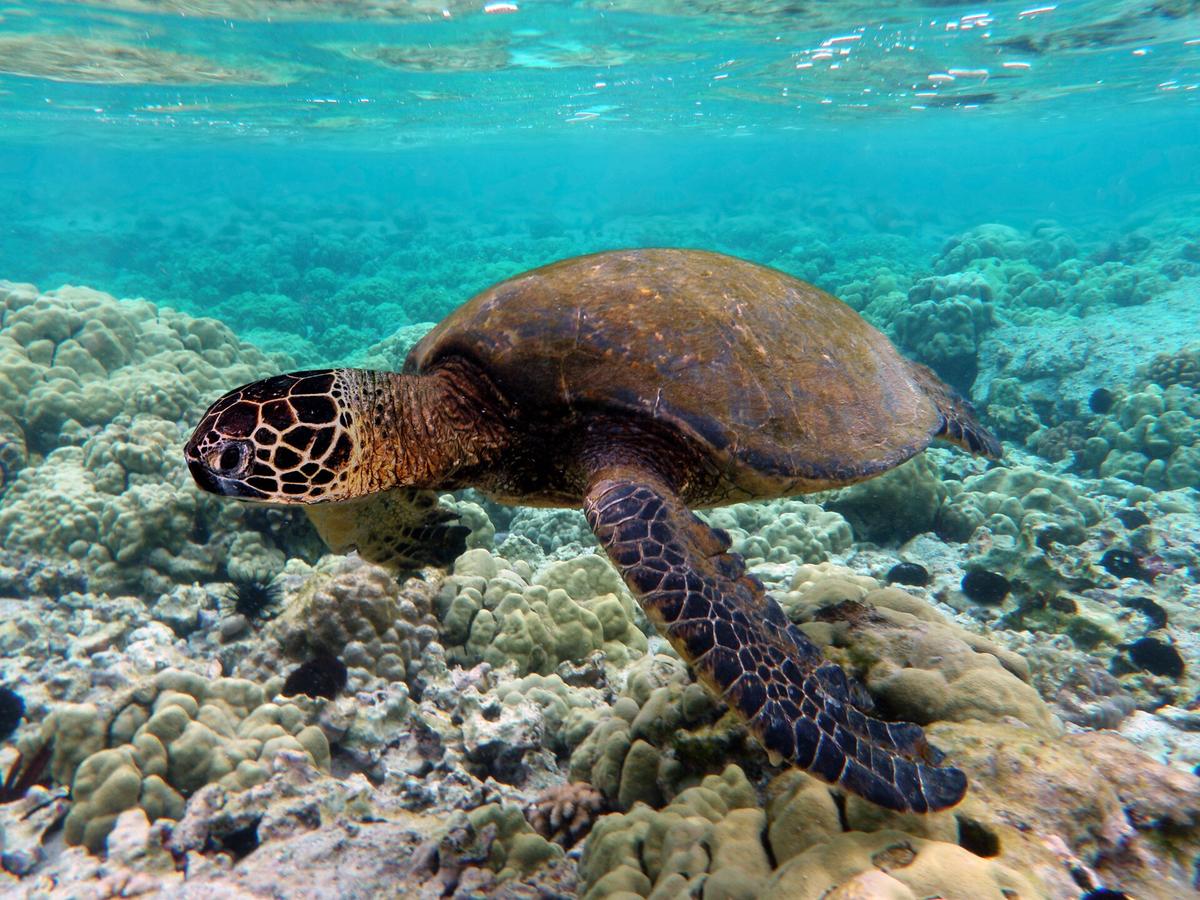
Tigers are one example. Wild tiger numbers increased by over 70% between 2010 and 20256, according to the report. In 2025 the green sea turtle moved from Endangered to Least Concern on the IUCN Red List, which makes it, in WWF's words, the first marine turtle ever downlisted from Endangered to Least Concern6. WWF says the recovery reflects 50 years of coordinated work across some 80 nesting countries. Atlantic and Pacific bluefin tuna, both of which had fallen steeply by 2010, have recovered to the point where neither is considered overfished or a species of concern6.
Elephants show how local the picture can be. African savanna elephants remain Endangered overall6, yet some populations in southern Africa are increasing. WWF links that to legal frameworks that give local communities a direct stake in elephant stewardship, backed by anti-trafficking work, judicial reform and reduced corruption.
The Species Recovery Alliance announcement points to the existing Phoenix Species Project1, a partnership between two of its members, and quotes Cristián Samper of the Bezos Earth Fund saying that conservationists have shown species can be brought back from the brink1. Phoenix aims to demonstrate how targeted recovery could be scaled to help thousands of threatened species worldwide1, and the national plans, money and data behind that are what COP17 is meeting to review through 30 October.
Trivia
- Who was elected president of COP17 at the opening plenary? Armenia's Minister of Environment, Hambardzum Matevosyan, elected for a two-year term5.
- How many signatures had the biodiversity convention collected when it closed for signature on 4 June 1993? It had received 168 signatures7.
- Which protocol under the convention, on sharing the benefits of genetic resources, was adopted in a Japanese city in 2010? The Nagoya Protocol, adopted on 29 October 2010 in Nagoya, Japan10, which entered into force on 12 October 2014.
- How many Aichi biodiversity targets, the set before Kunming-Montreal, were fully achieved globally by 2020? None. Mongabay notes that not a single one of the 20 Aichi biodiversity targets had been fully achieved globally by 202011.
- What kind of organism makes up more than a third of the species listed as extinct in the wild, critically endangered or endangered? Trees. Jean-Christophe Vié of Fondation Franklinia says in the Re:wild release that more than one third of the species classified as extinct in the wild, critically endangered or endangered on the IUCN Red List are trees1.
- How many threatened species is the Phoenix Species Project working to recover, and in how many countries? It focuses on 100 of the world's most threatened species1, spanning 30 countries.
- How far had Pacific bluefin tuna collapsed before its recovery? To 2% of unfished levels6, according to WWF, when it was classified as Vulnerable.
- Which Tanzanian lizard is recovering after villagers, rangers and ecologists cut down nearly 100,000 invasive Spanish cedar trees since 2016? The electric-blue gecko, whose population is recovering11 after it had been classified as critically endangered.
Sources
- Re:wild, Species Recovery Alliance announcement (press release), 16 October 2026. Accessed October 19, 2026.
- Ministerio de Ambiente y Desarrollo Sostenible (Colombia), Colombia y Armenia lanzan una coalición internacional para acelerar la recuperación de especies, 16 October 2026. Accessed October 19, 2026.
- Convention on Biological Diversity, Spotlight on COP 17: Announcements from Yerevan, 18 October 2026. Accessed October 19, 2026.
- UN News, COP17: The world has a plan to save nature. Is it working?, 17 October 2026. Accessed October 19, 2026.
- Public Radio of Armenia, Armenia officially launches COP17 in Yerevan, Hambardzum Matevosyan elected President, 19 October 2026. Accessed October 19, 2026.
- WWF-UK, Living Planet Report 2026 (press release), 8 October 2026. Accessed October 19, 2026.
- Convention on Biological Diversity, History of the Convention. Accessed October 19, 2026.
- Convention on Biological Diversity, Kunming-Montreal Global Biodiversity Framework. Accessed October 19, 2026.
- Convention on Biological Diversity, Kunming-Montreal Global Biodiversity Framework, Target 4. Accessed October 19, 2026.
- Convention on Biological Diversity, About the Nagoya Protocol. Accessed October 19, 2026.
- Rhett Ayers Butler, Conservation is bringing species back. Governments must help those gains last, Mongabay, 19 October 2026. Accessed October 19, 2026.