ACCIONA Starts Commercial Operation of Two Wind Farms in Croatia
Key Points
- ACCIONA Energía has started commercial operation of the Opor (27 MW) and Boraja II (45 MW) wind farms in Croatia, with 16 Nordex turbines in all.
- The two farms are expected to generate about 203 GWh a year and sell under 12-year contracts for difference awarded at auction.
- Renewables supplied 58.0% of Croatia's gross electricity consumption in 2024, according to Eurostat.
- With the new farms, ACCIONA's installed wind capacity in Croatia reaches 102 MW, and the company is building the 189 MWp Promina solar plant.
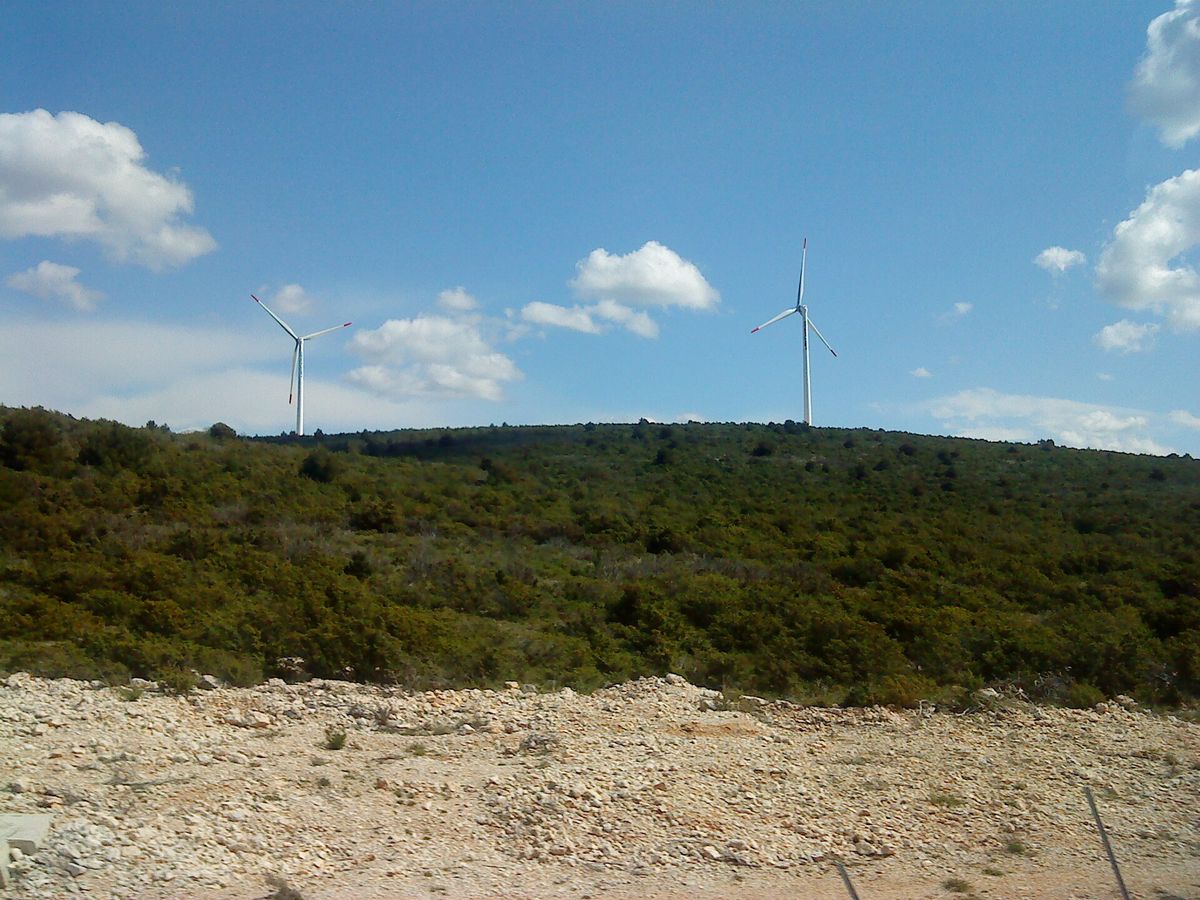

Two new wind farms in the hills of Dalmatia are now selling power into the Croatian grid. ACCIONA Energía has completed the commissioning and start of commercial operations1 of the Opor wind farm (27 MW) and the Boraja II wind farm (45 MW), Renewable Energy Magazine reported on 21 October 2026. Together they add 72 MW of wind capacity2 to the Croatian grid. Both farms deliver their electricity through HROTE, the Croatian energy market operator1.
Sixteen turbines in two counties
Opor has six turbines in the Split-Dalmatia region1, and Boraja II has ten in the neighbouring Šibenik-Knin region. Opor spans the municipalities of Prgomet, Lećevica and Kaštela4. Every turbine at both sites is a Nordex N149/4.55 rated at 4.5 MW, with a 149 metre rotor4, and Renewable Energy Magazine puts them on 105 metre steel towers1. Nordex introduced the N149 in 2017 as a machine designed specifically for light-wind regions8, with a variable output of 4.0 to 4.5 MW.
The company expects the two farms to generate about 203 GWh of electricity a year1. Its project pages split that output into an estimated 75 GWh a year4 at Opor and 128 GWh a year5 at Boraja II. Construction created up to 400 direct jobs1 at its peak.
A longer build than first planned
ACCIONA announced both projects in July 2022. It put the investment at nearly €100 million3 at the time, which is about US$112.3 million at the European Central Bank reference rate of US$1.1234 per euro17 on 21 October 2026, and expected the farms to be operational in 20243. ACCIONA's Opor project page gave a scheduled start of April 20254 and an investment of more than €37 million (about US$41.6 million at the same ECB rate). The Boraja II page lists its start up year as 20265.
How the contracts for difference work
Both farms sell under 12-year contracts for difference1 awarded in a public auction, through a program launched by the Croatian government and HROTE and approved by the European Commission. A contract of this kind guarantees a reference price for the electricity, which reduces the farms' exposure to swings in wholesale prices1.
The European Commission had already cleared a separate Croatian support scheme in December 2021, with a budget of approximately €783 million14 (about US$879.6 million at the 21 October 2026 ECB rate), for electricity from wind, solar, hydro, biomass, biogas and geothermal plants. Producers chosen in tenders held from 2021 to 2023 receive a premium on top of the electricity market price14 for 12 years. Bidders compete for that premium, and it cannot exceed the gap between a technology's average production cost and the market price14.
Where Croatia stands on renewables
Croatia already draws most of its electricity from renewable sources. Eurostat puts the renewable share of the country's gross electricity consumption at 58.0% in 202410, against 47.5% for the EU as a whole. The Eurostat dataset, updated on 15 September 2026, shows a provisional 58.8% for 20259.
Across all energy use, heating and transport included, the share is lower. Croatia's renewable share of gross final energy consumption was 26.5% in 2024 and a provisional 28.5% in 20259, near the EU figure of 25.2% in 202411.
Hydropower carries a large part of the load. Provisional figures from the Renewable Energy Sources of Croatia association (OIEH), reported by Croatia Week, show hydropower supplying 26% of the electricity consumed in Croatia in 202513, while wind, solar, biomass and biogas together supplied 26.6% and imports covered 16.2%. The same figures put the country's installed wind capacity at 1,277 MW at the start of 202613, and WindEurope data cited by Balkan Green Energy News put it at 1,309 MW at the end of June 20262, before Opor and Boraja II began commercial operation.
Croatia's updated national energy and climate plan raises its 2030 goal for renewables in gross final energy consumption to 42.5%12, according to the European Environment Agency, which says the country has great renewable energy potential, particularly when it comes to wind power12. That matches the EU-wide figure in the revised Renewable Energy Directive, which sets a minimum of 42.5% share of renewables15 in the energy mix by 2030 as a binding target. Eurostat calculated that the EU as a whole was 17.3 percentage points short11 of that target in 2024.
The wind of the Adriatic coast
Croatia's coast has a wind of its own, the bura. The Croatian Encyclopedia describes it as a strong, dry, cold, gusty and turbulent wind from the land16 that blows along the eastern coast of the Adriatic Sea, mostly in the cold part of the year. Along the coast from Trieste to Dubrovnik, bura winds of 20 to 35 metres per second16 are common.
ACCIONA in Croatia
The new farms join Jelinak6, a 30 MW wind farm in Split-Dalmatia that ACCIONA has run since 2013 and calls its first wind farm in Croatia. With Opor and Boraja II, the company's installed wind capacity in the country reaches 102 MW1.
ACCIONA is also building the Promina photovoltaic plant7, a 189 MWp project in Šibenik-Knin county. The company says Promina will be the largest solar plant in the country, will produce 320 GWh a year and is due for commissioning in 2027. It too holds a 12-year contract for difference7.
Trivia
- Who inaugurated the Jelinak wind farm on 6 October 2013? Ivo Josipović6, then President of Croatia.
- Which turbines turn at Jelinak? Twenty AW1500 wind turbines6 of ACCIONA Windpower technology, with an 80 metre hub height.
- Where does the bura blow hardest? Around the Gulf of Trieste and the Kvarner Gulf16 and in the Velebit Channel, especially near Senj.
- Which EU country had the highest renewable share of electricity consumption in 2024? Austria, at 90.1%10, ahead of Sweden and Denmark.
- How many solar panels will the Promina plant use? More than 300,000 photovoltaic modules7, connected through a new 400 kV substation on the site.
- At which trade fair did Nordex plan to present the N149/4.0-4.5 in 2017? Husum Wind8, held from 12 to 15 September 2017.
- On what date did the revised Renewable Energy Directive enter into force? On 20 November 202315, with an aspiration to reach 45% renewables by 2030.
Sources
- REM, ACCIONA Energía Begins Commercial Operation of Two Wind Farms in Croatia, Renewable Energy Magazine, 21 October 2026. Accessed October 21, 2026.
- Vladimir Spasić, Acciona Energía kicks off commercial operations of two wind farms in Croatia, Balkan Green Energy News, 20 October 2026. Accessed October 21, 2026.
- ACCIONA Energía, ACCIONA Energía ramps up growth with two new wind farms in Croatia, 18 July 2022. Accessed October 21, 2026.
- ACCIONA, Opor wind farm (project page). Accessed October 21, 2026.
- ACCIONA Energía, Boraja II wind farm (project page). Accessed October 21, 2026.
- ACCIONA Energía, Jelinak wind farm (project page). Accessed October 21, 2026.
- ACCIONA Energía, ACCIONA Energía secures a contract for difference for a new PV plant in Croatia, 5 August 2024. Accessed October 21, 2026.
- Nordex, Nordex entering 4 MW class with powerful turbine, 1 September 2017. Accessed October 21, 2026.
- Eurostat, Share of energy from renewable sources (nrg_ind_ren), dataset updated 15 September 2026. Accessed October 21, 2026.
- Eurostat, 2024: nearly 50% of EU electricity came from renewables, Eurostat news, 14 January 2026. Accessed October 21, 2026.
- Eurostat, 25.2% of energy EU used in 2024 came from renewables, Eurostat news, 18 December 2025. Accessed October 21, 2026.
- European Environment Agency, Croatia: renewable energy sources, Europe's environment 2025, 29 September 2025. Accessed October 21, 2026.
- Croatia Week, Croatia renewable energy records in 2025, 5 January 2026. Accessed October 21, 2026.
- BV Swagath, European Commission approves €783m Croatian scheme to support production of electricity from renewable energy sources, NS Energy, 10 December 2021. Accessed October 21, 2026.
- European Commission, Renewable energy targets (archived copy, 2 October 2026). Accessed October 21, 2026.
- bura, Hrvatska enciklopedija, mrežno izdanje, Leksikografski zavod Miroslav Krleža, 2013 to 2026. Accessed October 21, 2026.
- European Central Bank, Euro foreign exchange reference rates: US dollar (USD). Accessed October 21, 2026.