Why the Iran War Hit Diesel Harder Than Gasoline, and What Adds Supply
Key Points
- In the EIA's weekly survey, average US on-highway diesel reached $6.529 a gallon in the week of September 21, 2026, the highest weekly figure in the series.
- Before the war, a gallon of diesel cost 87 cents more than a gallon of gasoline, and by early October the gap was $1.85.
- The EIA's October outlook forecasts that retail distillate prices will remain above $6 a gallon in October, then ease to a retail diesel average of about $4.50 a gallon in 2027.
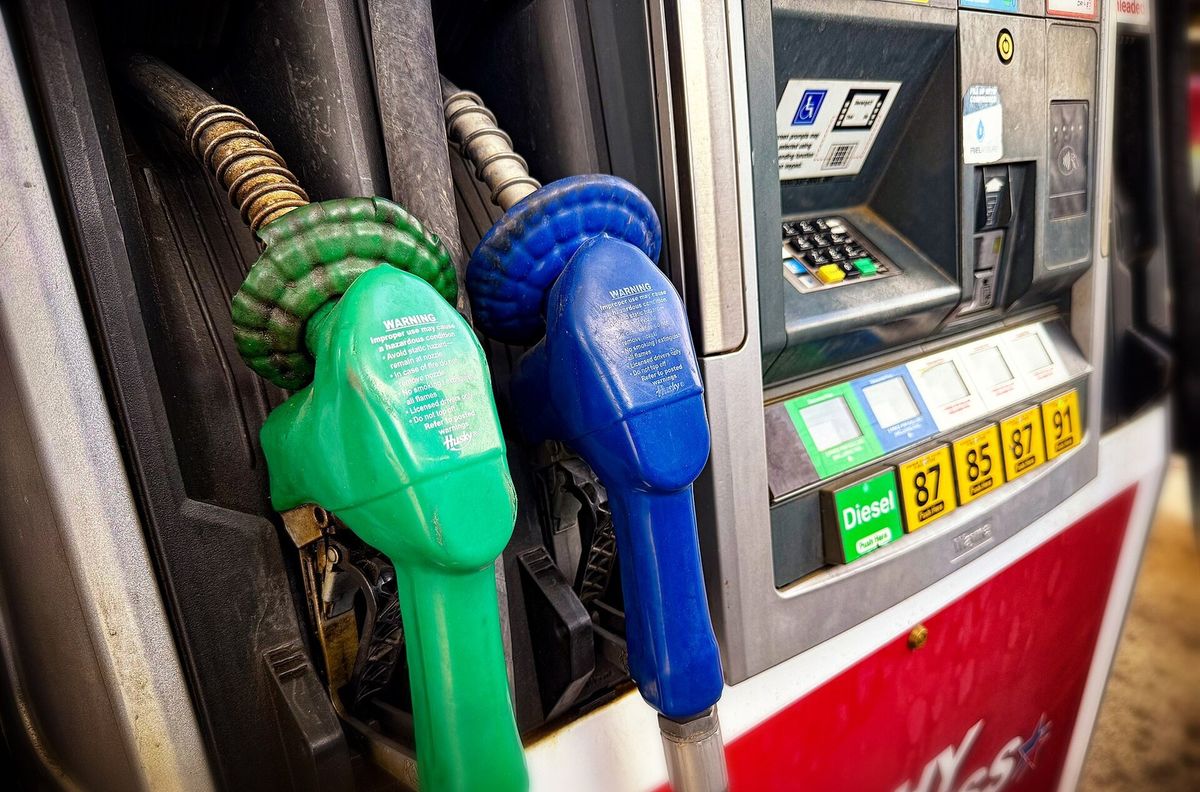

Diesel has climbed further and faster than gasoline since the war with Iran began. In the Energy Information Administration's weekly survey, the average US price of on-highway diesel was $3.809 a gallon in the week of February 23, 20262, and it reached $6.529 in the week of September 21, the highest weekly figure in the series. The previous record was $5.810, set in June 2022. The latest reading, for October 51, was $6.199, which is $2.488 more than a year earlier. Regular gasoline went from $2.937 to $4.3543 over the same stretch, an increase of about 48 percent against about 63 percent for diesel, by this article's arithmetic from the EIA series. Before the war, a gallon of diesel cost 87 cents more than a gallon of gasoline. By early October the gap was $1.85. Here is why, as of October 12, 2026, and what different camps say it would take to make more diesel at home.
What the conflict is
The Associated Press, reporting in June, wrote that "Israel joined the U.S. in launching the war on Feb. 28"4. Early in the war, the AP reported, Iranian attacks on ships brought traffic through the Strait of Hormuz to a near standstill, and the US answered with a blockade of Iranian ports. Al Jazeera describes the strait as having been effectively shut in retaliation, and notes that some 20 million barrels of oil flowed through it each day before the war6.
The fighting has not followed a straight line. In mid-June the AP reported an initial deal that would extend a shaky ceasefire and reopen the strait. On July 10, Bloomberg News reported that President Trump had declared "the Cease Fire is OVER!"5, with each side blaming the other for breaking the June agreement. In early September, Al Jazeera described a tanker war, with the US striking Iranian tankers and Iran hitting tankers and firing a ballistic missile toward US warships. Reuters reported on October 7 that maritime security sources counted at least 12 attacks on oil, LNG and LPG tankers7 between September 28 and October 5, the most in any week since the war began, even though Gulf oil exporters had topped pre-war levels for about half of September. On October 11, Al Jazeera cited Kpler data showing that crude passing through the strait averaged 8.5 million barrels a day in the week ended October 738, roughly 40 percent below the normal level, and reported that mediated efforts to end the war remained deadlocked.
Why diesel took the bigger hit
Crude oil is part of the story. Brent crude was roughly $70 a barrel before the war6, according to Al Jazeera, and near $96 at the end of September11, according to Bloomberg. The EIA, in its October Short-Term Energy Outlook, said diesel prices averaged $6.29 a gallon in September8, "driven by higher crude oil prices and rising crack spreads." Energy researchers Morgan Bazilian and Jamie Webster, writing in The Conversation, describe crack spreads as the short-term profit margins for making diesel17, and that is where the part of the price crude alone does not explain shows up.
The Middle East exports a lot of diesel. Argus Media reported in March that grades of crude with better distillate yields were gaining value because of a tight global market for jet fuel and diesel, "as those are typically exported from the Middle East in high quantities."10 Refined products have come back more slowly than crude. Bloomberg reported on September 30 that, by JPMorgan's estimate, supply of diesel and gasoline from the region was about 3 million barrels a day, or 58 percent of pre-war levels11.
Shipping fuel through a war zone costs more. Before the war, war-risk insurance for a tanker ran about 0.25 percent of the ship's hull value, The National reported, and Marcus Baker of the broker Marsh said rates since then "can be anywhere between 3 per cent and 10 per cent on hull value"13. Platts reported in June, citing the shipbroker BRS, that the premium lands harder on product tankers than on crude carriers, because, BRS said, there is evidence that smaller product tankers earning lower freight rates have been discouraged from crossing Hormuz12.
Russia cut its diesel exports. Ukraine has stepped up drone attacks on Russian refineries, and on September 30 OilPrice.com reported that Russia had extended its ban on "exports of diesel, marine fuel, and gasoil for all fuel producers by October 31."14 Bazilian and Webster describe Russia as historically the second-largest diesel exporter, after the United States. On October 10, after a call between Presidents Putin and Trump, the Russian government partly lifted the ban, allowing 500,000 metric tons of diesel onto the global market36, TASS reported. The Kyiv Independent37 reported the same move, citing TASS.
Stocks were already low. In September 2025, before any of this, the EIA expected US distillate inventories to end 2025 and 2026 below previous years, partly because of refinery closures and strong demand overseas, and said that "increased renewable diesel production in 2026 will partially offset some of the decline in distillate fuel oil production."15 Weekly EIA data show US distillate stocks at 105.1 million barrels on October 2, 202616, down from 120.8 million at the end of February and 121.6 million a year earlier. The East Coast is tighter still. Its distillate inventories were 32 percent below their five-year seasonal average in September9, the EIA said.
Bazilian and Webster add that US refineries were already running at nearly 98 percent of capacity, that distillate stocks in late August were the lowest for that point in the year since 1951, and that diesel crack spreads passed $100 a barrel for the first time17. Their conclusion is that the world cannot simply raise refinery output to cover the shortfall.
What it would take to make more diesel at home
More domestic supply can mean two different things. One is more crude oil. The other is more capacity to turn crude into diesel. They run into separate limits.
Crude oil is not the bottleneck
US crude production was 13.71 million barrels a day in February 2026 and 13.95 million in July18, the latest month reported. The EIA forecasts 13.9 million barrels a day for 2026 and 14.3 million for 20278. Baker Hughes counted 462 rigs drilling for oil in the week ending October 919, six more than the week before. Bazilian and Webster's point is that more crude does not by itself mean more diesel when refineries are already running near their limits. The American Petroleum Institute, an industry group, describes the problem as "an unprecedented disruption to global refining capacity"20.
Refining capacity has been shrinking
The EIA counted 130 operable refineries with 18.2 million barrels per calendar day of capacity on January 1, 202622, two refineries and more than 250,000 barrels per calendar day fewer than a year earlier. LyondellBasell closed its Houston refinery in March 2025 and Phillips 66 closed its Los Angeles refinery in October 2025, about 400,000 barrels a day between them. Valero's 145,000 barrel-a-day Benicia refinery in California has since stopped refining too, and the EIA dropped it from its monthly capacity figures in March 2026.
New refineries are rare. According to the EIA, the newest refinery with significant downstream units is Marathon's in Garyville, Louisiana, which came online in 197723. The newest refinery of any size, the EIA says, is a 45,000 barrel-per-calendar-day plant in Galveston, Texas, that began operating in February 2022. A company called America First Refining plans a $4 billion refinery in Brownsville, Texas, built for light US shale crude, and its chairman, John Calce, expects full operation in 202921, RFD-TV reported. The report says it will not relieve the shortage it describes. RFD-TV reported that Interior Secretary Doug Burgum has said more domestic refining could turn more Permian crude into diesel, gasoline and jet fuel.
Why so little gets built is argued over in Congress. The REFINER Act, which passed the House on November 20, 202525, would have the National Petroleum Council study refining capacity and recommend ways to increase it. The committee report backing it says US capacity fell by more than a million barrels a day from 2020 to 2022 and attributes the decline to the closure of some refineries "due to state policies hostile to refining operations."24 Representative Frank Pallone Jr., the committee's ranking member, opposed the bill, noting that the council is made up of oil and gas industry members and writing that "the bill biases the outcome of the process it creates from the start."
Renewable diesel cuts both ways
The EIA counted 19 renewable diesel and other biofuel plants with 324,000 barrels a day of capacity26 as of January 1, 2026, and in September 2025 expected renewable diesel output to partly offset falling petroleum diesel production. Bazilian and Webster count conversions among the reasons diesel is tight, noting that since 2020 more than a dozen refineries have converted to producing renewable diesel17 to take advantage of federal and state biofuel incentives.
The East Coast and the Jones Act
The East Coast has the least room to spare. In the EIA's words, "Because of limited regional refinery capacity, the East Coast region consumes more distillate fuel than it produces."9 It fills the gap with fuel from the Gulf Coast, mostly through the Colonial Pipeline, plus shipments by water and imports.
Water shipments between US ports fall under the Jones Act, which requires ships that are US-flagged and owned, US-built and crewed by US citizens. The EIA reports that the Department of Homeland Security issued a limited waiver of the Jones Act on March 17 and has renewed it since27. The White House press secretary said the waiver was in response to supply chain disruptions arising from the ongoing conflict with Iran41 and was meant to address short-term disruptions in the oil market, according to an analysis by the law firm Holland and Knight. The EIA also reports that Gulf Coast to East Coast shipments reached a record 1.2 million barrels a day in April, with distillate at a record 220,000 barrels a day. People disagree about what the waiver did for prices. The American Maritime Partnership, which objected to the waiver's extension, said in August that "the waiver has not lowered fuel prices for American consumers."28 Economists Ryan Kellogg and Richard Sweeney, in a 2023 working paper, estimated that without the Jones Act, average East Coast diesel prices in 2018 and 2019 would have been $0.82 a barrel lower29, which works out to about 2 cents a gallon. The Kellogg and Sweeney estimate covers repealing the law, not a temporary waiver.
Keeping diesel at home
In September the debate turned to exports. Platts reported that Treasury Secretary Scott Bessent said the administration was examining "whether it's feasible in terms of the overall refining capacity"30. Platts also reported that on September 17, Representative Tim Burchett, a Tennessee Republican, filed two bills, one banning diesel exports until January 2027 and one triggering export controls if the national average diesel price reaches $5 a gallon, arguing that "redirecting domestically refined barrels away from export markets would ease prices at home." Senator Chuck Grassley wrote on X on September 19 that the president should "put an embargo on diesel exports like presidents in the 70s put embargoes on agriculture products." Analysts at S&P Global said a ban could force US refiners to cut crude runs by nearly 2 million barrels a day. API argued that Gulf Coast refineries make more diesel than their region uses and need exports to keep running at high rates. RSM chief economist Joe Brusuelas told Fox News a ban "sounds good on the surface but is significantly counterproductive."31 On October 2, after the G7 and partner nations agreed to release as much as 100 million barrels of emergency oil and diesel stocks and reaffirmed a commitment to refrain from energy export restrictions, Trump told reporters, "we're not going to be doing the export ban,"40 Bloomberg reported. LBC reported him also saying a ban was "never really on the table"32.
The reserves
The Strategic Petroleum Reserve holds crude oil, not diesel. The Energy Department says the US committed 172 million barrels33 as its share of a 400 million barrel release coordinated with International Energy Agency members, carried out as exchanges that companies repay later with extra barrels. On September 29 it asked for bids on another exchange of up to 40 million barrels, saying deliveries under awarded exchanges are scheduled for November and December. On October 10 the department also authorized emergency exchanges of up to 4 million barrels39 to ExxonMobil and BP America, citing inclement weather in the Gulf of America. EIA weekly data show the reserve at 283.0 million barrels on October 234, down from 415.4 million at the end of February.
For diesel itself there is the Northeast Home Heating Oil Reserve, which the Energy Department describes as "a one million barrel supply of ultra low sulfur distillate (diesel)"35, held in Maine, Massachusetts, Connecticut and New York Harbor. That is less than 1 percent of the 105 million barrels of distillate the EIA counted in US stocks in early October.
Where prices go from here
The EIA's October outlook assumes oil flows from the Middle East stay constrained through the end of 2026. It forecasts that retail distillate prices "will remain above $6/gal in October"9 and then ease with crude, to a retail diesel average of about $4.50 a gallon in 20278. Those are forecasts, and the past eight months have shown how quickly events in the strait can overturn one.
Sources
- Gasoline and Diesel Fuel Update, US Energy Information Administration, released October 6, 2026. Accessed October 12, 2026.
- Weekly U.S. No 2 Diesel Retail Prices, US Energy Information Administration. Accessed October 12, 2026.
- Weekly U.S. Regular All Formulations Retail Gasoline Prices, US Energy Information Administration. Accessed October 12, 2026.
- Jon Gambrell and Elena Becatoros, Iran and U.S. reach an initial deal to extend the ceasefire and open the Strait of Hormuz but challenges remain, Associated Press via PBS NewsHour, June 15, 2026. Accessed October 12, 2026.
- Courtney Subramanian, Trump says Iran ceasefire over but talks on deal to continue, Bloomberg News via The Brunswick News, July 10, 2026. Accessed October 12, 2026.
- US, Iran engaged in tanker war: Where is the months-long conflict headed?, Al Jazeera, September 6, 2026. Accessed October 12, 2026.
- Jonathan Saul, Attacks on Tankers in Hormuz Hit Highest of Any Week Since Start of Iran War, Sources Say, Reuters via gCaptain, October 7, 2026. Accessed October 12, 2026.
- Short-Term Energy Outlook, US Energy Information Administration, October 6, 2026. Accessed October 12, 2026.
- Short-Term Energy Outlook, Petroleum Products, US Energy Information Administration, October 6, 2026. Accessed October 12, 2026.
- Mykah Briscoe and Amanda Smith, US Mars crude nears $105/bl on supply concerns: Update, Argus Media, March 12, 2026. Accessed October 12, 2026.
- Oil Holds Decline as Middle East Exports Seen Near Pre-War Level, Bloomberg via Energy Connects, September 30, 2026. Accessed October 12, 2026.
- Hormuz insurance costs deter clean tankers more than crude carriers: brokerage, Platts (S&P Global) via Hellenic Shipping News, June 18, 2026. Accessed October 12, 2026.
- Shipping insurance surges again as attacks intensify over Strait of Hormuz, The National, July 17, 2026. Accessed October 12, 2026.
- Tsvetana Paraskova, Russia Extends Diesel Export Ban Through Oct. 31, OilPrice.com, September 30, 2026. Accessed October 12, 2026.
- U.S. total distillate inventories forecast to end 2025 and 2026 at multiyear lows, Today in Energy, US Energy Information Administration, September 24, 2025. Accessed October 12, 2026.
- Weekly U.S. Ending Stocks of Distillate Fuel Oil, US Energy Information Administration. Accessed October 12, 2026.
- Morgan Bazilian and Jamie Webster, Iran war pushes diesel, the economy's lifeblood, to record high prices, with no relief in sight, The Conversation, republished by Kiowa County Press, September 30, 2026. Accessed October 12, 2026.
- Crude Oil Production, United States, monthly, US Energy Information Administration, released September 30, 2026. Accessed October 12, 2026.
- US and Canada rig count increases, week 41, 2026 (Baker Hughes data), SteelOrbis, October 2026. Accessed October 12, 2026.
- API Statement on Potential U.S. Diesel Export Ban, American Petroleum Institute, September 22, 2026. Accessed October 12, 2026.
- Tony St. James and Alex Heider, Record Diesel Prices Renew Focus on U.S. Domestic Refining Capacity, RFD-TV, September 18, 2026. Accessed October 12, 2026.
- U.S. refining capacity decreased during 2025, Today in Energy, US Energy Information Administration, June 29, 2026. Accessed October 12, 2026.
- When was the last refinery built in the United States?, Frequently Asked Questions, US Energy Information Administration. Accessed October 12, 2026.
- House Report 119-267, REFINER Act, Committee on Energy and Commerce, September 11, 2025. Accessed October 12, 2026.
- H.R. 3109, REFINER Act, Engrossed in House, 119th Congress. Accessed October 12, 2026.
- U.S. Biofuels Plant Production Capacity Report, US Energy Information Administration, September 24, 2026. Accessed October 12, 2026.
- Waterborne shipments from the U.S. Gulf Coast increased in April and May, Today in Energy, US Energy Information Administration, August 17, 2026. Accessed October 12, 2026.
- American Maritime Partnership Responds to Extension of Jones Act Waiver, Dredgewire, August 12, 2026. Accessed October 12, 2026.
- Ryan Kellogg and Richard L. Sweeney, Impacts of the Jones Act on U.S. Petroleum Markets, NBER Working Paper 31938, December 2023. Accessed October 12, 2026.
- Trump to consider diesel export restrictions amid political pressure, Platts (S&P Global) via Hellenic Shipping News, September 24, 2026. Accessed October 12, 2026.
- Amanda Macias, Trump's diesel idea could have unleashed a problem Americans never saw coming, Fox News, September 23, 2026. Accessed October 12, 2026.
- Trump claims US was never going to implement diesel export ban as G7 agrees reserve release, LBC, October 3, 2026. Accessed October 12, 2026.
- The United States Energy Department Continues Execution of Strategic Reserve Release Commitments, US Department of Energy, September 29, 2026. Accessed October 12, 2026.
- Weekly U.S. Crude Oil Stocks in the Strategic Petroleum Reserve, US Energy Information Administration. Accessed October 12, 2026.
- Northeast Home Heating Oil Reserve, Office of Petroleum Reserves, US Department of Energy. Accessed October 12, 2026.
- Russian government partially lifts diesel export ban following Putin-Trump agreements, TASS, October 10, 2026. Accessed October 12, 2026.
- Abbey Fenbert, Russia partially lifts ban on diesel exports after Trump-Putin deal, Kyiv Independent, October 10, 2026. Accessed October 12, 2026.
- Hormuz attacks intensify as efforts to end war on Iran stall, Al Jazeera, October 11, 2026. Accessed October 12, 2026.
- Energy Department Authorizes Strategic Petroleum Reserve Exchange to Address Supply Disruptions Due to Hurricane, US Department of Energy, October 10, 2026. Accessed October 12, 2026.
- Jennifer A. Dlouhy, Trump rules out U.S. diesel export ban after G7 release, Bloomberg via Transport Topics, October 2, 2026. Accessed October 12, 2026.
- Jones Act Waiver Issued in Response to Iran Conflict: Legal Analysis and Implications, Holland and Knight, March 20, 2026. Accessed October 12, 2026.