Does Willpower Run Out? The Ego Depletion Replication Record
Key Points
- A 1998 paper reported that people who ate radishes instead of chocolates later quit faster on unsolvable puzzles, and concluded that self-control draws on a limited resource.
- A 2010 meta-analysis of 83 experiments reported a significant ego-depletion effect and called its support preliminary.
- A 2016 replication across 23 labs and 2,141 participants found a pooled effect size of 0.04, with a confidence interval that includes zero.
- A 2021 preregistered project with 36 labs and 3,531 participants found d = 0.06 and reported no evidence for a depletion effect in its confirmatory tests.

Ego depletion is the idea that self-control runs on a limited supply, so that using willpower on one task leaves less for the next. It has been tested in large, coordinated experiments that report very different numbers from the early ones. This article follows four papers across 23 years.
The 1998 radish experiment
Baumeister, Bratslavsky, Muraven and Tice published a paper titled “Ego depletion: is the active self a limited resource?” in the Journal of Personality and Social Psychology in May 1998 (volume 74, issue 5)1. It reported four experiments. In Experiment 1, according to the abstract, people who forced themselves to eat radishes instead of tempting chocolates later quit faster on unsolvable puzzles than people who had not had to exert self-control over eating1.
The abstract says Experiment 2 found a similar decrement in persistence after making a meaningful personal choice to perform attitude-relevant behavior, and Experiment 3 found that suppressing emotion led to a drop in performance on solvable anagrams1. Experiment 4, it adds, found that an initial task requiring high self-regulation made people more passive1. The authors concluded that the self’s capacity for active volition is limited and that a range of seemingly different acts share a common resource1.
The 2010 meta-analysis
Hagger, Wood, Stiff and Chatzisarantis published a meta-analysis of 83 studies in Psychological Bulletin in July 2010 (volume 136, issue 4)2. Its abstract reports a significant effect of ego depletion on self-control task performance, with significant effect sizes for effort, perceived difficulty, negative affect, subjective fatigue and blood glucose levels, and small, nonsignificant effects for positive affect and self-efficacy2.
The abstract was cautious in its own wording. It describes the findings as preliminary support for the ego-depletion effect, and says that support for motivation and fatigue as alternative explanations shows a need to integrate the strength model with other theories2.
The 2016 multilab replication
A Registered Replication Report in Perspectives on Psychological Science, published in July 2016 (volume 11, issue 4), summarizes the state of the field before its own test3. Its abstract says a meta-analysis of ego-depletion experiments had found a medium-sized effect, but that subsequent meta-analyses questioned the size and existence of the effect and identified instances of possible bias3. Those analyses, the abstract says, were the catalyst for the project.
Multiple laboratories (23 labs, 2,141 participants in total) ran a standardized protocol based on a sequential-task paradigm by Sripada and colleagues3. In a sequential-task design, people first do a task meant to use up self-control and then do a second, different task, and performance on the second is measured. The pooled result was small, with a d of 0.04 and a 95% confidence interval from -0.07 to 0.15, which includes zero3.
The 2021 multisite test
Vohs, Schmeichel, Lohmann, Gronau and many co-authors published “A Multisite Preregistered Paradigmatic Test of the Ego-Depletion Effect” in Psychological Science in October 2021 (volume 32, issue 10)4. The abstract describes a preregistered project with 36 laboratories and 3,531 participants, in which each lab ran one of two procedures meant to manipulate self-control and then measured performance on a later self-control task4. The authors called their approach the paradigmatic replication approach4.
The confirmatory tests found a nonsignificant result of d = 0.06, and the Bayesian meta-analyses found the data were 4 times more likely under the null than under the alternative hypothesis4. The abstract states that the preregistered analyses did not find evidence for a depletion effect4.
Exploratory analyses on the full sample, ignoring the exclusion criteria, found a statistically significant effect of d = 0.08, but Bayesian analyses showed the data were about equally likely under the null and informed-prior hypotheses4. Exploratory moderator tests suggested the effect was larger for participants who reported more fatigue, and it was not moderated by trait self-control, willpower beliefs or action orientation4.
Where the evidence stands
Put side by side, the four records show an early set of experiments and a meta-analysis that reported a significant effect, followed by two multilab preregistered projects that reported effects near zero. The 2010 meta-analysis found a significant effect and called its support preliminary. The 2016 report found a pooled d of 0.04 across 23 labs, and the 2021 project found d = 0.06 across 36. In the 2016 abstract the confidence interval includes zero, and the 2021 abstract says its preregistered analyses did not find evidence for a depletion effect.
That does not mean self-control is not real, and none of the abstracts opened for this article says so. They test one specific claim, that a first demanding task leaves people worse at a second one. The 2021 abstract also labels its fatigue result as exploratory, so it is not one of the confirmatory results. This article read the abstracts, not the full papers, so effect sizes and procedures beyond them are not reported, and it draws no advice for readers from them.
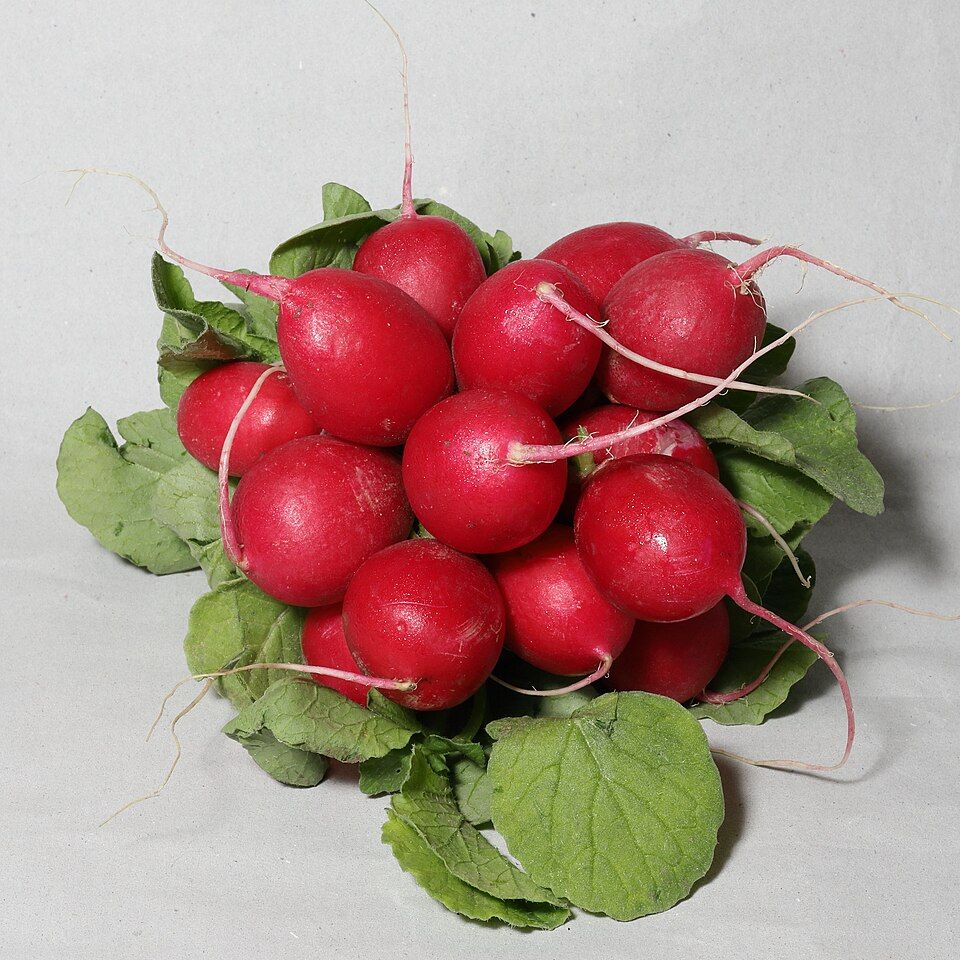
The photograph at the top shows a bunch of radishes. It is filed on Wikimedia Commons as “A Bunch of Radishes,” and it is here only because radishes were the food in the 1998 experiment. It does not depict any participant or procedure from the papers above.
Trivia
- What food were participants made to eat instead of chocolate in the 1998 experiment? Radishes1.
- How many experiments did the 2010 Psychological Bulletin meta-analysis pool? 832.
- How many laboratories took part in the 2016 Registered Replication Report? 23, with 2,141 participants in total3.
- What pooled effect size did the 2016 report find? d = 0.04, with a 95% confidence interval from -0.07 to 0.153.
- How many laboratories and participants were in the 2021 Psychological Science project? 36 laboratories and 3,531 participants4.
Sources
- Baumeister RF, Bratslavsky E, Muraven M, Tice DM. Ego depletion: is the active self a limited resource? Journal of Personality and Social Psychology, 74(5), 1998 (PubMed 9599441). Accessed November 2, 2026.
- Hagger MS, Wood C, Stiff C, Chatzisarantis NLD. Ego depletion and the strength model of self-control: a meta-analysis. Psychological Bulletin, 136(4), 2010 (PubMed 20565167). Accessed November 2, 2026.
- Hagger MS, Chatzisarantis NLD, Alberts H, et al. A Multilab Preregistered Replication of the Ego-Depletion Effect. Perspectives on Psychological Science, 11(4), 2016 (PubMed 27474142). Accessed November 2, 2026.
- Vohs KD, Schmeichel BJ, Lohmann S, Gronau QF, et al. A Multisite Preregistered Paradigmatic Test of the Ego-Depletion Effect. Psychological Science, 32(10), 2021 (PubMed 34520296). Accessed November 2, 2026.