WHO Validates Eritrea's Elimination of Trachoma
Key Points
- On 16 November 2026, WHO said it had validated Eritrea's elimination of trachoma as a public health problem.
- WHO counts Eritrea as the 11th country in its African Region and the 34th worldwide to reach the milestone.
- Eritrea used WHO's SAFE strategy: surgery, antibiotics, facial cleanliness and environmental improvement.
- WHO says 92 million people still lived in trachoma-endemic areas as of March 2026.
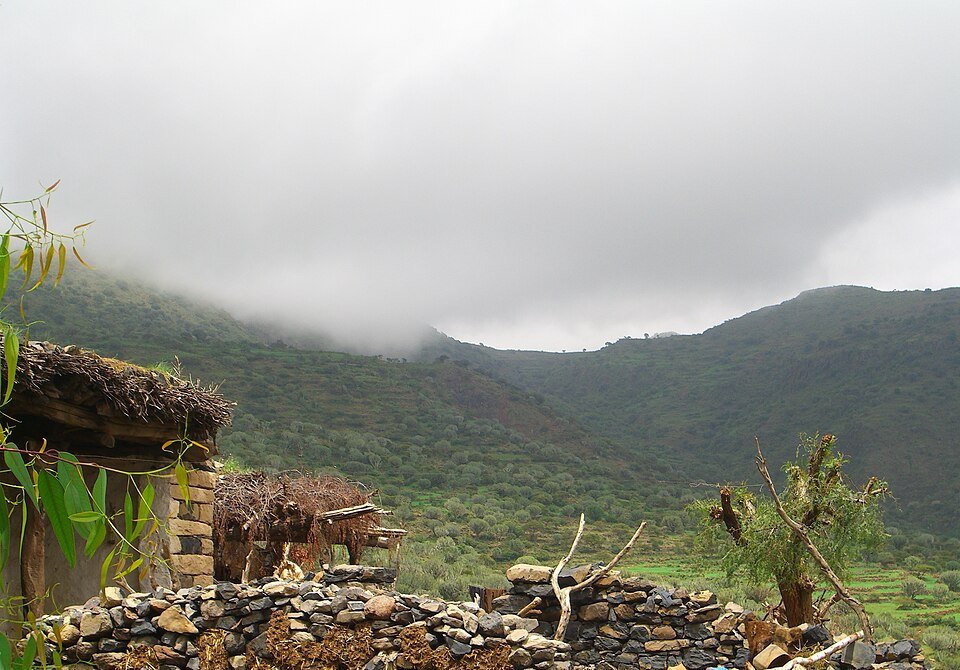

On 16 November 2026, the World Health Organization said it had validated Eritrea's elimination of trachoma as a public health problem1. WHO counts Eritrea as the 11th country in its African Region and the 34th worldwide to reach that milestone. Trachoma is an eye infection that can end in blindness, and WHO's Director-General calls the result the product of two decades of determined effort.
What WHO announced
WHO's statement says Eritrea's programme began with baseline surveys conducted in different parts of the country between 2006 and 20201, after which the country progressively applied WHO's recommended SAFE strategy where interventions were needed. WHO says the country surveyed all 58 sub-zobas, its second-level administrative areas1, and scaled up interventions wherever trachoma was endemic. Dr Tedros Adhanom Ghebreyesus, WHO's Director-General, is quoted saying that after two decades of determined effort Eritrea has consigned trachoma as a public health problem to history1.
The SAFE strategy
SAFE is an acronym for four parts. WHO describes them as surgery for trachomatous trichiasis, antibiotics to clear infection, facial cleanliness to reduce transmission, and environmental improvement, particularly improved access to water and sanitation1. The release adds that the antibiotics distributed were predominantly oral azithromycin, donated by Pfizer Inc. through the International Trachoma Initiative1.
How Eritrea did it, according to WHO
Reach was a challenge. WHO notes that many people live in remote rural areas where access to health care and clean water and sanitation can be limited1. Its account says Eritrea used a community-led sanitation approach that helped achieve significant public health gains with limited external funding1, and that health workers used digital tools for data collection and mapping to identify affected communities and target resources, including in hard-to-reach areas1. The country has also set up systems to identify and manage new trichiasis cases1 and will keep up surveillance after validation. WHO credits the Ministry of Health, communities, health workers and development partners.
What validation means
WHO says it validates elimination only after receiving a recommendation from an independent, WHO-appointed dossier review group1 that has reviewed a country's evidence and confirmed that the agreed epidemiological thresholds have been met and that systems exist to detect and manage future cases. The wording is elimination as a public health problem, As the next section notes, WHO says trachoma remained a public health problem in at least part of 29 countries as of March 2026.
The global picture
WHO's notes to editors say trachoma is the world's leading infectious cause of blindness1, caused by the bacterium Chlamydia trachomatis. They put the global population requiring interventions at an estimated 1.5 billion in 2002, falling to below 100 million by November 2025, a reduction of about 94%1. As of March 2026, WHO says 92 million people still lived in trachoma-endemic areas1, and trachoma remained a public health problem in at least part of 29 countries. In 2025, 98 829 people received surgery for the advanced stage of the disease and 47.4 million received antibiotics1. Trachoma is one of the 21 diseases and disease groups covered by WHO's road map for neglected tropical diseases for 2021 to 2030.
Trivia
- Which country did WHO say on 16 November 2026 had eliminated trachoma as a public health problem? Eritrea1.
- Where does Eritrea rank worldwide among countries to reach this milestone, according to WHO? 34th1.
- What do the four letters of the SAFE strategy stand for? Surgery, antibiotics, facial cleanliness and environmental improvement1.
- How many sub-zobas did Eritrea survey? 581.
- Which bacterium causes trachoma? Chlamydia trachomatis1.