Does Smiling Make You Happier? The Facial Feedback Record
Key Points
- A 1988 paper had people hold a pen in ways that inhibited or facilitated smiling muscles, and its abstract reports stronger humor responses under the facilitating condition.
- A 2016 Registered Replication Report with 17 labs found a rating difference of 0.03 units, against 0.82 units in the original.
- A 2019 meta-analysis of 286 effect sizes calls the overall effect on emotional experience small and variable.
- A 2022 multi-lab test with 3,878 participants indicated effects for mimicry and voluntary expression tasks and less conclusive evidence for the pen task.

The facial feedback hypothesis says that your own facial expression can change how you feel. Smile, the idea goes, and you feel a little happier. It has been tested many times, and its record shows how the size of a famous result can change under repeated checking.
The 1988 pen experiment
Strack, Martin and Stepper published a paper in the Journal of Personality and Social Psychology in May 1988 (volume 54, issue 5)1 with a title that calls its method a nonobtrusive test. Its abstract says people held a pen in their mouth in ways that either inhibited or facilitated the muscles typically associated with smiling, without being asked to pose a smiling face1. The abstract says the design aimed to eliminate methodological problems of earlier experiments. In Study 1, according to the abstract, subjects reported more intense humor responses to cartoons under facilitating conditions than under inhibiting conditions1.
The abstract describes Study 2 as replicating Study 1 and adds that facial feedback operated on the affective but not the cognitive component of the humor response1. The abstract describes the effect as operating on the affective component, not the cognitive one.
The 2016 registered replication
A Registered Replication Report in Perspectives on Psychological Science (volume 11, issue 6, November 2016) says the 1988 study had not been replicated directly2. The report describes 17 independent direct replications of Study 1, all following the same protocol2. A meta-analysis compared funniness ratings in the “smile” (teeth) and “pout” (lips) conditions.
The original study reported a rating difference of 0.82 units on a 10-point scale2. The meta-analysis of the replications found a difference of 0.03 units, with a 95% confidence interval from -0.11 to 0.162. That interval sits close to zero and includes zero, so in those 17 labs the pen manipulation did not reproduce the original size of effect. The abstract does not say why.
A pool of 286 effect sizes
A single failed replication is not the whole literature. A meta-analysis in Psychological Bulletin (volume 145, issue 6, June 2019) pooled 286 effect sizes from 138 studies that manipulated facial feedback and collected emotion self-reports5. Its title says the effects on emotional experience are small and variable, and its abstract calls the overall effect significant but small5.
The abstract also names moderators; one of them concerns the type of outcome. Of 12 potential moderators examined, three were associated with differences in effect size5. Facial feedback influenced emotional experience (reported amusement, for example) and, to a greater degree, affective judgments of a stimulus, such as how funny a cartoon is rated5. Three publication bias detection methods found no evidence of publication bias in work on emotional experience, but all three found evidence of it in work on affective judgments5. That last point is a caution about the bigger numbers, because the larger effects sat in the part of the literature where the abstract reports evidence of publication bias. The abstract concludes that the evidence supports the central claim that facial feedback influences emotional experience, although the effects tend to be small and heterogeneous5.
The 2022 multi-lab test
A later test was a global adversarial collaboration. The Many Smiles Collaboration published its preregistered, multicentre study in Nature Human Behaviour (volume 6, issue 12, December 2022)3. Its abstract reports data from 3,878 participants across 19 countries3.
The result split by task, as the abstract reports. A facial mimicry task and a voluntary facial action task could both amplify and initiate feelings of happiness3. Evidence was less conclusive when facial feedback was manipulated unobtrusively with the pen-in-mouth task3. The abstract reports less conclusive evidence for the pen task than for the mimicry and voluntary action tasks.
Could it be a demand effect?
One standing worry is that participants guess the hypothesis and respond accordingly. A paper in the Journal of Personality and Social Psychology (volume 124, issue 2, February 2023) ran six experiments across 29 countries with 995 participants to test this4. Its abstract says that demand characteristics and participants’ beliefs moderated the effects of posed facial expressions on emotion reports but did not fully account for them4. Even participants who were told, or who believed, that facial poses do not influence emotions still showed facial feedback effects4. The abstract frames the result as showing that the effects are not solely driven by demand or placebo effects.
Where the evidence stands
Put side by side, the five records tell a layered story. The original pen result of 0.82 units was not reproduced in 17 labs, which found 0.03 units. A pooled analysis of many experiments finds a small, variable effect on emotional experience. A very large preregistered test indicated support for some ways of manipulating the face and less conclusive evidence for the pen. And a later set of experiments found that participants guessing the aim does not fully explain the effect. None of the abstracts opened here says that smiling reliably improves a person’s mood in everyday life, so this article draws no advice from them. They concern short laboratory tasks and self-reported feelings. This article read the abstracts, not the full papers, so effect sizes and procedures beyond them are not reported.
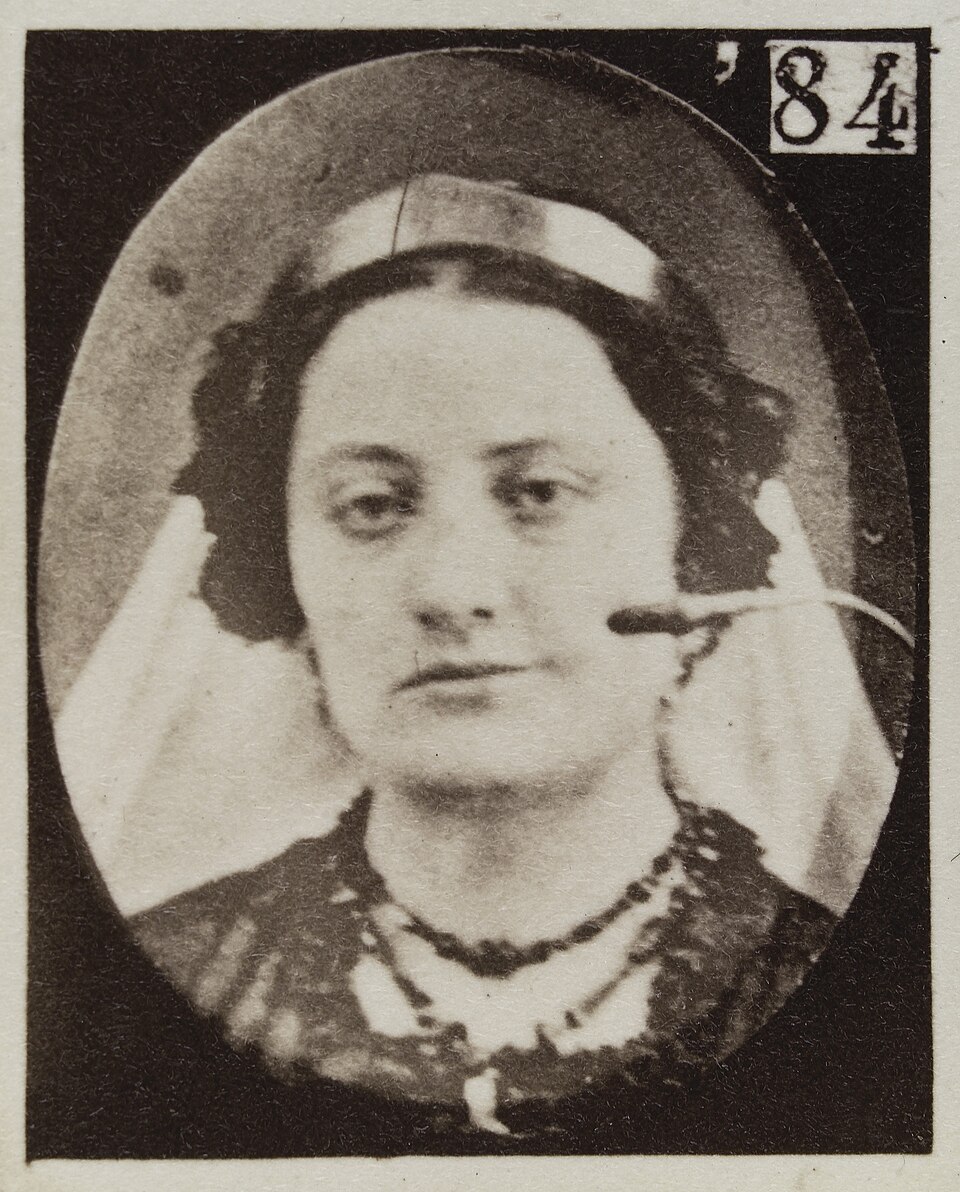
The photograph at the top is an image from the Wellcome Collection, filed on Wikimedia Commons under the title “Experiments in physiology. Facial expressions; False Smile.” Its file page describes a false smile being induced by electrical currents. It is shown only as an old photograph of the face as a subject of study, and it does not depict a participant in any study discussed here.
Trivia
- What object did participants hold in their mouths in the 1988 experiment? A pen, held in ways that inhibited or facilitated the muscles typically associated with smiling1.
- How many independent direct replications did the 2016 Registered Replication Report describe? 172.
- What rating difference did the 2016 meta-analysis find? 0.03 units (the original: 0.82 on a 10-point scale)2.
- How many participants and countries were in the 2022 Many Smiles study? 3,878 participants from 19 countries3.
- How many effect sizes did the 2019 Psychological Bulletin meta-analysis pool? 286, from 138 studies5.
Sources
- Strack F, Martin LL, Stepper S. Inhibiting and facilitating conditions of the human smile: a nonobtrusive test of the facial feedback hypothesis. Journal of Personality and Social Psychology, 54(5), 1988 (PubMed 3379579). Accessed November 1, 2026.
- Registered Replication Report: Strack, Martin, & Stepper (1988). Perspectives on Psychological Science, 11(6), 2016 (PubMed 27784749). Accessed November 1, 2026.
- A multi-lab test of the facial feedback hypothesis by the Many Smiles Collaboration. Nature Human Behaviour, 6(12), 2022 (PubMed 36266452). Accessed November 1, 2026.
- Coles NA, Gaertner L, Frohlich B, Larsen JT, Basnight-Brown DM. Fact or artifact? Demand characteristics and participants' beliefs can moderate, but do not fully account for, the effects of facial feedback on emotional experience. Journal of Personality and Social Psychology, 124(2), 2023 (PubMed 35617225). Accessed November 1, 2026.
- Coles NA, Larsen JT, Lench HC. A meta-analysis of the facial feedback literature: Effects of facial feedback on emotional experience are small and variable. Psychological Bulletin, 145(6), 2019 (PubMed 30973236). Accessed November 1, 2026.