The U.S. Federal Deficit Rose to $1.99 Trillion in Fiscal 2026
Key Points
- The Treasury put the federal deficit for fiscal year 2026, which ended September 30, 2026, at $1.99 trillion, up from $1.78 trillion in fiscal 2025.
- Receipts rose about 3 percent to $5.40 trillion, while outlays rose about 5.5 percent to $7.40 trillion.
- Corporate income taxes and customs duties both fell, and $144.6 billion in customs duties was refunded.
- Social Security was the largest spending category, at $1.67 trillion.
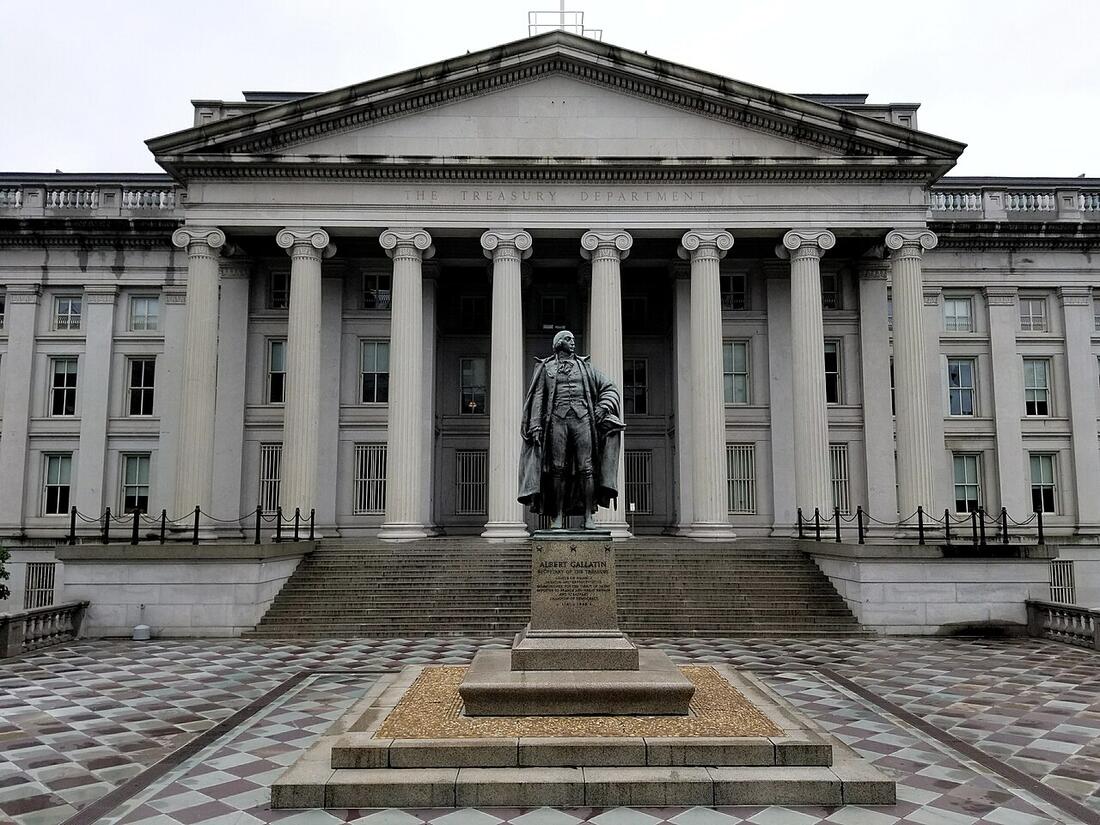

The federal government spent about $2 trillion more than it collected in fiscal year 2026, which ended on September 30, 2026. The Treasury's Final Monthly Treasury Statement puts the deficit at $1.99 trillion, up from $1.78 trillion in fiscal 20251, an increase of about 12 percent. Here is where the money came from and where it went.
Deficit and debt are different things
A deficit is the gap in a single year, and debt is the total owed after many years of gaps. Economists call the first a flow, measured over a period, and the second a stock, measured at one moment (Government budget balance5). The Treasury's financing table shows the link. It lists borrowing from the public of $2.07 trillion in fiscal 2026, against $1.97 trillion in fiscal 20251, and debt held by the public rising from $30.28 trillion to $32.43 trillion1 over the year. The same table lists a $93.2 billion increase in operating cash1, the Treasury's operating cash balance, and $12.7 billion from other means. Netting those three lines (the cash increase subtracts) gives the deficit.
Receipts and outlays
Receipts, the money the government collected, totaled $5.40 trillion, against $5.23 trillion in fiscal 20251, a rise of about 3 percent. Outlays, the money it paid out, totaled $7.40 trillion, against $7.01 trillion1, a rise of about 5.5 percent. Because spending grew faster than revenue, the gap between them widened.
The year did not run in the red every month. April brought in $837.3 billion in receipts against $622.3 billion in outlays1, a surplus of $215.0 billion and the only one of the twelve months. July had the largest monthly deficit, $432.3 billion, on outlays of $766.3 billion1. September closed the year with a deficit of $26.9 billion. The statement's highlight box adds that outlays for veterans benefit payments shifted from September 1, 2026, to August 20261, a timing detail worth remembering when comparing single months. Fiscal 2025 had three surplus months (April, June and September), according to the same table.
Actual results came in under the statement's full-year budget estimates. Its table of budget estimates for the full fiscal year lists $5.48 trillion in receipts and $7.54 trillion in outlays1. Subtracting them gives a deficit of about $2.06 trillion (Big Time Trivia's arithmetic), against the $1.99 trillion actual.
The headline figure combines two parts. The on-budget deficit was $1.82 trillion and the off-budget deficit $176.6 billion1. The statement's explanatory notes say outlays of off-budget federal entities are excluded by law from the budget totals, but the statement shows them separately and combined to display total federal outlays.
Where the money came from
Individual income taxes were the largest source, at $2.85 trillion, up from $2.66 trillion1. Social insurance and retirement receipts, which include the payroll taxes for Social Security and Medicare, came to $1.81 trillion, up from $1.75 trillion1.
Corporate income taxes and customs duties both fell. Corporate income taxes came to $381.4 billion, down from $452.1 billion1. Customs duties, the taxes on imports, brought in $317.8 billion before refunds, but $144.6 billion was refunded1, leaving net customs receipts of $173.2 billion, against $194.9 billion in fiscal 2025.
By the statement's figures, individual income taxes made up about 53 percent of receipts (Big Time Trivia's arithmetic). Three smaller lines are also listed: excise taxes of $106.0 billion, estate and gift taxes of $38.7 billion (up from $29.5 billion) and miscellaneous receipts of $46.7 billion1.
Where it went
Grouped by what the money pays for, the statement's cumulative chart lists the largest outlays as Social Security at $1.67 trillion, Medicare at $1.07 trillion, net interest at $1.05 trillion, health at $1.03 trillion and national defense at $965 billion1.
Most of the big categories grew from a year earlier. Social Security rose from $1.58 trillion, Medicare from $997 billion, net interest from $970 billion and national defense from $917 billion1. Net interest of $1.05 trillion works out to just under 20 percent of receipts (Big Time Trivia's arithmetic). The statement also lists gross interest on Treasury debt securities at $1.36 trillion, against $1.22 trillion1. Some categories shrank (natural resources and environment fell from $88.3 billion to $57.1 billion1) and others grew faster than the big five (education, training, employment and social services rose from $71.0 billion to $107.6 billion). The deficit equals about 27 percent of outlays (Big Time Trivia's arithmetic).
What a fiscal year is
The federal fiscal year runs from October 1 to September 30. That schedule came from the Congressional Budget and Impoundment Control Act of 19742, and the first fiscal year on it began on October 1, 1976. Before that, the federal government moved its fiscal year from the calendar year to one starting July 1 in 18432, and Wikipedia, citing the National Conference of State Legislatures, counts 47 of 50 states ending their fiscal year on June 302. The Treasury normally releases each monthly statement on the eighth workday of the month after the month it covers1.
What to know when reading the numbers
- The statement is prepared on a modified cash basis: receipts are counted when collected, and refunds are deducted from gross receipts1, which is why customs duties appear net of the $144.6 billion refunded.
- It is one of three Treasury reports. The Daily Treasury Statement covers cash and debt each working day, the Monthly Treasury Statement covers receipts and outlays, and the Combined Statement is the official annual publication1.
- Fiscal 2027 began on October 1, 2026. As of October 31, 2026, the statement says the October 2026 statement is scheduled for release at 2:00 p.m. EST on November 12, 20261.
Trivia
- How big was the federal deficit in fiscal 2026? About $1.99 trillion1.
- Which source brought in the most federal revenue? Individual income taxes, at $2.85 trillion1.
- On what date does the federal fiscal year begin? October 1, set by a 1974 law and first used in 19762.
- What was the separate three-month budget period in 1976 called when the fiscal year moved? The transitional quarter, July 1 to September 30, 19762.
- Whose statue stands at the north entrance of the Treasury Building? Albert Gallatin's3, the fourth and longest-serving Secretary of the Treasury.
- When did Gallatin's time as Treasury Secretary begin? May 14, 1801, under Thomas Jefferson4.
Sources
- Bureau of the Fiscal Service, U.S. Department of the Treasury, Final Monthly Treasury Statement of Receipts and Outlays of the United States Government for Fiscal Year 2026 Through September 30, 2026. Accessed October 31, 2026.
- Fiscal year, Wikipedia. Accessed October 31, 2026.
- Treasury Building (Washington, D.C.), Wikipedia. Accessed October 21, 2026.
- Albert Gallatin, Wikipedia. Accessed October 21, 2026.
- Government budget balance, Wikipedia. Accessed October 31, 2026.