The 12 Federal Reserve Banks Open for Business, November 16, 1914
Key Points
- All twelve Federal Reserve Banks opened for business on the same day, Monday, November 16, 1914.
- The Panic of 1907 led Congress to set up the National Monetary Commission in 1908, and President Woodrow Wilson signed the Federal Reserve Act on December 23, 1913.
- A committee of McAdoo, Houston and Williams chose the twelve Reserve Bank cities and announced them on April 2, 1914.
- On opening day most of the banks had about twenty employees, while Chicago had 41 and New York had 85.
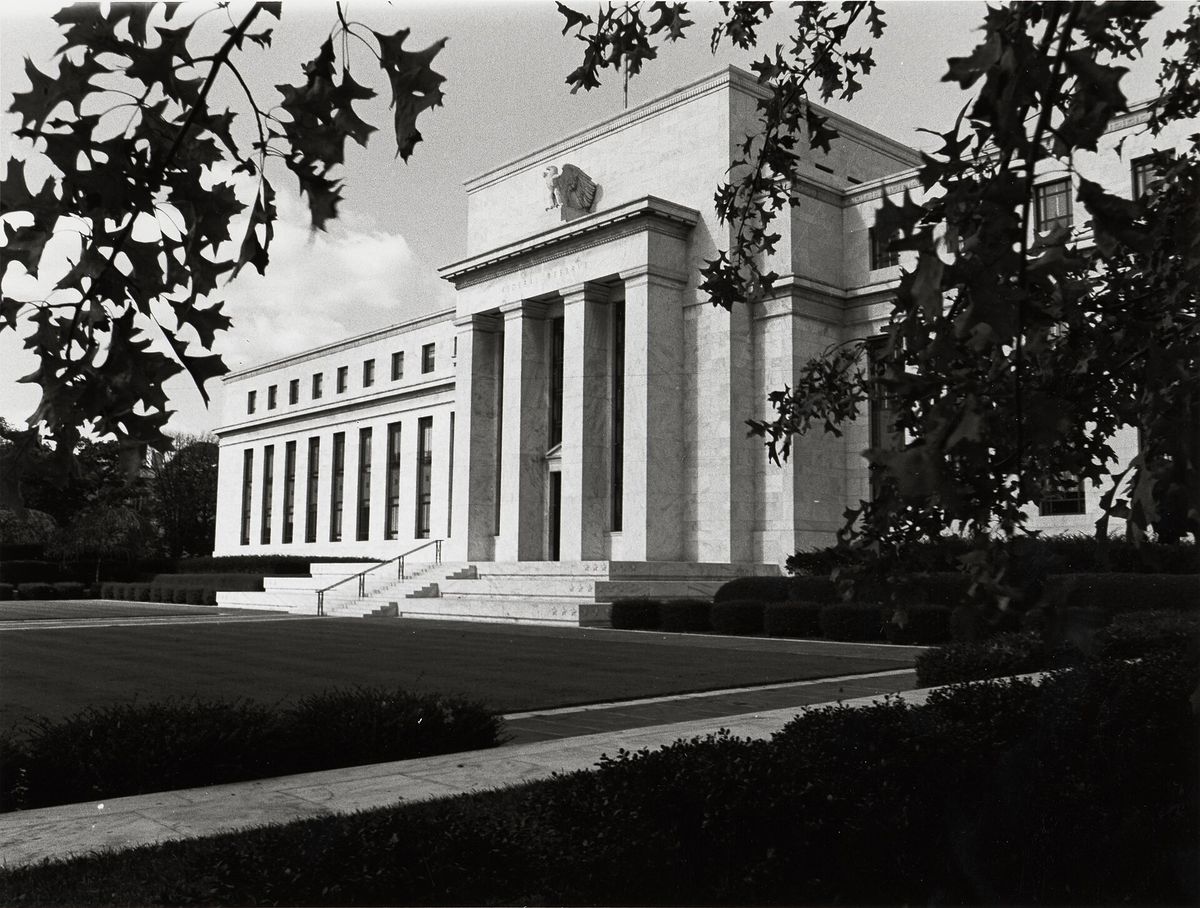

On Monday, November 16, 1914, all twelve Reserve Banks opened on the same day1, from Boston to San Francisco. The United States had a working central bank, less than a year after Congress created one.
A panic with no lender of last resort
The push for a central bank came out of a bad October. On October 16, 1907, two speculators, F. Augustus Heinze and Charles W. Morse, suffered huge losses3 in a failed attempt to corner the stock of United Copper. Runs hit banks tied to the pair, and then news linked Charles T. Barney, president of the Knickerbocker Trust Company, to Morse. Knickerbocker suspended operations on October 223, and its fall sparked the full-scale financial crisis in New York City3.
No public institution existed to stop it. At the time the United States was the only major financial power without a central bank2, so J.P. Morgan organized private investments and credit lines2 to hold the banking system together. Between August and December 1907, New York City trust companies saw the withdrawal of over 36 percent of deposits3, and in 1908, by the Federal Reserve's own account, industrial output fell 17 percent, and real GNP fell by 12 percent3.
From a commission to a law
Congress passed the Aldrich-Vreeland Act on May 30, 19082. It authorized emergency currency and set up an eighteen-member National Monetary Commission, chaired by Sen. Nelson Aldrich2. In November 1910 a small group of bankers and officials, Paul Warburg and Abram Piatt Andrew among them, met in secret on Jekyll Island, Georgia2 to draft a plan. Aldrich unveiled it in January 1911, and a revised version reached Congress in 1912 as a proposal for a National Reserve Association with a forty-six-member Board2. Under that plan the government would have had no stake in the institution.
The Democrats wrote their own bill. In the House, Rep. Carter Glass led the subcommittee that drafted it, and Glass had at first favored as many as twenty regional banks2. In the Senate, a similar measure from Robert L. Owen prevailed. President Woodrow Wilson signed the Federal Reserve Act on December 23, 19132. Its official title begins “An Act To provide for the establishment of Federal reserve banks, to furnish an elastic currency, to afford means of rediscounting commercial paper”8, and goes on to promise more effective supervision of American banking. The final law called for between eight and twelve Reserve Banks2, and it left the hard part, deciding where, to a committee.
Picking the twelve cities
That committee was the Reserve Bank Organization Committee, made up of Treasury Secretary William G. McAdoo, Agriculture Secretary David F. Houston and Comptroller of the Currency John Skelton Williams4. Its members spent about six weeks on the road, covering roughly 10,000 miles4, and held public hearings in 18 cities that produced more than 5,000 pages of testimony4. They also polled national banks on their first, second and third choices. Thirty-seven cities applied4 to host a Reserve Bank.
New York, Chicago and St. Louis were easy picks, since all three were already central reserve cities. The full list, announced on April 2, 19144, was Boston, New York, Philadelphia, Cleveland, Richmond, Atlanta, Chicago, St. Louis, Minneapolis, Kansas City, Dallas and San Francisco. Each Reserve Bank needed at least $4 million in capital4, raised by member banks subscribing 6 percent of their own capital and surplus.
The cities left out were loud about it. New Orleans and Baltimore protested4, since each was bigger than some of the winners. Critics questioned Richmond getting a bank when Atlanta also did, and two Reserve Banks in Missouri drew grumbling about the number of Missouri politicians in office. The committee finished its work in 98 days4. The Reserve Banks have stayed in their original cities4, and district lines have changed only minimally.
A Board, a war and an opening date
Charles S. Hamlin, Frederic A. Delano, Paul M. Warburg, W.P.G. Harding and Adolph C. Miller all took the oath of office on August 10, 19147. Hamlin was the first governor of the Board, the post now called chairman. Two more seats went to officials ex officio, McAdoo and Comptroller Williams, and under the original law the Treasury Secretary served as Chairman of the Board7 until the Banking Act of 1935 took effect on February 1, 1936.
The First World War began in Europe in the summer of 19145, before any Reserve Bank had opened, and it set off a brief financial panic and an outflow of gold from the United States. That pressure gave the organizers urgency to open quickly9.
Each new bank got a local board of nine directors. There were three Class C directors appointed by the Board1, three Class A bankers and three Class B directors drawn from commerce, agriculture or industry, with the last two groups elected by member banks. A governor ran day to day operations, a title the 1935 law later changed to president.
Opening day
The banks opened about seven months after the committee chose their locations9. Most banks had about twenty1 employees on opening day, while Chicago had 41 and New York had 85. McAdoo had told the banks to start modestly, with a few chairs and tables and some clerks, and his summary of the plan ran seven words, “The way to begin is to begin.”1 He called the opening “a new era in the history of business and finance in this country.”9
The Federal Reserve Bank of St. Louis made its first currency delivery to a member bank on December 1, 19146, and by December 4 it was offering to collect checks drawn on any Federal Reserve Bank. In 1914 the Federal Reserve Board issued $10 Federal Reserve notes with a portrait of Andrew Jackson10, physically larger than the $10 bills in circulation now.
Trivia
- Where did the Federal Reserve Bank of Minneapolis first do business? In the board room and teller cages of the Minnesota Loan & Trust Company1.
- How long before opening day did the Atlanta Reserve Bank choose its first location? Sixteen days1.
- When did the St. Louis Reserve Bank make its first loan, and for how much? On November 18, 1914, for $1 million6.
- How did the Jekyll Island group keep its 1910 meeting quiet? Members used first names only and described it as a duck hunting trip2.
- Who was the first vice governor of the Federal Reserve Board? Frederic A. Delano, from August 10, 1914 to August 9, 19167.
- What reason did the organizing committee give for passing over New Orleans? Atlanta and Dallas had similar bank sizes but had doubled in the prior decade, while New Orleans had changed little4.
- How much did Knickerbocker Trust depositors withdraw before it suspended in 1907? Nearly $8 million3, and it reopened in March 1908 after an infusion of $2.4 million in new capital.
- How much smaller did Federal Reserve notes get in 1929? About 30 percent smaller10, going from 7.375 by 3.125 inches to 6.14 by 2.61 inches.
Sources
- Reserve Banks Open for Business, Federal Reserve History. Accessed November 10, 2026.
- Federal Reserve Act Signed by President Wilson, Federal Reserve History. Accessed November 10, 2026.
- The Panic of 1907, Federal Reserve History. Accessed November 10, 2026.
- Reserve Bank Organization Committee, Federal Reserve History. Accessed November 10, 2026.
- The Fed's Formative Years, Federal Reserve History. Accessed November 10, 2026.
- Federal Reserve Bank of St. Louis, Federal Reserve History. Accessed November 10, 2026.
- Board of Governors Members, 1914 to Present, Board of Governors of the Federal Reserve System. Accessed November 10, 2026.
- Official Title, Federal Reserve Act, Board of Governors of the Federal Reserve System. Accessed November 10, 2026.
- Fed Facts: November 16 marks the anniversary of the Federal Reserve Banks opening day, Federal Reserve Financial Services, 15 November 2018. Accessed November 10, 2026.
- History of U.S. Currency, U.S. Currency Education Program. Accessed November 10, 2026.