Green Climate Fund Sets a Record With USD 3.3 Billion Approved in 2026
Key Points
- At its 46th meeting in October 2026, the Green Climate Fund Board approved 21 projects and USD 1.97 billion in new climate finance, which the Fund calls "the largest approved at a single GCF Board meeting."
- GCF approvals in 2026 total USD 3.3 billion, "a new annual record," just above the USD 3.26 billion approved in 2025.
- The Fund links the record to a July 2026 balance sheet decision that raised funding available for new projects from USD 1.37 billion to about USD 5.65 billion.
- The Board reappointed Mafalda Duarte as Executive Director for a second four year term.

The Green Climate Fund (GCF) has approved more money at one Board meeting than ever before. At its 46th meeting, held from 26 to 29 October 2026 at its headquarters in Songdo, Republic of Korea, the Board approved 21 projects and accredited 16 new partners1, with new climate finance totalling USD 1.97 billion. That figure includes additional financing for an existing facility, and the Fund says it is "the largest approved at a single GCF Board meeting."1 The same release puts the year's running total at a new high: "In 2026, GCF approvals total USD 3.3 billion, a new annual record."1
What the Green Climate Fund is
The GCF was established in 2010 by the 194 parties5 to the United Nations Framework Convention on Climate Change (UNFCCC), the treaty under which the yearly UN climate conferences meet. Its stated mandate is "to foster low-emission, climate-resilient development pathways in developing countries."5 In practice, it pays for projects in two broad groups: mitigation, which cuts or avoids greenhouse gas emissions, and adaptation, which helps places cope with heat, drought, floods and rising seas. The Fund says it aims for "a targeted 50:50 balance"5 between those two over time.
The GCF is formally an operating entity of the Financial Mechanism of the Convention6, the UNFCCC says. It is governed by its own Board and is accountable to, and works under the guidance of, the UN climate conference of the parties. Projects are developed and carried out by accredited organisations5, which is why each Board meeting approves new partners as well as new projects.
What was approved this time
Of the 16 new partners, nine are Direct Access Entities (DAEs), national or regional bodies based in developing countries rather than international agencies. According to the Fund, DAEs will manage 34 per cent1 of the funding approved at this meeting. Thirteen of the 16 were the first partners accredited under the GCF's revised accreditation framework, with an average review time of four months against a nine month service standard.
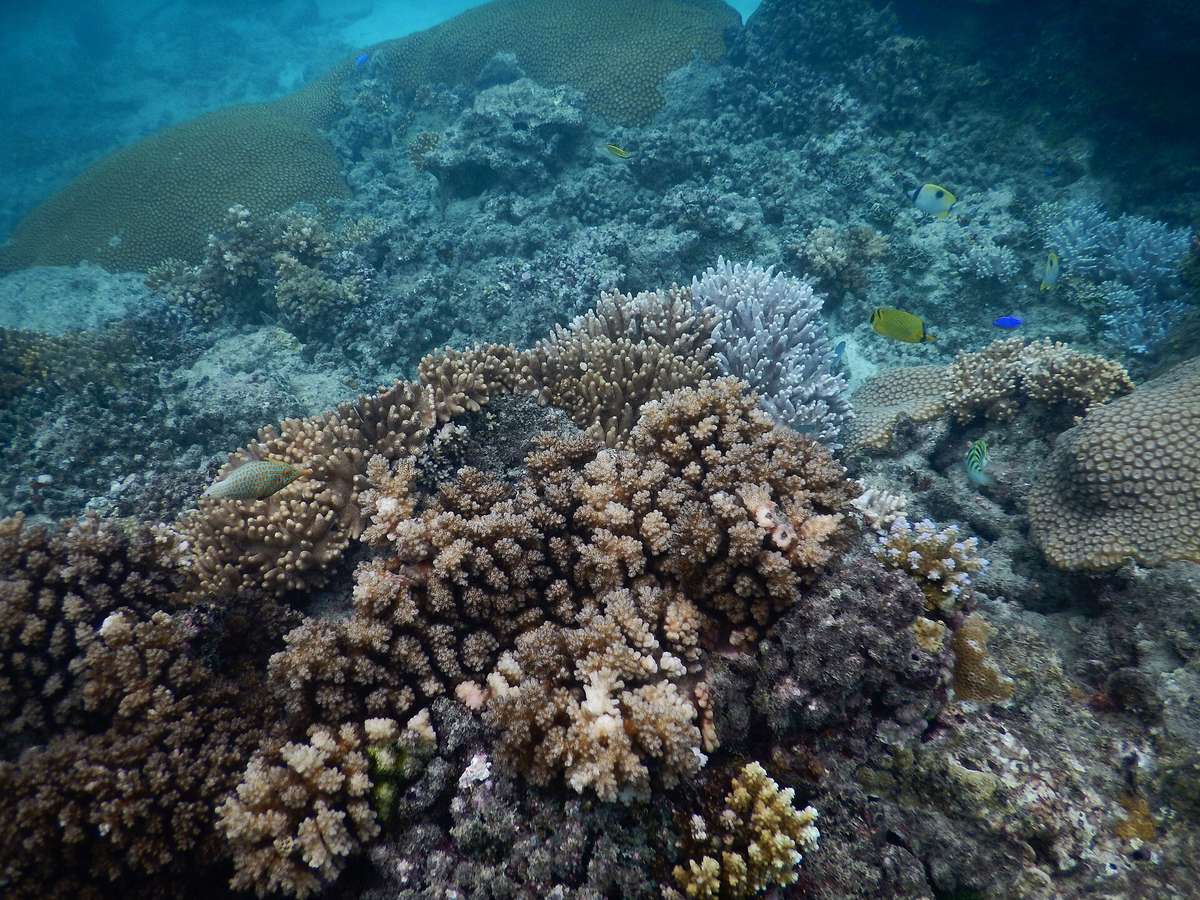
Several approvals are firsts. The release says five projects are the first single-country projects1 for their countries, Algeria, Cameroon (two projects), Moldova and Yemen, and that the meeting approved what it calls the first direct sovereign loan responding to the Belém call to action for the Congo Basin Forests. Named approvals include a project in the steppe and dry forest areas of the Algerian Green Dam with the UN Food and Agriculture Organization, the Fiji Coral Reef Resilience Project1 with World Wildlife Fund, Moldova Green Shield and a household resilience project in Ethiopia. Two Brazilian projects with the development bank BNDES and eB Capital are the first to come from a country platform set up with GCF readiness support. The Board also approved a second tranche for the Green Cities Facility run by the European Bank for Reconstruction and Development. ESG Today reported that the 21 projects reach 44 developing countries3.
The Fund says 13 of the 15 projects held to its Efficient GCF standard met it, with an average review time of six months against a nine month target1. "This Board meeting has once again demonstrated GCF's ability to deliver climate finance at scale," said Board Co-Chair Leif Holmberg of Sweden, and his fellow Co-Chair, Seyni Nafo of Mali, said, "Approving almost USD 2 billion at this Board Meeting is what delivering at scale means."1
The balance sheet change behind the jump
The Fund ties the record directly to a decision made in July. On 15 July 2026, the GCF said its Board had adopted, earlier that month, a decision on managing the Fund's balance sheet that lets it commit more money from resources it already holds. Under the historical approach, the Fund said, there would have been USD 1.37 billion of funding for new projects2 in the second half of 2026 and 2027. Under the refined approach, the Secretariat put the figure at about USD 5.65 billion, an increase of more than USD 4 billion, available from the October 2026 Board meeting onward.
A fund that makes loans, grants and guarantees over many years keeps part of its money in reserve against what it has already promised. ESG Today described the July change as one that "reduced the amount of capital that it holds in reserve on its balance sheet."3 The GCF's own calculation assumes "a similar portfolio composition and deployment of financial instruments as from 2015-2025,"2 so the extra room rests on the mix of projects staying close to what it has been. Executive Director Mafalda Duarte said in July that the reform lets the Fund manage its balance sheet "much more efficiently while preserving the unique concessional and risk profile of GCF."2 Concessional finance means money offered on softer terms than a commercial lender would give, such as grants or cheap, long loans. The October release says the measures introduced at the previous Board meeting freed additional funding capacity1 that contributed to the record.
How 2026 compares with earlier years
The previous annual record was set only a year earlier. In October 2025, after its 43rd Board meeting, the Fund reported that its approvals for 2025 had reached USD 3.26 billion4. That meeting approved USD 1.332 billion for 22 projects, which the GCF then described as the largest amount approved at a Board meeting. The 46th meeting beat that single meeting figure by about USD 640 million, and the 2026 total edges past 2025's USD 3.26 billion. By subtraction, roughly USD 1.3 billion of this year's approvals came from the Board's earlier meetings in 2026.
The overall portfolio has grown in step. In October 2025 the GCF counted 336 projects and USD 19.3 billion4 in Fund resources, or USD 78.7 billion including expected co-financing. With the new approvals, it reports 379 projects and programmes1 with USD 22.3 billion in GCF funding, or USD 87.3 billion once co-financing from other investors is counted.
A second term for the Executive Director
The Board also reappointed Mafalda Duarte1 as Executive Director for a second four year term, which the release links to the Board's support for her reform agenda. Duarte called it "an unequivocal vote of confidence in our reform agenda and overall ambition for the Fund."1 Before the GCF, she served as CEO of the Climate Investment Funds3, ESG Today noted, and in the Fund's release she said, "Over the last three years we have implemented deep reforms," pointing to more efficient management of the balance sheet among them.
The meeting also adopted policies for the Fund's third replenishment period, known as GCF-3. These include an updated Policy for Contributions1, meant to give more flexibility in working with contributors, and the Fund's first Policy for Contributions from Other Sources, aimed at non-sovereign and alternative contributions.
Trivia
- At which UN climate conference, and under which decision, was the Green Climate Fund established? At COP 16 in Cancun6, by decision 1/CP.16.
- Before 2025, which year held the GCF record for annual approvals? 20214, with USD 2.9 billion.
- In which country did the GCF Board meet when it approved its first projects, and how many were there? Zambia, in November 20158, where it approved eight projects with USD 168 million in funding, for projects worth USD 624 million in all.
- Whom did Mafalda Duarte succeed as GCF Executive Director, and when did her first term begin? Yannick Glemarec9; she was selected at the 35th Board meeting in March 2023 and started on 1 August 2023.
- Which organisation became the first national Direct Access Entity of the Maldives at the 46th Board meeting? The Maldives Finance and Leasing Company1 (MFLC).
- In which city is COP31, the UN climate conference that followed this Board meeting, being held? Antalya, Türkiye7; the GCF noted the Board met less than two weeks before COP31 got underway.
Sources
- Green Climate Fund, press release: GCF financing tops USD 3 billion for consecutive record year as reforms continue to deliver, 29 October 2026. Accessed November 8, 2026.
- Green Climate Fund, press release on balance sheet efficiency and more than USD 4 billion for new investments, 15 July 2026. Accessed November 8, 2026.
- Mark Segal, Green Climate Fund Approves Record $3.3 Billion Climate Investments, ESG Today, 2 November 2026. Accessed November 8, 2026.
- Green Climate Fund, press release: The Green Climate Fund achieves record-breaking year as Board channels USD 3.26 billion to developing countries in 2025, 30 October 2025. Accessed November 8, 2026.
- Green Climate Fund, About GCF. Accessed November 8, 2026.
- UNFCCC, Green Climate Fund. Accessed November 8, 2026.
- Green Climate Fund, GCF Board looks to accelerate delivery of climate finance in lead-up to COP31, 22 October 2026. Accessed November 8, 2026.
- UN News, Green Climate Fund approves first eight investments to combat climate change, 6 November 2015. Accessed November 8, 2026.
- Green Climate Fund, press release: GCF Board approves nearly USD 600m in new climate projects after selecting Mafalda Duarte as new Executive Director, 17 March 2023. Accessed November 8, 2026.