Ghana Unveils Heritage Series Cedi Notes, Circulating From 1 December
Key Points
- President John Dramani Mahama launched the Bank of Ghana's Heritage Series banknotes at Bank Square in Accra on 12 November 2026, and the notes will be introduced into circulation from 1 December 2026.
- The existing series remains legal tender and will circulate alongside the new notes, and the bank said there is no need to rush to exchange or withdraw existing notes.
- The series keeps the same eight denominations, GH¢1 to GH¢200, and the bank's Head of Currency Management ruled out any higher denomination.
- The notes keep a cotton base reinforced for durability, a choice the bank's currency head linked to Ghana's tropical climate.
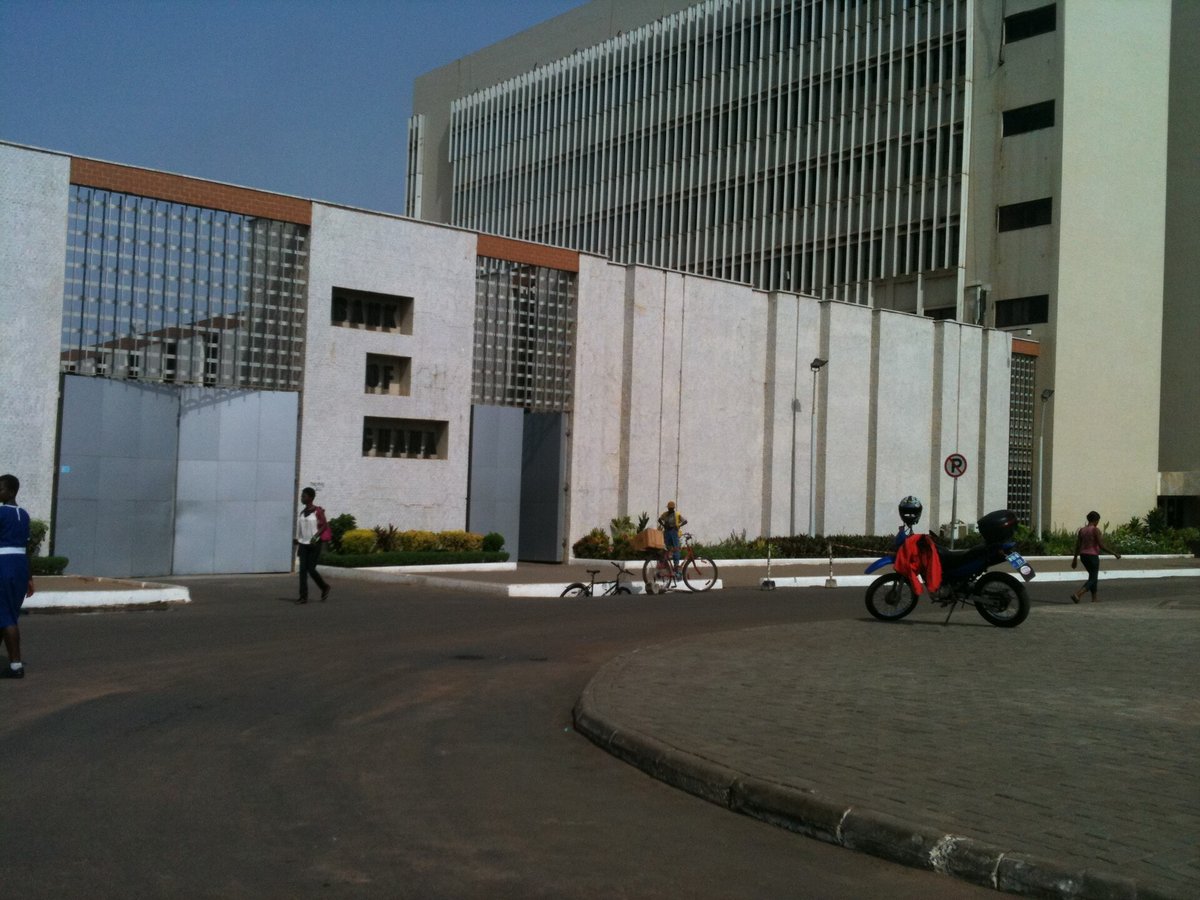

Ghana's cedi is getting a new look. On Thursday, 12 November 2026, President John Dramani Mahama launched the Bank of Ghana's Heritage Series banknotes3 at Bank Square in Accra, the central bank's headquarters. In his welcome remarks, Governor Johnson Pandit Asiama said the new notes will be introduced into circulation from 1 December 20262 and will circulate alongside the existing series, which remains legal tender. The launch theme was “The Cedi, Our Future: Secure & Designed to Last”2.
The date moved once on the way. Asiama first announced the series on 24 September 2026 and said it would be officially launched on 3 November 20261. On 3 November, Graphic Business reported that the launch had been pushed to 12 November5, without giving a reason.
What a new banknote series is
A new series is a fresh design for the notes a country already uses, rather than a new currency. What changes is the paper in people's hands. In his September statement, Asiama said Ghana's core designs had been in circulation for more than two decades1, and that over that time currency circulation had evolved, technology had advanced and security standards had become more sophisticated.
The Heritage Series keeps the same eight denominations: GH¢1, GH¢2, GH¢5, GH¢10, GH¢20, GH¢50, GH¢100 and GH¢2005. Dominic Owusu, the bank's Director and Head of Currency Management, used a radio interview in September to rule out anything bigger. “We are not doing any higher denominations,”7 he said, and warned listeners against claims on social media about higher denominations.
What changes for people holding cedis
Very little, at first. The governor's September statement told the public there is no need to rush to exchange or withdraw existing notes1 because of the new series. Graphic Online reported after the launch that banks will withdraw the old notes gradually4.
The new notes differ in three ways the bank names. Asiama said they carry enhanced security features2 meant to make counterfeiting harder and help the public spot real notes more easily. They are built to last longer in Ghana's climate and under frequent handling, and they come in smaller, more portable sizes2. The bank is also offering a Cedi App to help the public learn the features of the Heritage Series2 and to assist people with visual impairments, and Graphic Online reported that the app is free on the Apple App Store and Google Play4.
Alongside the launch, the bank plans a nationwide public education campaign2 across all regions and in major local languages, covering how to recognise real notes and how to handle them.
The faces and places on the notes
The governor said each denomination tells its own story through featured personalities, landmarks, and symbols2, including Adinkra symbols. According to the Ghana Broadcasting Corporation (GBC), the portraits run as follows.
- GH¢1, Agnes Oforiwa Tagoe-Quarcoopome; GH¢2, Cardinal Peter Dery; GH¢5, James Kwegyir Aggrey; GH¢10, Justice Annie Jiagge8.
- GH¢20, Ephraim Amu; GH¢50, Theodosia Salome Okoh; GH¢100, Kofi Annan; GH¢200, Kwame Nkrumah8.
The GH¢50 portrait drew public questions after the launch. A nephew of Okoh said the portrait shows her younger sister, Letitia Obeng, and the bank said on 13 November that the portrait is Okoh's13, built from several photographs of her.
Ghanaian News Canada describes the reverse sides: Makola market women on the GH¢19, the Larabanga Mosque on the GH¢2, Achimota School on the GH¢5, the Supreme Court on the GH¢10, the National Theatre on the GH¢20, Jubilee House on the GH¢50, a reference to the Kofi Annan International Peacekeeping Training Centre on the GH¢100 and the Kwame Nkrumah Mausoleum on the GH¢200. The same report notes that today's notes carry a group image of the Big Six9, while of the Big Six only Nkrumah appears on the new series. It identifies Okoh as the designer of Ghana's national flag and reports that Tagoe-Quarcoopome was the first Makola woman to open an account with what was then the Standard Bank of West Africa.
Why Ghana kept cotton
Some countries have switched to plastic. Australia's central bank says it moved to polymer to make Australia's banknotes more secure against counterfeiting11, and it later issued a whole series printed on polymer between 1992 and 1996. Ghana chose otherwise. Owusu said the Heritage Series keeps a cotton base that is reinforced for durability6, and pointed to the climate. He said “in our environment, we find ourselves in a tropical environment where people sweat,”6 adding that places using plastic notes are often temperate. He noted that cotton notes are also used in Europe and the United States, and Graphic Online described the launched notes as printed on reinforced cotton paper4.
In September Asiama asked Ghanaians to stop crumpling, writing on, stapling1 notes, or using them for money bouquets, showering or spraying, so they stay in circulation longer and cost less to replace.
Why the bank still backs cash
Asiama's case for the new notes rested on security and on cash itself. He said digital payments are transforming economies, but that payment networks can be disrupted by technical failures, cyber incidents, natural disasters, or deliberate attacks2, and that physical cash then gives households and businesses a dependable way to keep trading.
Where the Heritage Series fits in the cedi story
The cedi arrived as Ghana's decimal currency in July 19652. Mahama told the launch audience that its name comes from sedie, the Akan word for cowrie shells3, which were used in trade long before modern banks.
The last big change came in July 2007, when Ghana redenominated the currency by shedding four zeros10. One new Ghana cedi was set equal to 10,000 old cedis and divided into 100 pesewas, and old and new notes were to circulate together for six months. Graphic Online called the Heritage Series the most significant redesign of the cedi4 since that redenomination. This time no zeros go and the denominations stay the same.
Trivia
- Which two traditional rulers jointly unveiled the Bank of Ghana Cedi App at the launch? King Tackie Teiko Tsuru II, the Ga Mantse, and Togbe Afede XIV, the Agbogbomefia of the Asogli State3.
- On what date does the Bank of Ghana mark its 70th anniversary? 4 March 20272.
- At which two regional offices does the bank plan new Cash Centres? Ho and Tamale2.
- What is the name of the software the bank built in house to link it with commercial banks on currency operations? The Enterprise Currency Operations Management Software (ECOMS)2.
- Which 1964 law, which the bank is working with stakeholders to modernise through a new Currency Act, has governed Ghana's currency for many decades? The Currency Act, 1964 (Act 242)2.
- What was the largest note in the new Ghana cedi series of 2007? The 50 cedi note10.
- What is United States currency paper made of? 25% linen and 75% cotton12.
- What occasion did Australia mark with a polymer $10 note in January 1988? The bicentenary of Australia11.
Sources
- Johnson Pandit Asiama, Governor, Bank of Ghana, Statement by the Governor on the Introduction of the Heritage Series of Ghana Cedi Banknotes, 24 September 2026. Accessed November 14, 2026.
- Johnson Pandit Asiama, Governor, Bank of Ghana, Welcome Remarks at the Launch of the Ghana Cedi Heritage Series, Bank Square, Accra, 12 November 2026. Accessed November 14, 2026.
- Ghana Business News (GNA), President launches Ghana's new Heritage Series cedi banknotes, 12 November 2026. Accessed November 14, 2026.
- Kwame Larweh, Graphic Online, From cowries to the cedi: President Mahama unveils new Heritage Series notes, 12 November 2026. Accessed November 14, 2026.
- Maclean Kwofi, Graphic Business, BoG postpones new cedi notes launch to November 12, 3 November 2026. Accessed November 14, 2026.
- Kareen Tei, MyJoyOnline, Ghana to retain cotton banknotes under new Heritage Series, BoG, 25 September 2026. Accessed November 14, 2026.
- Kareen Tei, MyJoyOnline, No new denominations beyond GH¢200 under Heritage Series, BoG, 25 September 2026. Accessed November 14, 2026.
- Benjamin Nii Nai Anyetei, GBC, More Than Money: The Stories Behind Ghana's New Cedi Notes, 14 November 2026. Accessed November 14, 2026.
- Ebenezer Adugyamfi and Emmanuel Ayiku, Ghanaian News Canada, Bank of Ghana unveils Heritage Series banknotes, Announces December 1 Circulation Date, 12 November 2026. Accessed November 14, 2026.
- Business Recorder, Ghana redenominates its cedi currency, 4 July 2007. Accessed November 14, 2026.
- Reserve Bank of Australia, History of Banknotes. Accessed November 14, 2026.
- Bureau of Engraving and Printing, How Money is Made. Accessed November 14, 2026.
- 3News, Portrait on new GH¢50 note is Theodosia Okoh, not her sister, Bank of Ghana clarifies, 13 November 2026. Accessed November 14, 2026.