Central Banks Buy More Gold as Jewellery Demand Falls in Q3 2026
Key Points
- The World Gold Council put third quarter 2026 gold demand at 1,369 tonnes, 1% lower than a year earlier, while the value of that demand rose 22% to $188 billion.
- Central banks were net buyers of 321 tonnes in the quarter, up 42%, bringing their purchases for the first nine months of 2026 to 675 tonnes.
- Gold ETFs added 211 tonnes and bar and coin demand fell 19%, while jewellery demand fell 17% to 313 tonnes, "the weakest third quarter in our data series back to 2000" in the council's words.
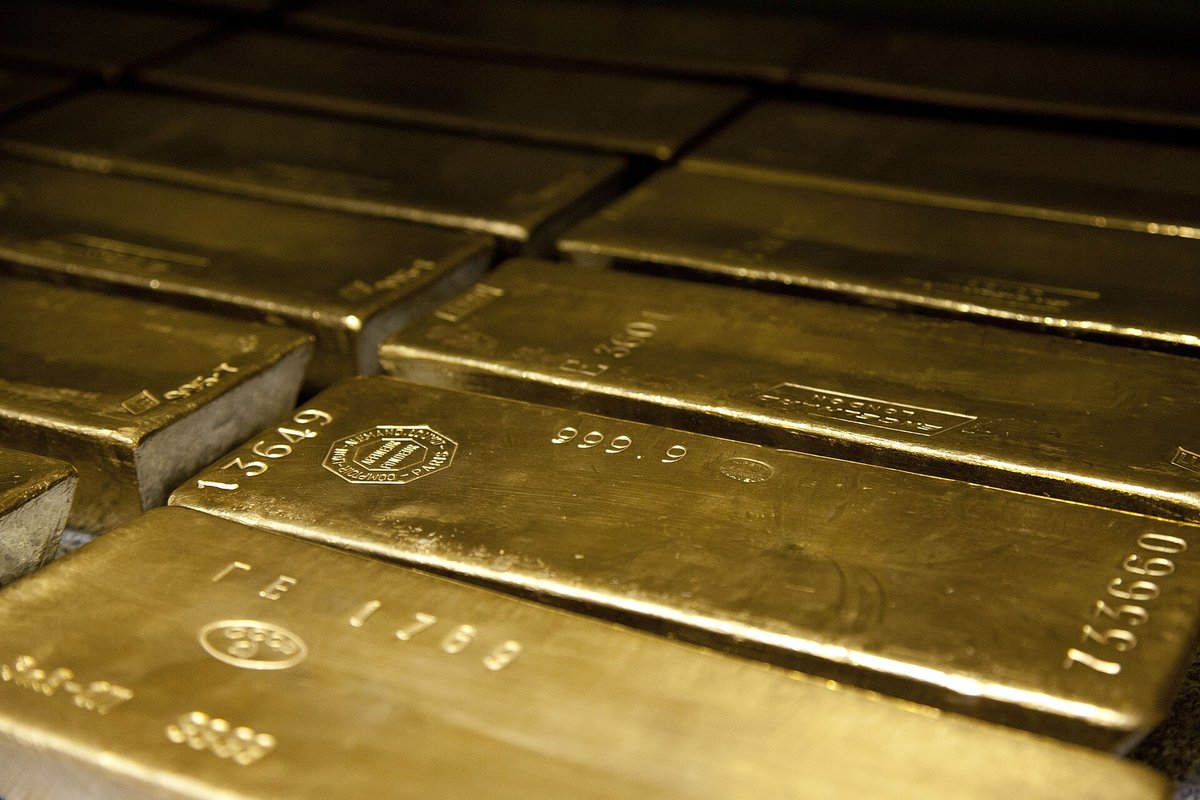

The World Gold Council's quarterly count of where gold goes put total demand for the third quarter of 2026 at 1,369 tonnes, 1% lower1 than a year earlier, including over the counter buying. Spending moved the other way. With the gold price averaging 23% more than a year earlier, the council's press release puts the value of that demand at $188 billion (US dollars), up 22%2. Central banks bought more and gold funds returned to buying after outflows in the second quarter, while households bought less jewellery and fewer bars and coins. The report, Gold Demand Trends for the third quarter of 2026, came out on 3 November 2026.
What the report is
The World Gold Council is an international trade association for the gold industry15, whose members are gold mining companies. Each quarter its Gold Demand Trends report tallies where gold went (jewellery, technology, investment and central banks) and where it came from (mines and recycling). The press release says this edition uses data from Metals Focus2. The council counts gold in metric tonnes and prices it in US dollars per troy ounce, and one troy ounce is 31.1034768 grams10, so a tonne holds about 32,151 troy ounces.
That arithmetic explains the gap between the two headline numbers. The council reports that the LBMA (PM) benchmark price averaged US$4,262/oz in Q31. At about 32,151 ounces a tonne, 1,369 tonnes is roughly 44 million ounces, and 44 million ounces at $4,262 each comes to about $188 billion. As of the end of September, demand for the first nine months of 2026 stood at 3,881 tonnes, which the council says "virtually matches the 2025 record"1 of 3,884 tonnes, while its value set a record of $566 billion.
Central banks stepped up
Central banks were net buyers of 321 tonnes, up 42%2 from a year earlier, which the press release calls the highest quarterly total since the fourth quarter of 2024. The council's central bank chapter puts that figure above the five year quarterly average3 of 227 tonnes. Purchases for the first nine months reached 675 tonnes, 6% more than in the same period of 2025.
Only part of that buying shows up in official reports. Reported purchases came to 120 tonnes, so the council estimates that about 63% of the quarter's demand3 was unreported. Among the banks that did report, the council counts the People's Bank of China as the largest buyer at 63 tonnes, followed by the National Bank of Poland with 40 tonnes, while Kazakhstan and Uzbekistan each added 14 tonnes. Russia's holdings fell by 19 tonnes, the only sizeable reduction in the quarter.
Why central banks hold gold
With prices still historically elevated, the council's chapter concludes "longer-term strategic considerations, such as diversification and risk management, have remained the primary driver of demand"3.
The council also surveys reserve managers once a year. Its 2026 survey, published on 16 June 2026 with a record 76 responses collected between 5 February and 19 May, lists the reasons central banks give for holding gold, among them its performance in times of crisis9, portfolio diversification, and hedging against inflation and geopolitical risk. In that survey, 89% of respondents expected global central bank gold reserves to rise over the next 12 months, a record 45% expected their own gold reserves to rise, and 74% expected "moderate or significantly lower US dollar holdings"9 in global reserves within five years.
Funds bought while individuals waited
Gold exchange traded funds (ETFs), whose shares trade like stocks and are backed by gold, swung back to buying. The council writes that they "reversed course following the Q2 outflows, adding 211t in Q3"1, and links the inflow to "mounting concerns over fiscal sustainability and inflation, among other things." Its investment chapter puts global ETF holdings at a record 4,256 tonnes4 after inflows worth a record $31 billion in the quarter. European funds added 92 tonnes, North American funds 81 tonnes and Asian funds 34 tonnes. The press release credits institutional investors2 with the inflows, while retail investors held back.
That caution showed up in bars and coins. Global demand fell 19% to 268 tonnes1 "as investors waited for a clearer price trend to emerge," the council says. China went against the trend, with demand up 7% to 78.9 tonnes4. In India demand fell 40% to 55 tonnes, and in the United States it fell 40% to 8.2 tonnes, the weakest US quarter since late 2019.
Jewellery got lighter, not cheaper
Jewellery demand fell 17% to 313 tonnes, which the council calls "the weakest third quarter in our data series back to 2000"5. Yet buyers spent slightly more, because the value of jewellery demand "edged up 2% y/y to US$43bn"1. Shoppers paid more per gram and took home less metal. The jewellery chapter puts it plainly: "High prices remained the key constraint on demand in Q3."5
The two largest markets both shrank. China's jewellery demand fell 22% to 66 tonnes, its weakest third quarter since 2006, and India's fell 20% to 100 tonnes, the weakest third quarter since 2020. For India the council points to domestic prices about 45% higher5 than a year earlier, a shift to lighter, lower carat and studded pieces, a later festival calendar that moved some buying into the fourth quarter, and weak rural incomes after below average monsoon rain.
Gold inside machines
Technology is the smallest category but grew. Gold used in technology rose 3% to 85 tonnes6, and the electronics part rose 5% to 72 tonnes. The council says "Strong AI infrastructure investment was a growth area for gold usage,"6 pointing to servers, data centres and high performance computing, while other industrial uses fell as high prices pushed manufacturers toward substitutes.
Where the supply came from
Total supply also came to 1,369 tonnes, down 1%7. Mines produced 1,071 tonnes, up 3% and a record for a third quarter in the council's series back to 2000. Recycling fell 8% to a three year low of 314 tonnes1, which the council ties mostly to the fall in the price from the second quarter. Mining companies also kept closing out their hedges (contracts that lock in a future selling price), "the eleventh successive quarterly decline"7 in the industry's hedge book, which reduced supply.
How the pieces compare
Set side by side, central bank buying (321 tonnes) was slightly larger than jewellery demand (313 tonnes). The council's senior markets analyst summed it up in the press release: "The third quarter was a mixed bag for gold demand."2
What the council expects
The council says, "We have raised our expectation for full-year central bank demand, which we expect to at least match 2025 following stronger-than-expected Q3 buying and a modest upward revision to Q2."8 It expects total investment demand to finish the year around 200 tonnes above 2025, half its earlier estimate of 400 tonnes above 2025, with a modest full year decline in bars and coins. It expects jewellery demand to fall from 2025 and says mine production could reach another record for the year, while subdued recycling is expected to bring a small decline in total supply.
Trivia
- Which French market town most likely gave the troy ounce its name? Troyes10, in northeastern France, whose fairs drew merchants from across Europe.
- How much gold does a London Good Delivery bar contain, and how pure must it be? Between 350 and 430 troy ounces11 (about 11 to 13 kilograms) of gold, at a minimum of 995.0 parts per thousand fine, under rules set by the London Bullion Market Association.
- When was the South African Krugerrand first minted, and where does its name come from? On 3 July 196712. The name joins the surname of Paul Kruger, a former president of the South African Republic, with the rand, South Africa's currency.
- On what date did President Richard Nixon end the direct convertibility of the US dollar into gold? 15 August 197113, in the package of measures known as the Nixon shock.
- What is gold's chemical symbol, where does it come from, and what is its atomic number? Au, from the Latin aurum14, and its atomic number is 79.
- In what year was the World Gold Council founded? 198715. It is headquartered in London.
Sources
- Louise Street and Krishan Gopaul, Gold Demand Trends: Q3 2026, World Gold Council, 3 November 2026. Accessed November 4, 2026.
- Central bank buying and ETF inflows support gold demand in Q3, World Gold Council press release, 3 November 2026. Accessed November 4, 2026.
- World Gold Council, Gold Demand Trends Q3 2026: Central banks, 3 November 2026. Accessed November 4, 2026.
- World Gold Council, Gold Demand Trends Q3 2026: Investment, 3 November 2026. Accessed November 4, 2026.
- World Gold Council, Gold Demand Trends Q3 2026: Jewellery, 3 November 2026. Accessed November 4, 2026.
- World Gold Council, Gold Demand Trends Q3 2026: Technology, 3 November 2026. Accessed November 4, 2026.
- World Gold Council, Gold Demand Trends Q3 2026: Supply, 3 November 2026. Accessed November 4, 2026.
- World Gold Council, Gold Demand Trends Q3 2026: Outlook, 3 November 2026. Accessed November 4, 2026.
- World Gold Council, Central Bank Gold Reserves Survey 2026, 16 June 2026. Accessed November 4, 2026.
- Troy weight, Wikipedia. Accessed November 4, 2026.
- Good delivery, Wikipedia. Accessed November 4, 2026.
- Krugerrand, Wikipedia. Accessed November 4, 2026.
- Nixon shock, Wikipedia. Accessed November 4, 2026.
- Gold, Wikipedia. Accessed November 4, 2026.
- World Gold Council, Wikipedia. Accessed November 4, 2026.