Cattle Graze Under Raised Solar Trackers on a Galatea Dairy Farm
Key Points
- TCL Solar's release describes the Gordon Cattle and Solar Farm in Galatea as "a 4.7 MW solar installation on 8 hectares of land" combined with a dairy operation of around 700 cattle.
- The panels sit on trackers raised to 2.2 metres so the cattle can keep grazing underneath, and the official opening was set for Thursday 12 November 2026.
- TCL Solar says the modules went through ammonia corrosion resistance testing in accordance with IEC 62716, because livestock waste releases ammonia.
- The Energy in New Zealand 2026 report put renewables at 88.5% of the country's electricity generation in 2025.
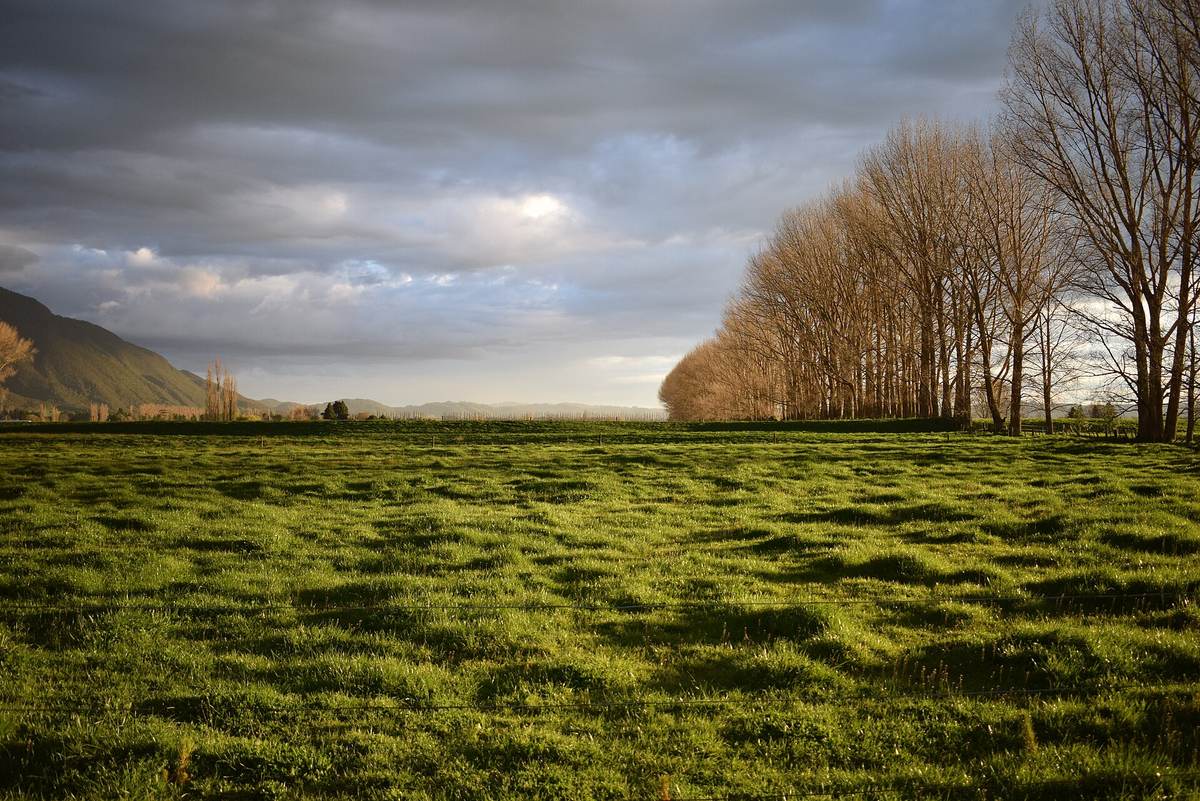

A dairy farm near Galatea, in the Bay of Plenty's Whakatāne District, has added a solar power plant without taking its pasture out of use. The Gordon Cattle and Solar Farm, at 228 Grant Road, Galatea, was set for its official opening on Thursday 12 November 2026, according to a release TCL Solar issued through PR Newswire1 on 10 November. The release describes a 4.7 MW solar installation on 8 hectares of land, combined with a dairy operation of around 700 cattle.
The panels are mounted on Clenergy ezTracker D1P trackers raised to 2.2 metres1, so the cattle can keep grazing underneath, and the trackers follow the sun through the day. Galatea lies about 300 kilometres southeast of Auckland2, according to pv magazine Australia.
What was built
The modules are TCL Solar 625 W TOPCon panels1. The release names the Gordon family, TCL Solar, Clenergy and Micropico, along with insurance and financial partners, as the group that delivered the project. TCL Solar is one of the two flagship module brands of TCL Zhonghuan, the release says.
The official opening, listed on Eventbrite3 as an open day organised by Clenergy, ran 10:30am to 1:30pm and was shown as sold out. The release says it would include a live panel discussion1 on bringing solar into working farmland.
Why ammonia matters on a dairy farm
Livestock waste and manure release ammonia, a corrosive gas that the release says can affect module materials over time1 and potentially contribute to corrosion. TCL Solar says the modules went through ammonia corrosion resistance testing in accordance with IEC 62716, the international standard for assessing resistance to ammonia exposure. pv magazine Australia called ammonia a technical challenge for agrivoltaics deployed in proximity to livestock2.
The release also lists potential benefits for the farm. Shade from the panels lowers soil temperature and moisture loss1 and can reduce the need for irrigation, and shaded ground can ease heat stress for livestock, it says. It adds that vegetation and moisture under the panels may help keep the modules cooler.
What agrivoltaics means
The US Department of Energy describes agrivoltaics, also called dual-use solar, as locating agricultural production, such as crops, livestock, or pollinator habitats, underneath solar panels or between rows of solar panels4. Canterbury case studies published by Our Land and Water in 2023 found that on a dairy farm the panels would need to be elevated for larger livestock5 to graze underneath, which would add cost and wind shear risk, and the dairy case showed a much smaller impact on farm profitability than the sheep and beef case.
The sheep version already runs in the same region. The Bay of Plenty Times reported in May 2026 that at the Rangitaiki Solar Farm near Edgecumbe, farmer Ben Parsons leases 45 hectares of grazing6 under the arrays, split into 10 fenced paddocks of 4 hectares that are rotated. The paper said the 50 hectare site produces an average of 49 gigawatt hours a year, enough for 7,000 homes (operator Lodestone Energy puts it at 54 GWh, enough for 7,500 homes7).
A Massey University pilot study in South Taranaki in 2023 found that pasture growth fell 84% beneath solar panels8, while growth between the panels rose 38%. Massey has since built a mock array at its Pasture and Crop Research Unit in Palmerston North to track light, soil moisture, soil and air temperature, and pasture quality under the structures.
How New Zealand makes its electricity
Most of the country's power is already renewable. The Ministry of Business, Innovation and Employment's Energy in New Zealand 2026 report, as summarised by pv magazine, put renewables at 88.5% of electricity generation in 20259, up from 85.5% in 2024. Installed solar capacity grew 52% during 2025, from 545 MW at the start of the year to 830 MW at the end. Renewable generation capacity passed 9 GW in 2025, led by hydro and geothermal, and solar made up 9.1% of it, against 1.9% in 2020.
On 11 June 2026 the ministry reported that renewables supplied 94.5% of all electricity10 in the March 2026 quarter, with a record 373 GWh from solar, up 50% on a year earlier. For the June 2026 quarter, PV Tech reported that renewables supplied 92% of New Zealand's electricity11, solar generation reached a record 242 GWh and coal-fired generation fell 74.3%.
The 202 MWp Tauhei solar plant near Te Aroha in Waikato, energised in July 2026, was the largest operational solar installation11 in New Zealand by peak capacity when PV Tech reported on it in September. Tauhei also grazes sheep under its modules, PV Tech reported.
Where Galatea is
Galatea is a settlement in the Whakatāne District. Its plains have the Ikawhenua Range and Mount Tāwhiuau on the east, the Rangitaiki River and Kaingaroa Forest on the west, and the Whirinaki River on the south, according to Wikipedia12. The Galatea locality counted 465 people at the 2023 census.
Trivia
- Which ship gave Galatea its name? HMS Galatea12, commanded by Prince Alfred, Duke of Edinburgh, when he visited New Zealand.
- What is the Māori name for Galatea? Kuhawaea12.
- How many panels does the Rangitaiki Solar Farm near Edgecumbe have? About 59,000 panels6, the Bay of Plenty Times reported, with the 2024 panels rated at 545 W each.
- How many sheep has Ben Parsons run on the Rangitaiki site? Between 850 and 1,2006, depending on the time of year, the Bay of Plenty Times reported.
- How much land does the Tauhei solar plant cover? 182 hectares11.
- What did Massey University build its mock solar array from? Wood and iron8, in place of solar panels and steel framing, to keep the cost down.
- What share of New Zealand's total energy consumption came from renewables in 2025? A record 32%9, according to the ministry's Energy in New Zealand 2026 report as summarised by pv magazine.
- When did the Rangitaiki Solar Farm first generate power? In March 20246, after construction started in 2023, the Bay of Plenty Times reported.
Sources
- TCL Solar, From Pasture to Power: Gordon Solar Farm Showcases the Future of Farming and Solar Energy in New Zealand, PR Newswire, 10 November 2026. Accessed November 12, 2026.
- Ev Foley, Ammonia corrosion resistance testing preps panels for 4.7 MW agrivoltaic project, pv magazine Australia, 12 November 2026. Accessed November 12, 2026.
- Clenergy Events, Gordon Cattle and Solar Farm Open Day, Eventbrite listing. Accessed November 12, 2026.
- US Department of Energy, Solar Energy Technologies Office, Agrivoltaics: Solar and Agriculture Co-Location, updated 17 December 2025. Accessed November 12, 2026.
- Annabel McAleer, On-farm solar energy production could significantly increase profits for sheep farmers, Our Land and Water, 7 September 2023. Accessed November 12, 2026.
- Catherine Fry, Rangitaiki solar farm shows how agrivoltaics lets sheep graze under panels, Bay of Plenty Times, NZ Herald, 10 May 2026. Accessed November 12, 2026.
- Lodestone Energy, NZ Solar Farms, Rangitaiki (Edgecumbe). Accessed November 12, 2026.
- Massey University, Can solar panels and pastoral farming work together?, Massey News, 8 January 2025. Accessed November 12, 2026.
- Patrick Jowett, Utility-scale projects drive New Zealand's solar rollout, pv magazine, 21 August 2026. Accessed November 12, 2026.
- Ministry of Business, Innovation and Employment, Renewable generation surges as solar shines, 11 June 2026. Accessed November 12, 2026.
- George Heynes, Solar overtakes coal in New Zealand as Q2 generation surges 56% to record 242GWh, PV Tech, 11 September 2026. Accessed November 12, 2026.
- Wikipedia, Galatea, New Zealand. Accessed November 12, 2026.